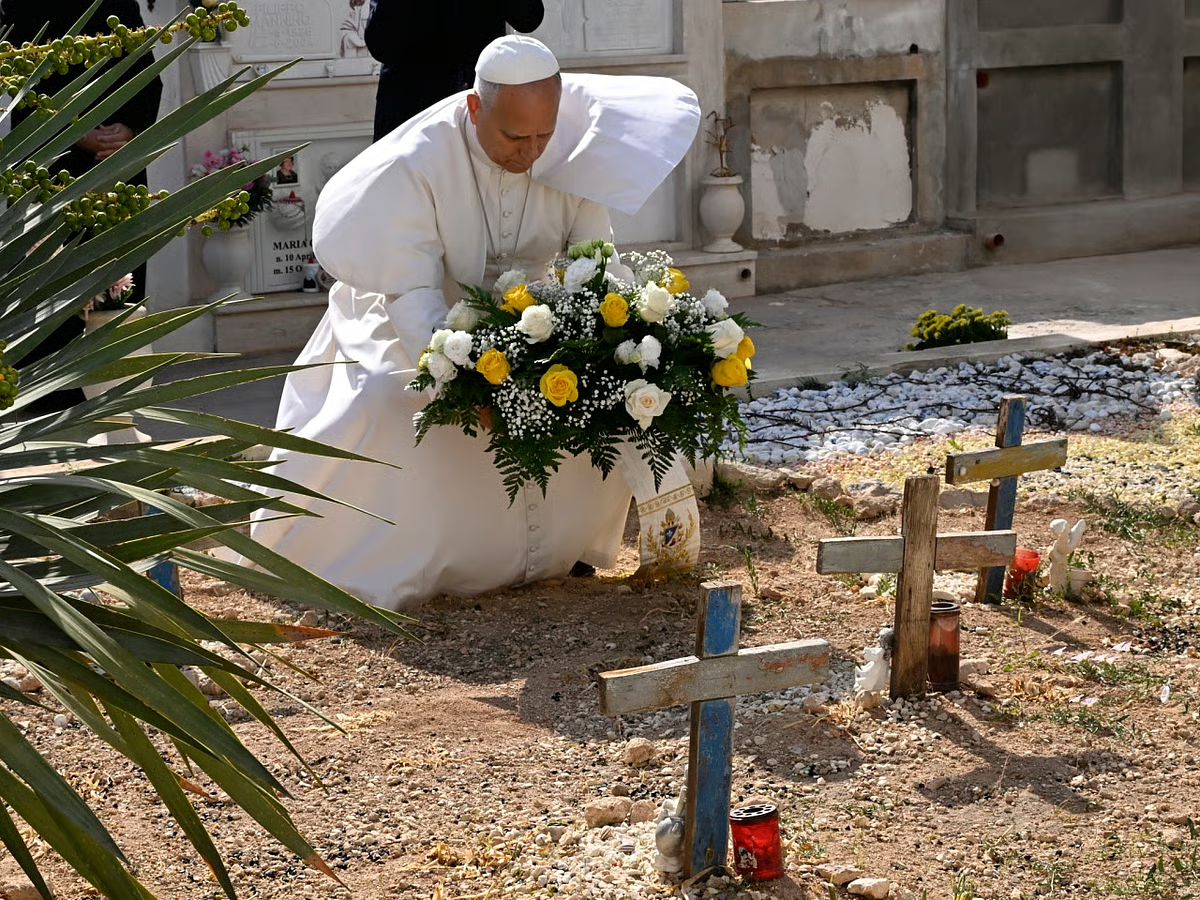
Pope Leo Lampedusa headlines told a powerful story this Fourth of July, as the American-born pontiff chose to spend the historic day at the heart of Europe’s migration crisis. Rather than simply celebrating his homeland’s 250th birthday from afar, Pope Leo XIV travelled to a tiny Sicilian island to honour the countless souls lost while chasing dreams of freedom and a better life. His journey blended solemn remembrance with quiet patriotism, sending a message that resonated far beyond the Mediterranean.
A Day of Contrasts
While Americans across the United States marked the anniversary of the Declaration of Independence with fireworks, rallies, and festive gatherings, the Pope pursued a very different kind of observance. He travelled to Lampedusa, a place synonymous with both hope and heartbreak.
There, he prayed at a migrant cemetery and led a solemn Mass for the island’s residents and its newest arrivals. The choice of location was deliberate and deeply symbolic, linking the ideals of freedom celebrated in America with the struggles of those still seeking it today.
Later that same day, however, the Pope embraced the holiday spirit in a more personal way, revealing the dual nature of his Fourth of July.
An Unusual Visit to the US Ambassador
In a move rarely seen from a pope, Leo paid a visit to the residence of the US Ambassador to the Holy See. Popes typically do not call upon ambassadors, making the gesture all the more notable.
The visit carried a warm, celebratory tone. According to the US Embassy, the ambassador presented the Pope with several thoughtful gifts to mark the occasion, including:
- A commemorative baseball.
- A freshly made apple pie.
- A United States World Cup jersey.
The Pope reportedly confirmed he was cheering for the American team in the World Cup. Beyond the lighthearted exchange, the two also discussed weightier matters, touching on American efforts to promote peace, protect religious freedom, and encourage moral courage around the globe.
The Island at the Center of a Crisis
To understand the significance of the visit, one must first understand Lampedusa itself. This small, rocky island stretches just under six miles in length and sits closer to Africa than to mainland Italy.
Because of its location, Lampedusa has become the primary gateway into Europe for hundreds of thousands of migrants. Many arrive by boat after treacherous crossings from Libya or Tunisia, often at the mercy of human traffickers who exploit their desperation.
Upon arriving, the Pope met with some of these migrants at the port. He then walked alone onto the jagged rocks of the jetty, the wind tugging at his cassock and even blowing off his skullcap as he gazed out at the sea. Before celebrating Mass, he blessed a plaque dedicating the dock to his predecessor.
Words That Speak to the Heart
Throughout his visit, Pope Leo emphasised the profound human dimension of the migration crisis. He reminded those gathered that meaningful action must come from genuine compassion.
He observed that in a place like Lampedusa, actions carry more meaning than words. Yet he cautioned that for those actions to be truly human, they must be rooted in the heart. It was a message that cut through political debate to focus on shared humanity.
In his homily, the Pope praised the island’s residents for what he called a miracle of compassion, honouring their willingness to welcome strangers in need. He urged Europe as a whole to rise to the moment and accept its responsibility toward the vulnerable.
A Message to America and Europe
The timing of the visit was no accident. By choosing this particular Saturday, the Pope delivered a pointed reminder to both the United States and Europe about the moral duty to protect human dignity.
He notably reminded America that it was itself founded by immigrants. In a heartfelt letter sent to Americans for the anniversary, he connected the protection of all human life with the obligation to welcome newcomers.
He wrote that welcoming, protecting, and assisting immigrants reflects the same commitment to life, noting that their hopes and sacrifices have shaped the nation since its earliest days. Receiving them with generosity, he explained, is not merely charity but a recognition of every person’s inherent dignity.
Honoring the Lost and Remembering Francis
One of the most moving moments came when the Pope paid tribute to those who had died. At the island’s migrant cemetery, he laid a wreath of yellow and white flowers upon graves marked by simple crosses fashioned from the shattered wood of shipwrecked boats.
His gestures echoed those of his predecessor, who had made the plight of migrants a central focus of his papacy. Years earlier, that former pope had visited the very same island, tossing a wreath into the sea and condemning the world’s indifference toward migrants.
For advocates working on behalf of migrants, the visit carried enormous weight. One activist, himself a migrant, described it as a strong sign of solidarity in the ongoing struggle to have migrant deaths properly recorded and remembered.
The Sobering Reality of the Numbers
Behind the ceremonies lies a grim statistical picture. While the number of migrants reaching Italy this year has dropped significantly compared to previous years, the danger remains as severe as ever.
The figures paint a troubling contrast:
- Arrivals in Italy stood at 14,464 as of Friday, down sharply from over 30,000 during the same period the previous year.
- More than 35,000 migrants have been recorded as missing in the Mediterranean since 2014.
- The true death toll is believed to be far higher, given countless unrecorded shipwrecks.
Experts point out that fewer arrivals have not meant fewer deaths. In fact, the proportion of those dying at sea appears to be rising, underscoring the persistent vulnerability of those who attempt the journey.
A Broader Vision for the Future
Pope Leo did not limit his message to remembrance alone. He called on European leaders to address migration comprehensively, combining immediate humanitarian relief with long-term solutions.
He advocated for strategies that would receive, protect, support, and integrate migrants, while also developing their home countries so that no one feels forced to leave in the first place. His approach reflected a desire to tackle the root causes of migration rather than merely managing its symptoms.
Having recently visited another European migration hotspot, the Pope has consistently challenged leaders who turn migrants away with indifference. He has also issued stern warnings to smugglers who profit from human suffering.
A Powerful Reminder
In the end, Pope Leo’s Fourth of July became a study in contrasts, weaving together celebration and sorrow, patriotism and compassion. From honouring the dead on a windswept island to sharing apple pie with an ambassador, his day embodied a message that transcended borders.
By standing at the crossroads of Europe’s migration crisis on America’s birthday, he reminded the world that the pursuit of freedom and dignity is a universal one. His journey served as a moving call to remember the vulnerable, to act with genuine compassion, and to recognise the shared humanity that binds all people together, no matter where they come from.
Author