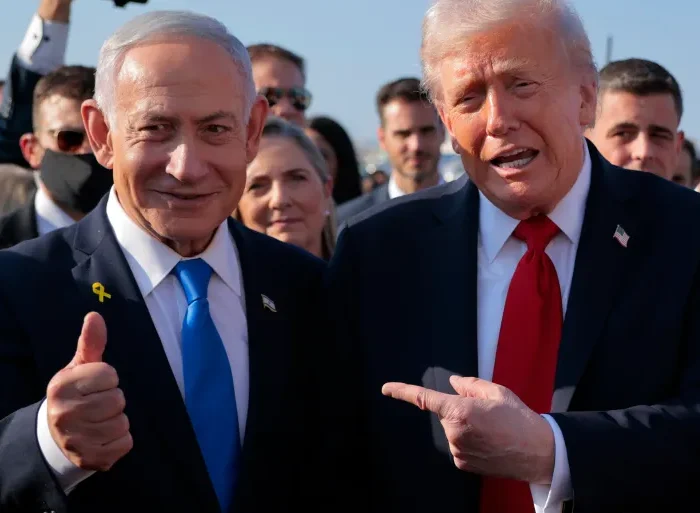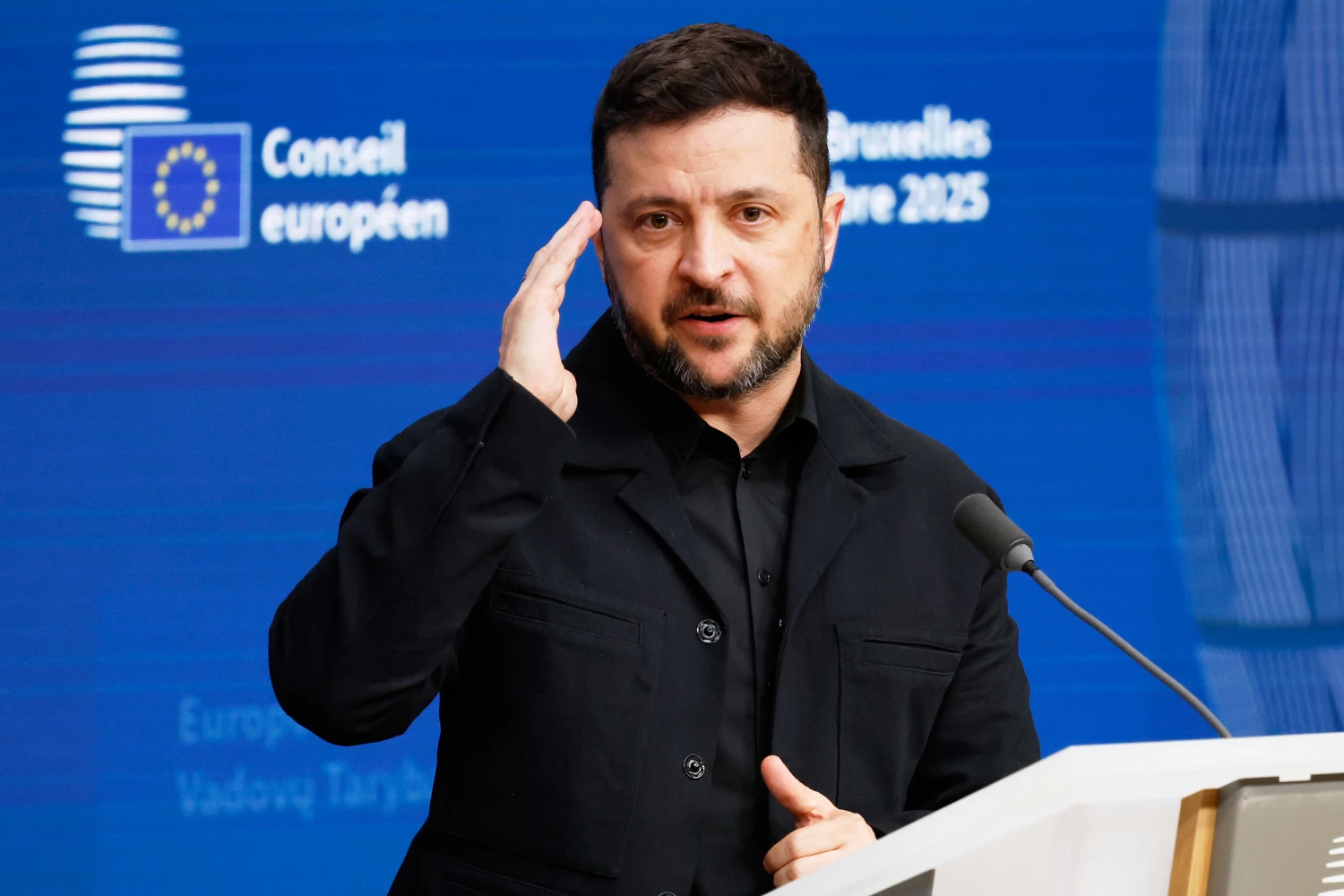
The Zelenskyy Washington visit on Tuesday looked nothing like the last one. Where February 2025 produced an Oval Office confrontation that ended in humiliation for the Ukrainian president, this trip ended with him smiling, seated in the Senate gallery, watching American lawmakers move decisively toward the sanctions package he has been chasing for years.
More striking than the warmth was the argument he managed to sell. A year ago, the working assumption in Washington was that Ukraine’s best hope was a negotiated loss. This week, senators from both parties were openly discussing the possibility that Kyiv could actually win.
From Disaster to Diplomacy
Volodymyr Zelenskyy left his meeting with President Donald Trump in good spirits, according to those around him — an outcome few would have predicted eighteen months ago. He then capped the day by watching the Senate vote overwhelmingly to advance legislation penalizing countries that continue purchasing Russian oil.
The vote does not make the bill law, but it pushes Congress one step closer to delivering something Kyiv has ranked at the top of its wish list. It also reflects a broader recalibration: Ukraine’s improving position is no longer confined to the front lines.
A former Trump administration official, speaking on condition of anonymity to describe internal dynamics, said the atmosphere between the two presidents has fundamentally changed because Ukraine is simply performing better in the war.
The Case Zelenskyy Made Behind Closed Doors
In a private session with senators and a handful of House members, Zelenskyy laid out a straightforward theory: economic pressure is what eventually drags Vladimir Putin to a negotiating table.
Senator Mike Rounds of South Dakota summarized the pitch afterward. The entire purpose, he said, is to force Putin into talks. Zelenskyy argued that sanctions would compound frustration inside Russia itself, deepening public anger over a war that has already cost enormous sums and lives.
The Ukrainian leader tied that pressure to what his forces have gained militarily. Sanctions, in his framing, are the tool that locks in battlefield progress and converts it into leverage.
He paired the argument with a familiar list of requests:
Licensing to manufacture Patriot air defense batteries domestically, a step Trump indicated at this month’s NATO summit in Ankara he was prepared to permit.
A reliable supply of PAC-3 interceptors, the munitions the Patriot system actually fires.
Continued access to Starlink satellite coverage, which Ukrainian forces rely on for targeting during long-range strikes.
Rounds noted that this was essentially the same case Zelenskyy delivered to lawmakers on the margins of the NATO gathering three weeks earlier. Repetition appears to be working.
Why Lawmakers Are Listening Now
Senator John Boozman of Arkansas offered the simplest explanation for the shift in mood. Battlefield success, he said, is what changed the conversation.
Finnish President Alexander Stubb, who also came to the Capitol on Tuesday, reinforced Zelenskyy’s argument. Senator Jim Risch of Idaho said both leaders told lawmakers the sanctions legislation might do more to end the fighting than anything happening militarily — that a bill passed in Washington could outweigh events on the ground.
The political landscape has moved in other ways too. Some MAGA-aligned figures who once defended Moscow have changed positions, most visibly conservative commentator Laura Loomer, who abandoned her pro-Russia stance after traveling to Kyiv.
Yehor Cherniev, a Ukrainian lawmaker from Zelenskyy’s Servant of the People party, said the Trump meeting demonstrated that earlier friction between the two governments belongs to the past and that the countries are now operating as allies.
A Vote Shadowed by a Funeral
Tuesday carried a somber layer. The sanctions measure was one of the late Senator Lindsey Graham’s signature causes, and the South Carolina Republican was among Ukraine’s most persistent defenders in Congress. Zelenskyy attended his funeral services in Washington alongside Trump, congressional leadership and foreign dignitaries.
Senate Armed Services Chair Roger Wicker of Mississippi suggested the bill, if enacted, could stand as Graham’s most significant legislative accomplishment.
Graham’s death, combined with Zelenskyy’s presence and the changed trajectory of the war, generated momentum that had been absent for months.
What the Bill Actually Does
The legislation would authorize tariffs of up to 100 percent on nations buying substantial volumes of Russian oil, with implementation left largely to the president’s discretion.
Senator Richard Blumenthal of Connecticut, a co-sponsor, said the drafting was deliberate — designed to spare allied economies while landing squarely on China and India, the two largest remaining buyers.
Supporters in both parties contend the resulting economic strain would be severe enough to make continuing the war untenable for Moscow.
The Obstacles Ahead
None of this is settled. Majority Leader John Thune wants to move quickly, potentially clearing the Senate within days, but complications remain and the House presents a steeper climb.
The White House has offered only lukewarm backing, and Republican leaders in both chambers spent months declining to schedule the bill out of deference to Trump. Trump himself has reversed positions abruptly before.
The House has already left for the remainder of the summer, which means the earliest possible enactment is September. Many House Democrats are uneasy about handing the president expansive tariff authority, a concern that could complicate passage even with bipartisan Senate support.
Senator Jeanne Shaheen of New Hampshire, the ranking Democrat on Foreign Relations, argued this version is the only sanctions framework realistically capable of becoming law. The recess, she suggested, at least buys time to address colleagues’ objections directly.
The lobbying will continue in the meantime. Ukrainian drone commanders are scheduled to appear at a Senate Republican lunch on Wednesday to discuss production capacity — another sign that Kyiv intends to keep making its case in person.
Author
-
Lucienne Albrecht is Luxe Chronicle’s wealth and lifestyle editor, celebrated for her elegant perspective on finance, legacy, and global luxury culture. With a flair for blending sophistication with insight, she brings a distinctly feminine voice to the world of high society and wealth.