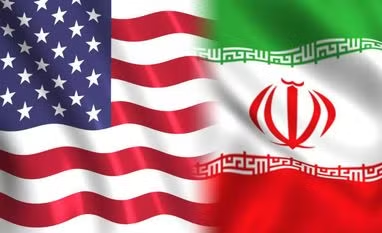
The U.S.-Iran talks were meant to launch with diplomatic fanfare. Instead, they stumbled out of the gate amid cancellations, confusion, and renewed violence — a chaotic opening that underscores just how fragile the road to peace remains. With deep distrust on both sides and a ticking 60-day clock, diplomats are bracing for a process defined by setbacks and suspicion.
A 60-Day Sprint Off to a Shaky Start
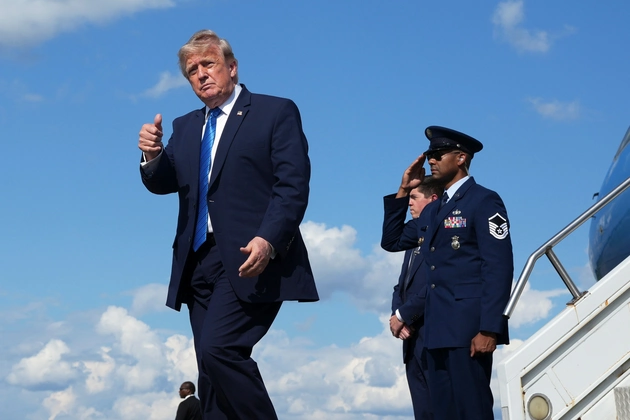
Iranian and American negotiators set themselves an ambitious goal: transform a loosely worded Memorandum of Understanding — signed with a felt-tipped flourish by President Donald Trump on Wednesday — into a comprehensive peace accord within 60 days.
By Friday, that window had already narrowed to 59 days, and the early turmoil made clear how much uncertainty still surrounds the effort. Beyond ending the war, negotiators must grapple with thorny issues, including the future of Iran’s nuclear program.
Scores of diplomats, journalists, and activists had gathered in Zurich on Friday for what was supposed to be the next phase. The plan called for a signing ceremony featuring Vice President JD Vance and Iranian Foreign Minister Abbas Araghchi, followed by negotiating teams convening at Bürgenstock, a Swiss resort long associated with this kind of diplomacy.
When the Plan Fell Apart
Almost nothing went as scheduled. Iran abruptly pulled its delegation, citing Israeli attacks in southern Lebanon. Hours before his planned departure from Washington, Vance called off his trip as well. By midmorning, the Swiss government confirmed there would be no talks in Zurich that day — and no clear sense of when they might begin.
A White House spokesperson acknowledged the difficulty, noting that the logistics of these negotiations had never been simple or predictable. Behind the scenes, mediators who had nurtured the process for months scrambled to keep the rift from unraveling everything.
Their efforts showed some results. By Friday afternoon in the Middle East, a truce between Israel and Hezbollah appeared to have been restored. By Saturday morning, plans were taking shape for talks to proceed in a smaller format — bringing together Araghchi, Trump’s envoy Steve Witkoff, and the president’s son-in-law Jared Kushner. But overnight Israeli strikes that killed at least five people in southern Lebanon threatened to create yet another obstacle.
Mediators Race to Hold It Together
Diplomatic channels remained active even as the public process stalled. Iran’s semiofficial Tasnim News Agency reported that negotiations were ongoing through mediators, with an announcement to follow if conditions for talks were met.
Pakistan emerged as a key intermediary. A Pakistani official familiar with the talks said the country was in contact with both Tehran and Washington, working to smooth over the disruptions. The official stressed that both parties needed to honor the MOU as the path forward — but cautioned that given the complicated history between the two sides and the recent war, further obstacles couldn’t be ruled out.
Why Neither Side Wants Collapse
Despite the turbulence, analysts believe neither Washington nor Tehran wants the process to fall apart entirely.
For the White House, the top priority is reopening the Strait of Hormuz and getting oil tankers moving again. For Iran, the incentives are substantial: a deal that lifts sanctions, leaves its leadership intact, and promises billions in unfrozen assets is difficult to abandon — even as Tehran publicly champions Hezbollah.
That calculation may explain why the Lebanon flare-up, however dangerous, is unlikely to derail Iran’s broader strategy. As Bilal Saab, a former Pentagon official now at the Washington-based think tank TRENDS US, put it, the MOU is simply too valuable for Iran to sacrifice over Hezbollah.
A Deal Critics Call Lopsided
Not everyone views the agreement favorably. Many analysts — including Israelis and even some congressional Republicans — argue that Trump secured a poor deal. Critics have faulted the 14-point MOU for demanding far too little of Iran in exchange for significant concessions.
That skepticism feeds into a deeper problem: the profound mutual distrust between the two nations. Even if they manage to agree on an implementation plan, there’s little confidence the deal will hold over the long term.
A History of Broken Agreements
Iran’s wariness is rooted in experience. Tehran sees Trump as someone who has repeatedly torn up agreements it reached or was negotiating with the West — and Switzerland has frequently been the backdrop for those collapses.
Araghchi himself was involved in talks there last winter that were reportedly making progress on limiting Iran’s nuclear program. Days later, Trump abandoned those negotiations and ordered the bombing of Tehran, killing Iran’s supreme leader, Ayatollah Ali Khamenei, along with many senior officials.
His diplomatic history stretches back further still. Araghchi took part in talks with the Obama administration in Geneva in 2013 and in Zurich in early 2015 that produced a nuclear deal involving the United States, Russia, Germany, France, Britain, and China — an agreement Trump later scuttled.
According to Ali Vaez, an Iran specialist at the International Crisis Group who spoke with senior Iranian officials in Switzerland, the Iranians view Trump as unreliable and erratic.
What Iran Hopes Is Different This Time
Despite that history, Tehran is betting that recent events might change the dynamic. Iranian officials hope that Trump’s experience launching a war that failed to achieve many of its objectives — while inflicting political and economic damage at home — will make him more inclined to follow through.
A central Iranian goal is holding Trump accountable for ensuring that Israel and Prime Minister Benjamin Netanyahu abide by the agreement, even though Israel is not a signatory and has openly denounced the pact.
As Vaez explained, the Iranians see this as a test of whether Trump is willing to restrain Netanyahu, who could resume bombing Iran within months. For Tehran, the MOU serves as proof of concept — evidence that it can negotiate a broader, more comprehensive agreement with the United States.
A Signing Ceremony Undone
The administration had hoped a formal signing ceremony in Switzerland would showcase the agreement as a major diplomatic win, with senior leaders including Pakistani Prime Minister Shehbaz Sharif and other mediators in attendance.
But Trump preempted that moment. On Wednesday, at a candlelit dinner at the Palace of Versailles outside Paris, seated beside French President Emmanuel Macron, he signed a copy of the document with his trademark Sharpie. He passed the paper to Secretary of State Marco Rubio, then gestured downward — seeming to mouth “oil” — and upward, “stock market.”
With Trump having claimed the spotlight, the planned ceremony was downgraded. Sharif and other dignitaries canceled their travel plans, and the event was recast as a high-level negotiating session.
The Lebanon Flashpoint
Then came the breakdown. On Thursday, Iran announced it would not send a team at all, pointing to Israel’s refusal to withdraw troops from southern Lebanon and its continued attacks. Tehran characterized Israel’s actions as a clear violation of the MOU’s first article, which calls for the immediate and permanent end of military operations on all fronts.
That night, four Israeli soldiers were killed in a Hezbollah attack on a tank, and the deal appeared to wobble — until a renewed Israel-Hezbollah ceasefire was announced Friday afternoon.
The Question of Victory
Iran’s willingness to return to the table appears closely tied to its ability to claim victory in the war. Tehran’s hard-line regime has portrayed itself as having stood up to two of the world’s most powerful militaries and survived. Beyond mere survival, it inflicted global economic disruption by closing the Strait of Hormuz — cutting energy supplies, driving up inflation and fuel prices, and threatening food shortages in some regions.
Vaez offered a striking analysis of the shift in leverage. One reason Trump treated Iran the way he did, he suggested, was the belief that he could get away with it. But that calculation has changed: the alternative is no longer hypothetical. Trump has tried force, and he now knows it doesn’t deliver results — it delivers pain.
The Road Ahead
With distrust running deep and violence still flaring along the Lebanon front, the U.S.-Iran talks face a daunting path. Both sides have powerful reasons to keep the process alive, yet neither fully trusts the other to honor its commitments. As the 60-day clock ticks down, the chaotic opening days may prove to be a preview of the hurdles still to come — a fragile diplomatic effort unfolding against a backdrop of suspicion, competing agendas, and the ever-present risk of renewed conflict.
Author