After Graham’s Death, Ukraine Scrambles to Keep Trump’s Ear in Washington
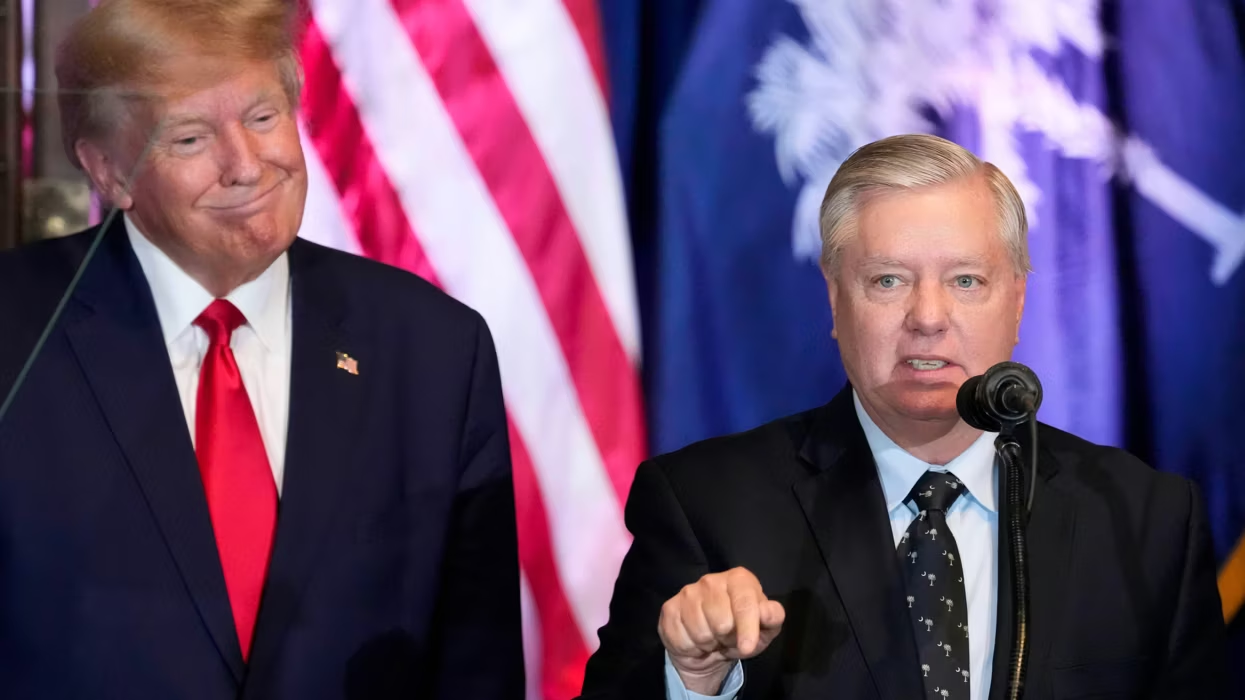
The question of who will champion Ukraine allies in Washington has taken on new urgency following the untimely death of Senator Lindsey Graham, one of Kyiv’s most steadfast supporters on Capitol Hill. As Ukraine and its partners work to maintain their momentum, they now face a difficult reality: losing a figure who bridged the gap between MAGA world and Kyiv leaves a void that may be hard to fill.
The stakes could hardly be higher, with Ukraine bracing for a harsh winter and grappling with a shortage of critical air defenses.
The Loss of a Key Go-Between
Graham occupied a rare and valuable position in Washington. He served as an essential intermediary connecting the Trump orbit to Ukrainian leadership, and he had been a driving force behind congressional efforts to crack down on the Kremlin’s covert channels for military support and its so-called shadow fleet.
His influence was felt right up until the end. One of his final official acts was visiting Ukrainian President Volodymyr Zelenskyy to brief him on his latest legislative push to sanction those purchasing oil from Russia.
Ukrainian officials have publicly insisted they intend to carry on his work. As one top official put it, they are actively engaging with both the Trump team and Congress to pressure Russia toward peace. While acknowledging the sadness surrounding Graham’s death, the official expressed hope for constructive action from Washington moving forward.
A Breakthrough on the Sanctions Bill
Graham’s passing came at a pivotal moment. Just before his death, an eleventh-hour breakthrough had emerged in negotiations between members of Congress and the Trump team over the language of his sanctions bill, hammered out during NATO’s annual leaders’ summit in Ankara.
The development appeared to mark a reversal for the U.S. administration, which had repeatedly tried to weaken the legislation. The new language, released Tuesday, included several notable provisions:
- It limits Trump’s ability to avoid sanctioning Russia during ongoing talks.
- It calls on Trump to identify and penalize Russian shippers and suppliers of sensitive military technology, such as sensors and machine tools.
- However, it also grants Trump broad latitude to waive the application of any sanctions or restrictions.
That final caveat has left some observers uncertain about how forcefully the measures will actually be applied.
Uncertainty Over Ukraine’s Next Champion
With Graham gone, a pressing question looms: who will emerge as Ukraine’s biggest advocate on the Republican side, and will that person have Trump’s ear?
Some of Kyiv’s allies worry that no one remains who can effectively manage Trump’s volatile relationship with Zelenskyy, a dynamic that has been marred by tense on-camera arguments. Graham had also played a crucial role in the minerals deal signed between Washington and Kyiv in 2025.
A former Trump administration official captured the concern bluntly, noting that Ukraine needs people who can interpret Trump for them because they don’t fully understand him. Losing that translator, the official suggested, represents a real setback.
Thin Ranks Among Ukraine’s Supporters
Although Graham’s sanctions bill boasts more than 80 cosponsors, he was uniquely positioned as a Republican with direct lines to both Zelenskyy and Trump. Replacing that dual access won’t be easy.
Other potential advocates exist but come with limitations:
- Senate Armed Services Chair Roger Wicker has supported arming Kyiv, but lacks Graham’s unique access.
- Sen. Thom Tillis, another staunch ally, is set to retire.
- Democrats like Sen. Richard Blumenthal, who co-authored the sanctions bill, have little sway over the White House.
The sense of loss extends to the broader roster of Ukraine’s supporters. Ukrainian parliament member Oleksandra Ustinova lamented the situation in a social media post, noting that Graham had died while Senator Mitch McConnell was hospitalized, describing them as Ukraine’s most powerful friends. She warned that many Republican allies of Ukraine are declining to seek reelection, leaving Congress and stripping Kyiv of some of its best advocates.
Fears for the Sanctions Package
Beyond personnel concerns, some in Kyiv are anxious about the fate of Graham’s sanctions package itself. They are reportedly weighing various scenarios in which the White House might undermine the bill.
Trump could drag out negotiations further or simply decline to use his leverage against Russia. As one person close to the Ukrainian government explained, even if the White House supports tough sanctions and the Senate passes them, Trump could delay signing, particularly if Iran becomes entangled in the matter. The concern is that the legislation grants Trump permission to impose sanctions without actually requiring him to do so.
Looking to Europe for Alternatives
The uncertainty in Washington has prompted attention toward potential allies across the Atlantic. Coming off a NATO summit where Trump largely complimented European leaders rather than criticizing them, some officials hoped Kyiv’s champions might help keep the president on message.
One European diplomat described spending long evenings on calls with Graham as the senator worked to secure more support for Ukraine. While acknowledging Graham’s loss would be deeply felt, the diplomat suggested others could step into the role, noting that this makes NATO Secretary General Mark Rutte more vital than ever.
Certain European leaders have earned reputations as Trump whisperers. Finnish President Alexander Stubb, a frequent golf partner of Trump’s, has lobbied him to maintain pressure in support of Ukraine.
A Shifting European Landscape
Yet Europe faces its own upheaval. Several key figures are leaving the political stage:
- British Prime Minister Keir Starmer may have only days left in office after resigning last month.
- French President Emmanuel Macron is term-limited and will depart next year.
Compounding matters, Trump’s frustration with European allies over their lack of support for the Iran war has led him to distance himself from some longtime confidants within NATO, including Italian Prime Minister Giorgia Meloni.
What Comes Next
The implications of Graham’s death for U.S. policy toward Ukraine are expected to weigh heavily on European diplomats. As one Washington-based diplomat observed, Graham had been a crucial driving force, and his absence will be keenly felt. The hope now is that whoever succeeds him will follow the same supportive line.
For Ukraine, the coming months will test whether the momentum Graham helped build can survive without him. With winter approaching, air defenses stretched thin, and a delicate sanctions bill hanging in the balance, Kyiv finds itself searching for new voices capable of reaching Trump. Whether those voices emerge, and whether they can match Graham’s influence, may well shape the trajectory of American support for Ukraine in the critical period ahead.
Author