The Trump administration’s USPS mail-in ballot policy scored a partial win in federal court Friday, though the practical effect is narrower than the headline suggests. One legal obstacle came down. A bigger one remains standing.
What the Appeals Court Decided
A three-judge panel of the D.C. Circuit Court of Appeals unanimously paused a lower court order that had blocked the Postal Service from restricting ballot delivery.
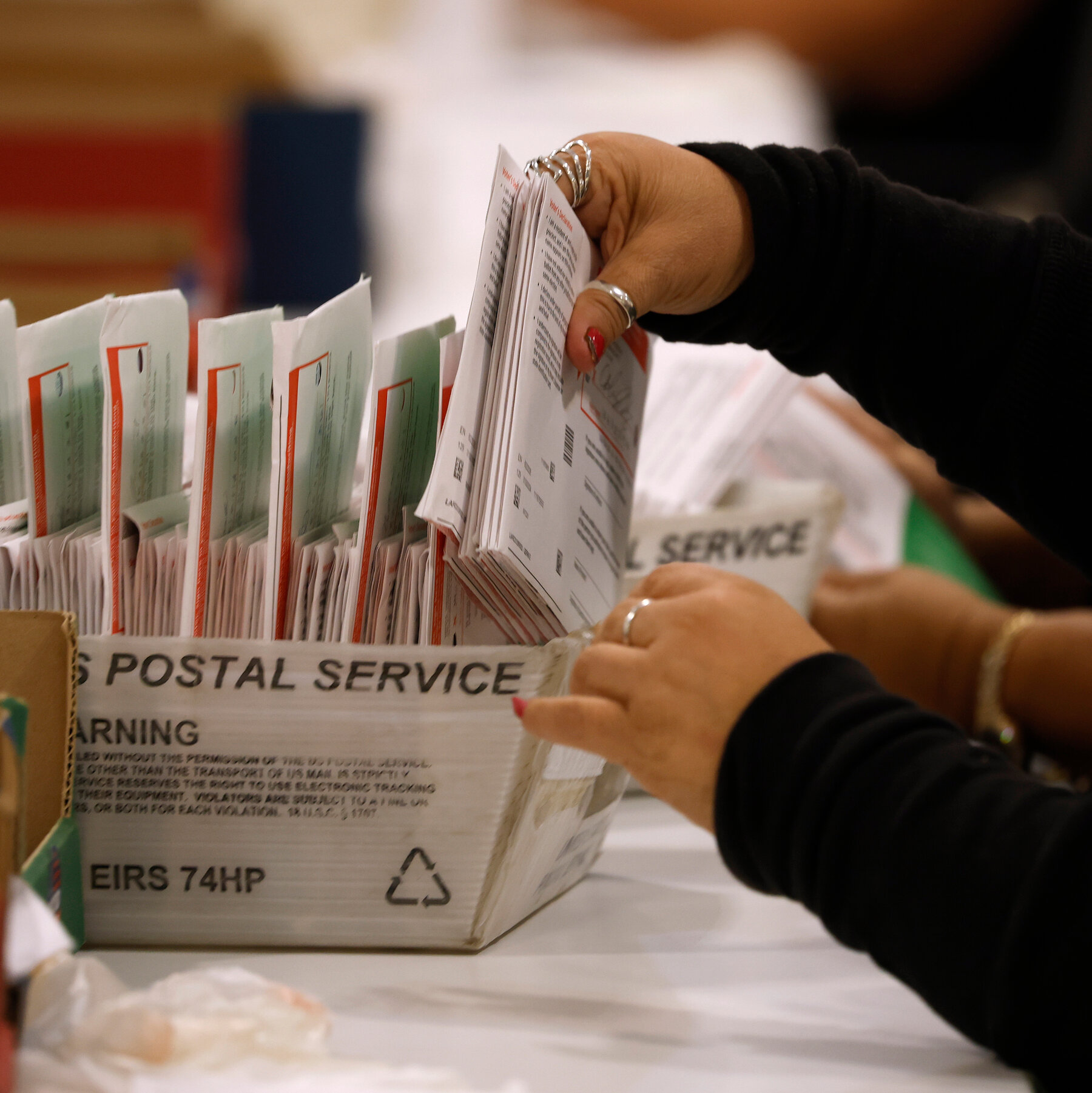
The underlying policy would limit delivery of mail-in and absentee ballots in states that decline to provide eligible voter lists to the federal government.
The panel’s reasoning rested on two conclusions:
- The Postal Service made a strong showing it will likely succeed in arguing the proposed rule is neither constitutionally nor prudentially ripe for review
- The rule falls outside the scope of a settlement agreement previously reached with the NAACP
Ripeness is a technical concept but an important one here. Courts generally decline to rule on policies that have not been finalized, on the theory that a proposal might change before it takes effect. The panel found that argument persuasive at this stage.
The Timing Argument
The judges also accepted that USPS would suffer irreparable harm if prevented from finalizing and implementing the rule before the November midterms.
Their phrasing was pointed: once an election happens, there can be no do over.
That reasoning cuts in an interesting direction. The same logic — that elections are unrepeatable — is frequently invoked by opponents of last-minute voting changes. Here it was deployed on behalf of implementing one.
What the Policy Would Actually Do
Postmaster General David Steiner confirmed earlier this month that the agency would not deliver mail-in ballots in states refusing to turn over sensitive voter data to the Trump administration.
He framed the goal to lawmakers as ensuring the right ballots reach the right people.
The policy traces back to a March executive order directing USPS to propose a final rule by August 3 accomplishing exactly that.
The NAACP’s Challenge
The NAACP sued in late June, arguing the proposal breaches a December 2021 settlement agreement.
That agreement obligated the Postal Service to prioritize monitoring and timely delivery of election mail through the 2028 elections — a commitment the organization argues is incompatible with selectively withholding ballot delivery from certain states.
District Judge Emmet G. Sullivan sided with the NAACP earlier in July. He characterized Trump’s order as designed to exert federal control over who in the United States may receive a mail-in or absentee ballot in federal elections through the Postal Service.
Friday’s appeals ruling paused that decision, not the reasoning behind it. The underlying litigation continues.
The Ruling That Still Blocks Everything
Here is why the administration’s victory is limited.
The executive order remains blocked across nearly two dozen states because of a separate ruling from a Boston-based federal judge late last month.
District Court Judge Indira Talwani found that the directive intruded on states’ constitutional authority to administer elections. She also ruled that efforts to remove individuals from voter rolls were unconstitutional.
That decision operates independently of the D.C. Circuit case. Clearing one injunction does not disturb the other.
The Underlying Dispute
Trump and his allies have repeatedly blamed mail-in voting for fraud, a claim that has not been supported by evidence.
The current effort represents a shift in approach. Rather than challenging mail voting directly, it conditions ballot delivery on state cooperation with federal data requests — turning the Postal Service into leverage in a dispute over voter file access.
That framing is precisely what Sullivan objected to and what Talwani found unconstitutional on federalism grounds.
Two Constitutional Questions in Play
The litigation is really contesting two separate issues.
The first is contractual: whether the Postal Service can adopt a policy that conflicts with a settlement it signed in 2021. That is the D.C. Circuit’s terrain.
The second is structural: whether the federal executive can direct how states administer elections at all. The Constitution assigns primary authority over election mechanics to the states, with Congress holding certain override powers. An executive order occupies uncertain ground in that arrangement.
Talwani’s ruling addressed the second question. Friday’s appeals decision did not.
What Happens Next
The August 3 deadline for a final rule is approaching, and the D.C. Circuit’s stay gives the Postal Service room to meet it.
But finalizing a rule and enforcing it are different things. With Talwani’s injunction covering roughly two dozen states, the geographic reach of any implementation would be substantially limited even if USPS completes the process on schedule.
Expect continued appeals on both tracks. With the midterms in November and litigation moving in parallel through two circuits, the timeline for resolution is tight — and the possibility of conflicting rulings between courts is real.
For voters, the practical upshot for now is that nothing has changed. Ballot delivery continues as it has. Whether that holds through November depends on decisions that have not yet been made.
Author