Bangladesh China trade tensions took center stage in Beijing this week as Bangladeshi Prime Minister Tarique Rahman pressed Chinese leader Xi Jinping to help shrink the lopsided trade gap between the two nations and accelerate the delivery of major infrastructure projects. The talks underscored both the deep economic ties and the delicate diplomatic balancing act facing Bangladesh’s new leader.
A First Visit With High Stakes
Rahman, who took office in February, is making his first visit to China since assuming power. The trip carries significant weight, as he must navigate a complex diplomatic landscape, maintaining strong ties with Beijing, one of Bangladesh’s biggest creditors, while keeping relations stable with neighboring India. The two regional rivals have long competed for influence across South Asia.
During a meeting at Beijing’s Great Hall of the People, Rahman made his priorities clear, framing the trade imbalance as a central concern.
The Push to Diversify Exports
At the heart of Rahman’s appeal was a request to broaden the range of Bangladeshi goods flowing into China. To help reduce the trade gap, he asked for support in diversifying his country’s exports, singling out several products, including:
- Fresh mangoes, jackfruit, and guava
- Aquatic products and raw leather
- Pharmaceutical goods
Rahman also emphasized the need for Chinese support in carrying out Bangladesh’s major signature projects, along with the upgrading and modernization of existing industrial units.
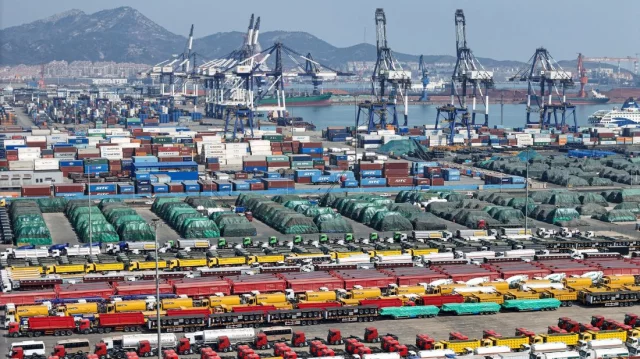
The scale of the imbalance helps explain the urgency. China purchased $1.3 billion worth of Bangladeshi goods last year, according to Chinese customs data. Notably, the top export was human hair used for wig making at $153 million, followed by cotton yarn at $80 million and jute products at $78 million.
Xi’s Response and Broader Cooperation
Xi signaled openness to Rahman’s requests, indicating that China would import more Bangladeshi products and back Chinese investment in the country. The two sides also explored expanding defence cooperation, though one of Rahman’s advisers told Reuters that no specific agreement was signed on that front.
China’s foreign ministry outlined a wider vision for collaboration. It expressed willingness to support the development of the China-Myanmar-Bangladesh Economic Corridor, designed to connect China’s Yunnan province to both countries. Beijing also pointed to potential cooperation in areas such as artificial intelligence, green and low-carbon development, healthcare, and education.
Infrastructure and Water Projects
Infrastructure featured prominently in the discussions. Bangladesh joined China’s Belt and Road Initiative in 2016, Xi’s flagship strategy aimed at linking Asia, Africa, and Europe through development and connectivity.
A foreign ministry spokesperson said the two countries had agreed to cooperate on port and water projects. He highlighted the Teesta River in particular, describing its comprehensive management and restoration as a livelihood project of great importance to Bangladesh, and said China was willing to provide assistance to the best of its ability.
Ahead of the meeting with Xi, Rahman had also met Premier Li Qiang, with the two signing multiple cooperation agreements to strengthen bilateral ties, according to state media.
The Debt and Investment Picture
The financial relationship between the two countries is substantial. According to World Bank data, Bangladesh owes China $6.2 billion, while the Beijing-based Asian Infrastructure Investment Bank has lent a further $2.3 billion. By comparison, India has lent its neighbor just $1.6 billion, underscoring China’s outsized role as a creditor.
Chinese firms have also poured significant investment into the country, contributing an additional $7.7 billion, roughly half of which went into Bangladesh’s energy sector, according to data from the American Enterprise Institute.
A More Cautious Beijing
Despite the warm rhetoric, analysts note that China has grown more careful about its financing decisions. Chim Lee, a senior analyst at the Economist Intelligence Unit in Beijing, explained that Beijing increasingly favors key logistics corridors that can be scaled up.
Bangladesh, he suggested, presents a challenge in that regard, because it does not offer the same kind of strategic corridor that regions like Central Asia or Myanmar provide. That calculation may temper how aggressively China commits to new projects.
The Bottom Line
Rahman’s visit highlights the dual reality of Bangladesh’s relationship with China: a vital economic partnership paired with a growing trade imbalance and a heavy debt load. As Bangladesh seeks more balanced trade, faster infrastructure delivery, and continued investment, it must also tread carefully between Beijing and New Delhi. The outcome of this diplomatic balancing act will shape not only Bangladesh’s economic future but also the broader contest for influence playing out across South Asia.
Author