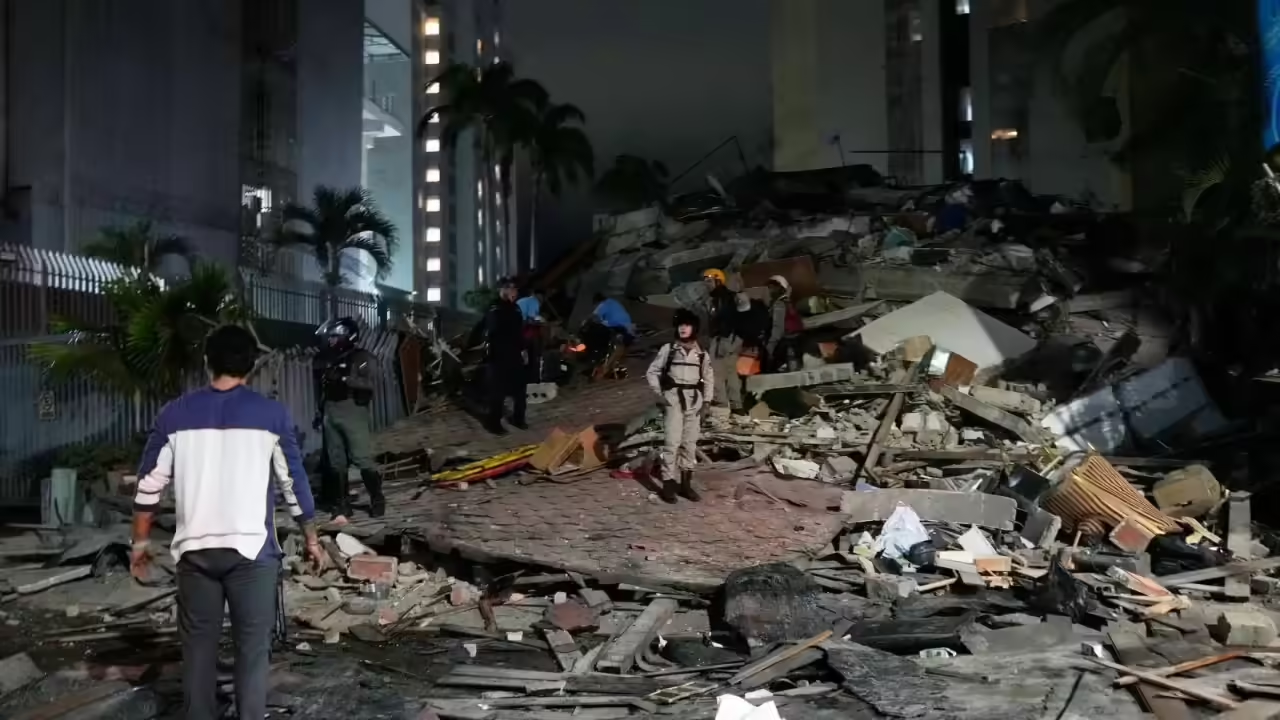
Venezuela earthquakes struck with devastating force this week, ranking among the most powerful the country has experienced in over a century. The twin quakes, which hit in rapid succession in the northern part of the nation, have left a trail of death, injury, and destruction that authorities are still working to fully assess.
A Sudden and Violent Disaster
On Wednesday evening, two earthquakes struck one after another in northern Venezuela, roughly 170 kilometers (105 miles) west of the capital, Caracas. The first measured magnitude 7.2, followed by an even stronger 7.5 quake.
The human toll has been severe and is still climbing. Early reports indicate that nearly a thousand people have been injured, more than 180 have died, hundreds remain trapped, and thousands more are unaccounted for. With rescue efforts ongoing, the full scale of the damage remains unclear.
How These Quakes Rank Historically
The strength of these earthquakes places them in rare company, both regionally and globally.
Seismic activity tends to concentrate along the restless edges of Earth’s tectonic plates, where pressure builds and releases. To put the magnitude in perspective, out of the millions of earthquakes recorded since 1900, only just over 500 have reached a magnitude of 7.5. That makes Wednesday’s larger quake part of an exceptionally small and powerful category.
Venezuela itself is no stranger to seismic activity, though events of this intensity are uncommon. Since 1900, the region has experienced nearly 60 earthquakes measuring 6.0 magnitude or greater.
A Troubling Recent Trend
Perhaps most striking is how much of the region’s strongest seismic activity has been concentrated in recent years. Half of the region’s most powerful quakes have struck within just the last eight years, pointing to a notable uptick in major seismic events in a relatively short span of time.
This pattern adds urgency to questions about preparedness and resilience in a country now grappling with one of its worst natural disasters in living memory.
The Response Begins
In the wake of the disaster, Venezuela’s acting president, Delcy Rodríguez, issued a state of emergency for the country. She announced that the government was in the process of establishing a $200 million reconstruction fund aimed at repairing damaged hospitals and homes.
The international community has also mobilized, with aid arriving from across the globe to support relief and recovery efforts. That outpouring of assistance reflects both the scale of the destruction and the broad solidarity extended to those affected.
The Bottom Line
Venezuela’s twin earthquakes stand as a stark reminder of the raw power of seismic forces and the vulnerability of the communities in their path. As one of the strongest events to hit the country in more than a hundred years, the disaster has claimed lives, displaced families, and tested the nation’s capacity to respond. With rescue operations continuing and recovery only beginning, the coming days will reveal the true depth of the damage and the long road ahead toward rebuilding.
This article discusses a recent disaster involving significant loss of life. Anyone affected by such events, or supporting loved ones who are, may find it helpful to reach out to trusted people or local support services during a difficult time.
Author