Just war theory, a cornerstone of Catholic thought for more than a thousand years, is facing an extraordinary challenge from an unexpected source: the pope himself. In a striking departure from centuries of doctrine, Pope Leo XIV has called the long-standing teaching “outdated,” arguing it has been distorted to justify modern conflicts. The move signals a potentially historic shift in how the Catholic Church approaches the morality of war.
A Rare Call for Change
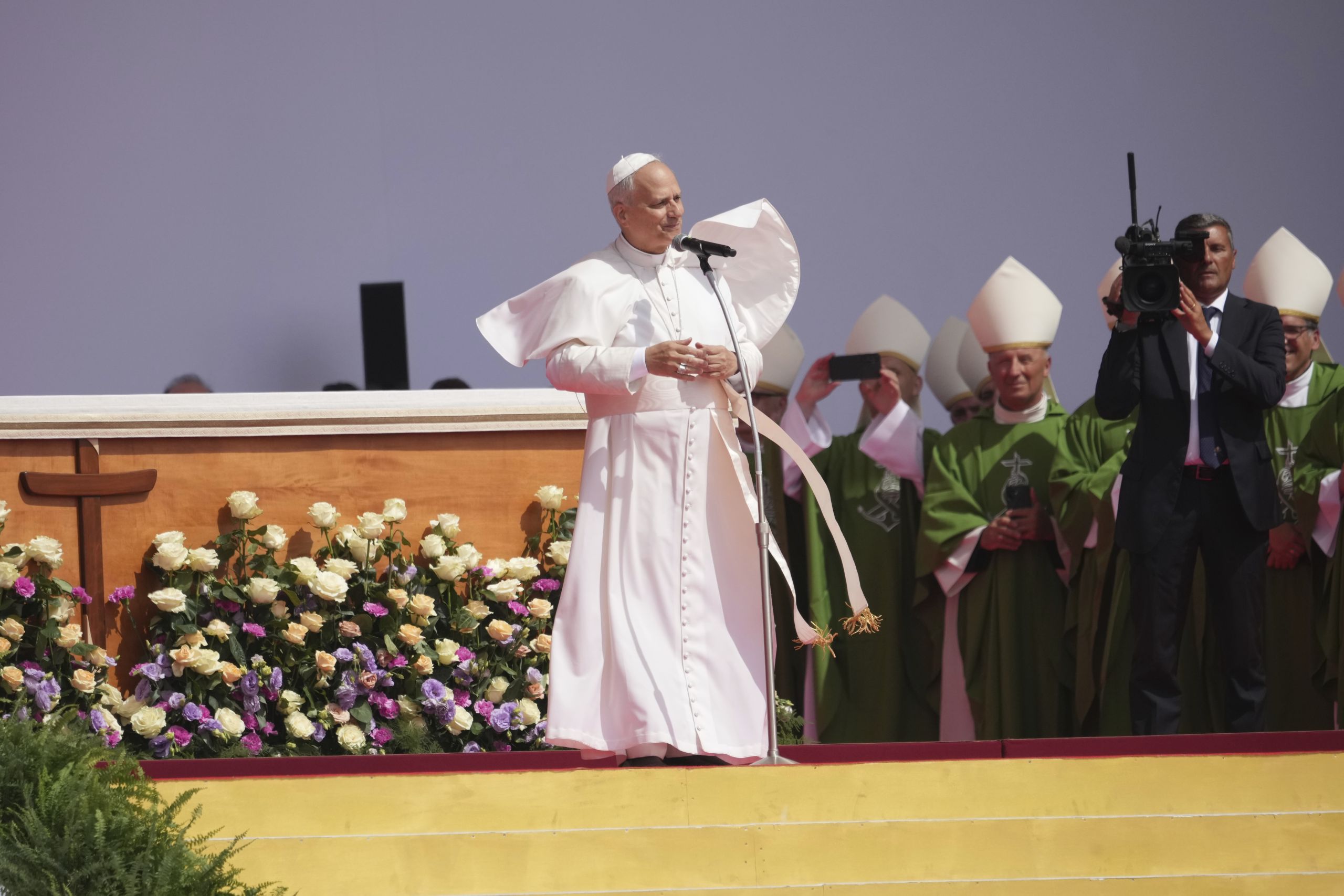
It is not every day that a pope seeks to overhaul a teaching that has stood for over a millennium, yet that is precisely what Pope Leo XIV did last month. In his inaugural encyclical, “Magnifica Humanitas,” the pontiff devoted a brief but pointed passage to just war theory.
Though the document focused mainly on protecting human dignity in the age of artificial intelligence, Leo used part of it to break with a foundational principle of Catholic thinking on conflict. He labeled the theory outdated and made clear that, in his view, it has been twisted for decades to justify wars, most recently the conflict in Iran.
What Just War Theory Actually Holds
To understand the significance of Leo’s stance, it helps to understand the doctrine he is questioning. Just war theory sets strict conditions that a war must meet to be considered morally legitimate. Among them:
- It should be waged in self-defense, and only after all alternatives have been exhausted.
- The use of force must be proportional to the threat.
- There should be a reasonable likelihood of success.
- The threat being confronted must be imminent.
The framework was largely developed by St. Augustine in the 5th century and later elaborated by St. Thomas Aquinas in the 13th century. Since at least World War II, several popes have criticized world leaders for using the theory as a convenient cover for conflicts that did not truly meet its standards.
Iran in the Background
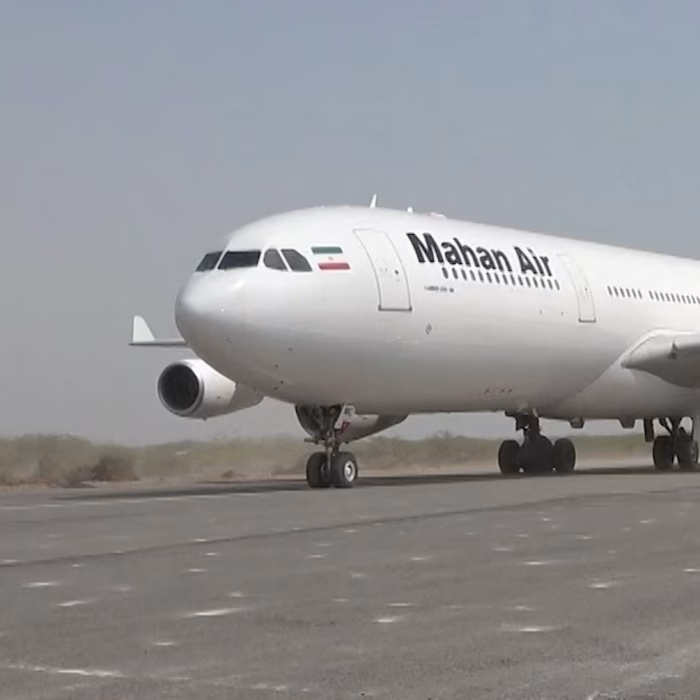
While Leo did not name a specific war in the encyclical itself, his focus on Iran was unmistakable. On June 6, while traveling to Madrid, he was asked whether a just war was being waged in Iran. His response was direct, stating that the criteria for a just war were not present in that conflict.
He went further, observing that just war theory dates back to centuries when it was impossible to imagine the weapons and destructive capacity available to humanity today. The implication was clear: a framework built for an earlier era may no longer fit the realities of modern warfare.
A Pope Uniquely Suited to the Task
For an institution generally resistant to change, the notion of rewriting the teaching of a revered saint might strike some as radical, even unorthodox. Yet few popes could be better positioned for the task than Leo.
He is a former head of the religious order named for Augustine, was taught by Augustinians beginning in his teenage years, and wrote his dissertation on the order’s governance. That deep grounding in Augustinian thought lends a particular authority to his willingness to revisit Augustine’s most influential ideas about war.
Ruling Out War Rather Than Redefining It
Notably, Leo did not propose a new framework for justifying war. Instead, his encyclical preserved the right to self-defense in the strictest sense while all but ruling out war’s broader legitimacy.
He argued that humanity now possesses far more effective tools for promoting life and resolving conflicts, naming dialogue, diplomacy, and forgiveness. The use of force and weapons, he wrote, reflects a kind of relational poverty that consistently brings disastrous consequences for civilian populations.
Building on His Predecessors
Leo’s critique echoes concerns raised by recent popes. In his 2020 encyclical “Fratelli Tutti,” Pope Francis observed that nearly every war in recent decades had been ostensibly justified, even when it was not truly just. Francis warned that war can easily be chosen by invoking humanitarian, defensive, or precautionary excuses, sometimes even through the manipulation of information.
Leo, however, has pushed the argument further by connecting it to emerging technology.
The Artificial Intelligence Dimension
A central thread of Leo’s reasoning is that the age of artificial intelligence undermines the moral criteria for a just war. He argued that only humans are capable of making genuine moral judgments, and that autonomous weapons systems make war more feasible while placing it further beyond human control.
This, he contended, violates the principle that armed force should be used only as a last resort in cases of legitimate self-defense. His conclusion was blunt: machines should not be making decisions about war.
A Public Clash With Washington
The pope’s views have already intersected with American politics. On April 10, Leo posted on his official account that God does not bless any conflict, adding that a disciple of Christ, the Prince of Peace, is never on the side of those who once wielded the sword and now drop bombs.
Vice President JD Vance, who is Catholic, initially pushed back, citing just war theory during a college speech and noting that reasonable people can disagree about whether a particular conflict is just. Later, however, at a commencement address at the U.S. Air Force Academy, Vance softened his stance, praising the encyclical and its call to update just war principles in light of new warfare technologies.
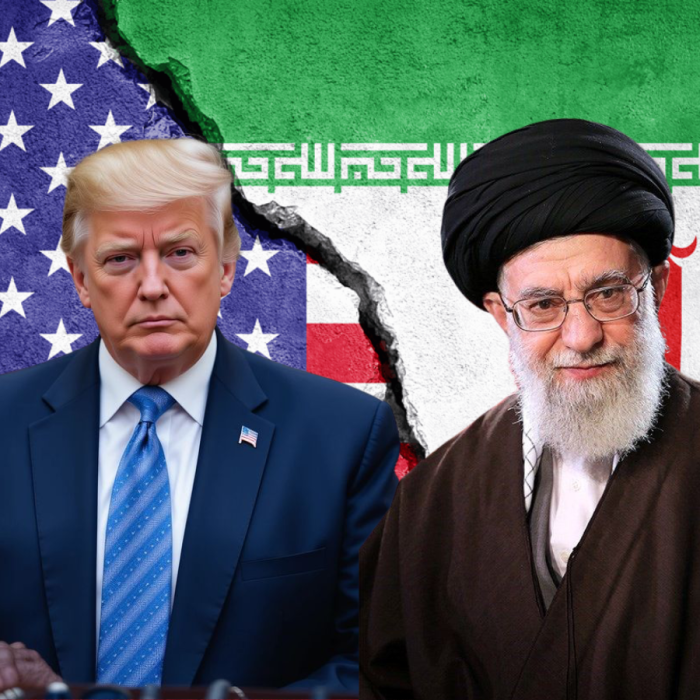
At the heart of the church’s critique of the Trump administration’s approach to Iran is the charge that it offered contradictory and shifting justifications for the conflict. While some arguments invoked just war elements, such as an imminent nuclear threat, Leo and his allies maintain that war cannot be justified without first exhausting dialogue, diplomacy, and forgiveness.
What Comes Next at the Vatican
The future of just war teaching is set to be a leading topic at a consistory, or gathering of the pope’s cardinals, at the Vatican. According to Vatican News, the meeting will take up the question directly.
The author argues that the cardinals should not hold back, contending that the moment demands new guidance rather than mere discussion. With artificial intelligence increasingly automating battlefield decisions, the church, drawing on millennia of moral reasoning and a presence in virtually every conflict zone, is seen as uniquely positioned to articulate a new framework on the ethics of war.
The Bottom Line
According to this perspective, the solution Leo and his predecessors are reaching for is deceptively simple: a return to Christian roots grounded in the conviction that war is fundamentally at odds with the Gospel of Jesus Christ. Whether the Vatican formally reshapes a teaching that has endured since the time of Augustine remains to be seen, but Pope Leo XIV has made clear he believes the moment for change has arrived.
The views described here reflect the argument of the original opinion piece, written by a former executive editor of The National Catholic Reporter. Just war theory and the morality of specific conflicts remain subjects of genuine debate among theologians, ethicists, and Catholics themselves, and people of good faith hold a range of views on these questions.
Author