Three Australian Women Face Slavery and Terrorism Charges After Returning From Syria
A long-running and politically charged saga reached a dramatic moment this week, as three Australian women Syria charges shook the country. The women — recently returned from the Roj camp in northeast Syria — were refused bail in court on Friday after being hit with serious slavery and terrorism-related allegations linked to the Islamic State group.
The arrests have reignited intense debate in Australia about national security, repatriation, and how the country should handle citizens who lived under ISIS rule.
A Group With ISIS Links Lands on Australian Soil
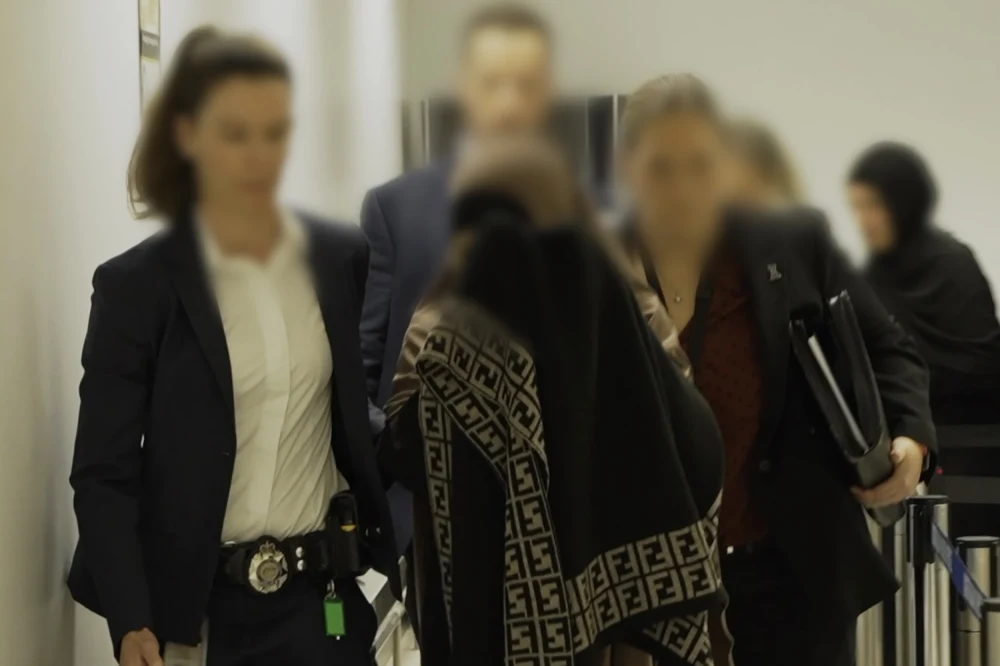
The three women were part of a larger group of four women and nine children who flew into Australia on two Qatar Airways flights from Doha on Thursday. All of them had spent years inside Roj camp, a sprawling detention facility in northeast Syria, near the Iraqi border.
The camp houses mostly women and children displaced from former Islamic State strongholds — many of them either accused of supporting ISIS or related to fighters who once served the so-called caliphate.
Australian authorities had warned for months that anyone returning from Syria could face criminal charges. That warning, it turns out, was no bluff.
Mother and Daughter Charged in Melbourne
Two of the most serious cases involve a mother-daughter pair charged in a Melbourne court:
- Kawsar Abbas, 53
- Zeinab Ahmed, 31
Police allege their family bought a Yazidi woman as a slave for $10,000 while living inside ISIS-controlled territory. The woman, according to investigators, was kept in the family’s home.
Authorities allege that Abbas, her husband, and their children travelled to Syria in 2014, when ISIS controlled large swathes of the region and was rapidly expanding its self-declared caliphate.
The charges they now face include:
- Kawsar Abbas: four counts of crimes against humanity under Australian law
- Zeinab Ahmed: two slavery offences
Each charge carries a potential maximum penalty of 25 years in prison.
Neither woman spoke during their brief court appearance, and bail was formally denied. Their lawyers said they would seek bail again on Monday.
The pair were originally captured by Kurdish forces in March 2019 and have spent the last several years in Roj camp with other family members.
Sydney Arrest: Terrorism Charges for Janai Safar
In a separate but connected case, Janai Safar, 32, was arrested at Sydney Airport upon her return.
She was charged with:
- Being a member of a terrorist organisation
- Entering or remaining in a region controlled by a terrorist group
Each charge carries a potential maximum sentence of 10 years in prison.
When Safar applied for bail in a Sydney court via video link from prison, the judge refused. Her lawyer argued that “exceptional circumstances” justified her release, citing concerns that:
- Safar may be suffering from PTSD
- Her 9-year-old son may also be suffering from trauma
- The boy knows no one else in Australia
Police allege Safar travelled to Syria in 2015 to follow her ISIS-fighter partner, who reportedly died there in 2017. While in Syria, she gave birth to a child.
Between 2014 and 2017, Australian law made it illegal to travel to Raqqa — a former ISIS stronghold — without a legitimate reason.
A Government With No Sympathy for the Parents
The political response has been swift and unforgiving. Prime Minister Anthony Albanese addressed the situation on Friday, expressing concern for the children but rejecting any sympathy for the adults involved.
“I have absolutely zero sympathy for these people,” Albanese said. “I do have sympathy for the children, who are victims of decisions that their parents have made.”
He emphasised that the children — many of whom have been raised in or scarred by life in detention camps — deserve protection, support, and care, regardless of what their parents may have done.
The Australian government has long taken a hard line on this issue:
- It has condemned travel to ISIS-held areas
- It has refused to actively help repatriate adults linked to the group
- It has charged returning citizens when warranted
But the government has also drawn a clear line when it comes to children, treating them as victims rather than suspects.
A Decade of Investigations
Australian police have been investigating the country’s citizens linked to atrocities in Syria for more than a decade. The terrorism charges and slavery allegations announced this week reflect years of intelligence work, including:
- Tracking the movements of Australians who travelled to Syria
- Building cases through Kurdish authorities and international partners
- Examining alleged crimes against minorities like the Yazidis
- Coordinating with global counterterrorism agencies
The Yazidi community, in particular, suffered horrific abuses under ISIS rule, including mass killings, forced displacement, and the systemic enslavement of women and girls. Australia’s willingness to pursue crimes-against-humanity charges signals how seriously it intends to address those atrocities — even years after the caliphate’s fall.
More Repatriations Could Be Coming
The 13 returnees who arrived this week may not be the last. Around 21 Australian women and children remain at Roj camp, and supporters say efforts to bring them home are likely to continue in the coming weeks.
However, repatriation isn’t guaranteed for everyone. One woman among that group is banned from returning to Australia by a temporary exclusion order, a measure introduced in 2019 to prevent defeated ISIS fighters from re-entering the country.
Key facts about exclusion orders:
- They can keep high-risk citizens out for up to two years
- They cannot be applied to children under 14
- Australia has ruled out separating children from their mothers
- Public records show no previous use of such an order before this case
The orders were designed to address exactly the kinds of risks now playing out in real time.
The Bigger Debate: Security vs. Humanity
This case has reignited a difficult, long-running debate in Australia, one that many countries are also wrestling with:
- Should governments help bring back citizens who joined or supported ISIS?
- How can authorities protect children without exonerating adults?
- What’s the right balance between justice and humanitarian concern?
- How can intelligence agencies guard against radicalisation among returnees?
Past Australian governments have repatriated women and children from Syrian camps on two prior occasions, while others have returned independently. With more potential returnees on the horizon, this issue is unlikely to fade from headlines anytime soon.
Final Thoughts
The Australian women Syria charges represent more than just a domestic legal story — they reflect the long, complicated aftermath of one of the most brutal terrorist movements of the 21st century. With slavery, terrorism, and crimes-against-humanity charges now in play, the courts are about to confront some of the toughest questions Australia has faced in years.
For the children caught in the middle, however, the focus remains on safety, support, and rebuilding lives shattered by adult choices. As the legal process unfolds and more returnees potentially arrive, Australia’s response will shape not only the futures of those involved but also the country’s broader approach to security, accountability, and justice.
Author