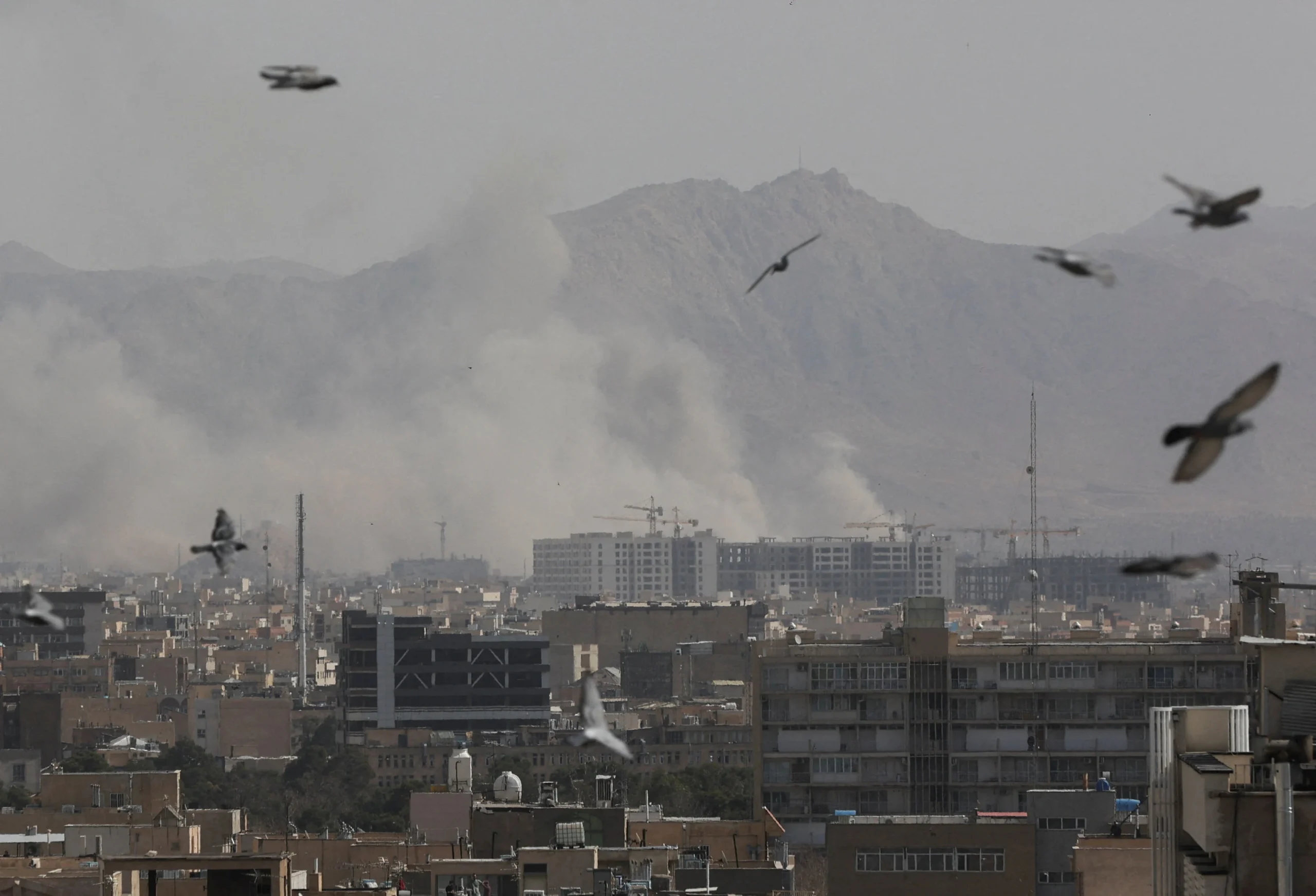
The Strait of Hormuz standoff has settled into a grinding daily exchange of strikes, with the United States and Iran each betting that the other will break first. Neither has.
That stalemate is exposing the limits of President Trump’s central strategy: escalating air attacks until Tehran yields.
Where Things Stand
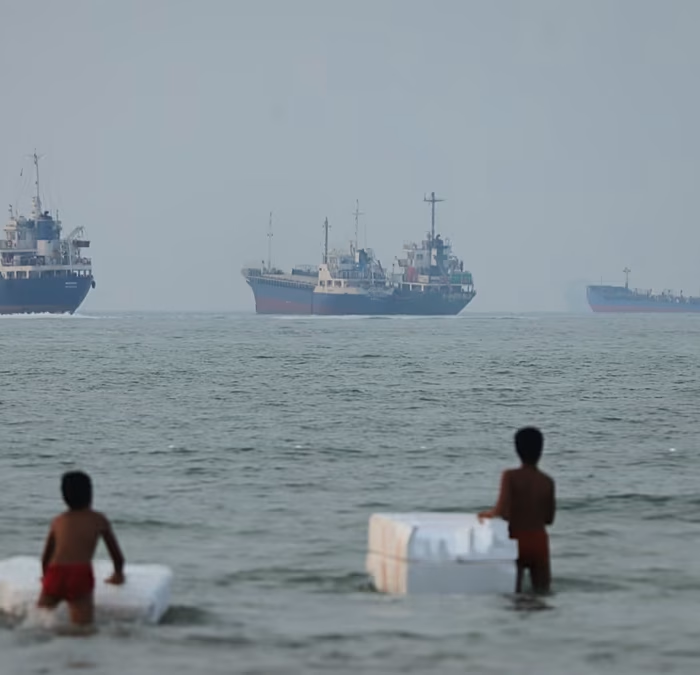
The Trump administration insists diplomacy remains available. Iran, meanwhile, has not loosened its hold on the shipping corridor through which roughly a fifth of the world’s oil normally moves.
The consequences have accumulated quickly. An interim ceasefire has collapsed. More American troops have been killed. Gasoline prices at home have climbed back up, creating a political problem for Republicans heading into the midterms.
Trump has framed his position in stark terms, warning that every time Iran kills an American soldier going forward, Iran will pay for that killing many times over.
A Misreading, Analysts Say
Mona Yacoubian, who directs the Middle East Program at the Center for Strategic and International Studies, described the renewed escalation as reflecting a fundamental misreading of the Iranian psyche and a failure to learn from earlier rounds of fighting.
She characterized the dynamic on both sides as a shared bet that doubling down militarily will break the deadlock and force the other party to relent.
The risk she identified is straightforward: the more escalatory things become, the harder it gets to grab any diplomatic opening that might appear.
Washington’s Stated Position
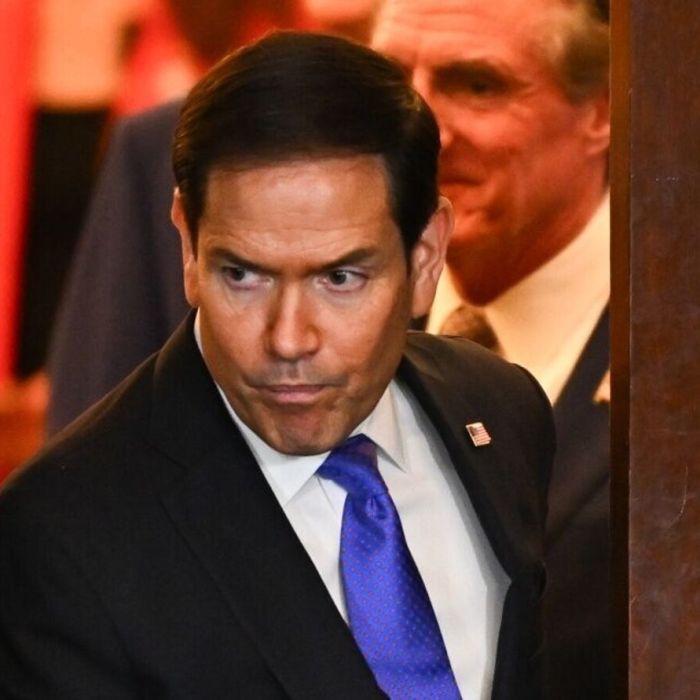
Secretary of State Marco Rubio told reporters Sunday night that the United States remains open to negotiating.
He said Iran keeps sending signals about wanting to talk, but that the American response is driven by Iranian behavior, which currently consists of launching missiles and drones at ships in the strait.
Rubio said the United States always remains open to a diplomatic solution, has tried multiple times with Iran, and will keep trying. If that door opens, he said, Washington would be glad to see it.
A US official, speaking anonymously because they were not authorized to comment, described Trump’s focus more narrowly: making Iran pay for the recent American deaths, for violations of last month’s interim agreement, and for attacks on shipping.
The same official said strikes will continue until Trump decides otherwise, while talks would proceed in parallel.
No Visible Off-Ramp
Outside observers are less convinced there is a plan.
Alan Eyre, a former US diplomat involved in earlier nuclear negotiations with Tehran and now a fellow at the Middle East Institute, put it bluntly. He said the administration is flustered and lacks a coherent, consistent strategy for extracting itself from what he called a quagmire.
What Air Power Can and Cannot Do
Several analysts pointed to the structural limits of the current approach.
Christopher Preble of the Stimson Center said the conflict has demonstrated what happens when a country relies solely on air power. He also noted the alternative is politically unavailable, since committing ground troops would face broad opposition among Americans and in Congress.
His summary of the impasse was almost mathematical: Trump can keep bombing, and Iran can keep the strait closed, or closed well enough.
David Schenker, a former official in the first Trump administration now at the Washington Institute for Near East Policy, said the current strikes on Iranian infrastructure essentially repeat what was done in the war’s opening weeks, which failed to produce capitulation.
He offered a number that lands hard. The United States hit 13,000 targets in the first six weeks of the war, and Iran did not take a knee.
The Vietnam Comparison
Retired Air Force Secretary Frank Kendall, who served under President Biden, reached back to earlier conflicts.
He said Vietnam among others showed what air power cannot accomplish alone, and that it generally has to be paired with ground operations, sometimes naval operations, and in the modern era, space capabilities.
Kendall also explained why the target list has grown harder over time.
When the war opened on Feb. 28, American and Israeli forces struck many fixed targets identified beforehand. But Iran had spent years preparing, concealing and dispersing its weapons.
The easy targets, Kendall said, are essentially gone. Ballistic missiles, cruise missiles and small aerial vehicles are all readily hidden, which makes sustained suppression of that threat extremely difficult. That is precisely why Iran can still hit ships in the strait and American bases across the region.
The Trust Problem
Diplomacy faces obstacles of its own.
Eyre argued the administration has shown little appetite for actual diplomacy, leaning instead on close advisers with thin international relations backgrounds while outsourcing portions of the effort to mediators including Qatar, Pakistan and Egypt.
He allowed that negotiations could theoretically work but described the road as tough, with the core obstacle being the near-total absence of mutual confidence. So little bilateral trust exists, he said, that everything becomes harder.
Small Signals Worth Noting
Both Schenker and Yacoubian detected some openness in recent statements from Trump, Rubio and their Iranian counterparts.
Yacoubian pointed to two developments in particular:
- The measured response from Trump and Defense Secretary Pete Hegseth to the recent killing of US service members in Jordan
- Iran’s release last week of an Iranian-American woman who had been barred from leaving the country
Both suggest, in her reading, that an off-ramp might still exist.
The Development That Could Erase Them
Those signals could be overtaken quickly.
Yemen’s Iran-backed Houthi rebels announced Monday a maritime embargo targeting Saudi Arabia. If that expands into a full shutdown of the Bab el-Mandeb Strait, Yacoubian said, it would amount to a perfect storm of disruption for an already fragile global economy.
That scenario would close the last practical alternative route for Gulf oil exports, compounding the damage from Hormuz rather than merely adding to it.
The Underlying Problem
Strip away the daily strike reports and the shape of the conflict is simple.
The United States has the capacity to bomb indefinitely without forcing a decision. Iran has the capacity to disrupt shipping indefinitely without needing to win anything. Both sides are absorbing costs they consider tolerable while inflicting costs the other considers survivable.
That is not a war moving toward resolution. It is two positions hardening while the exit narrows.
Author