An Israeli settler siege in the West Bank has drawn an unusually blunt condemnation from the United States, with Ambassador Mike Huckabee describing the settlers’ conduct as an act of terror — language rarely applied by an American official to Israeli citizens.
The intervention appears to have moved Israeli forces to act.
How the Siege Began
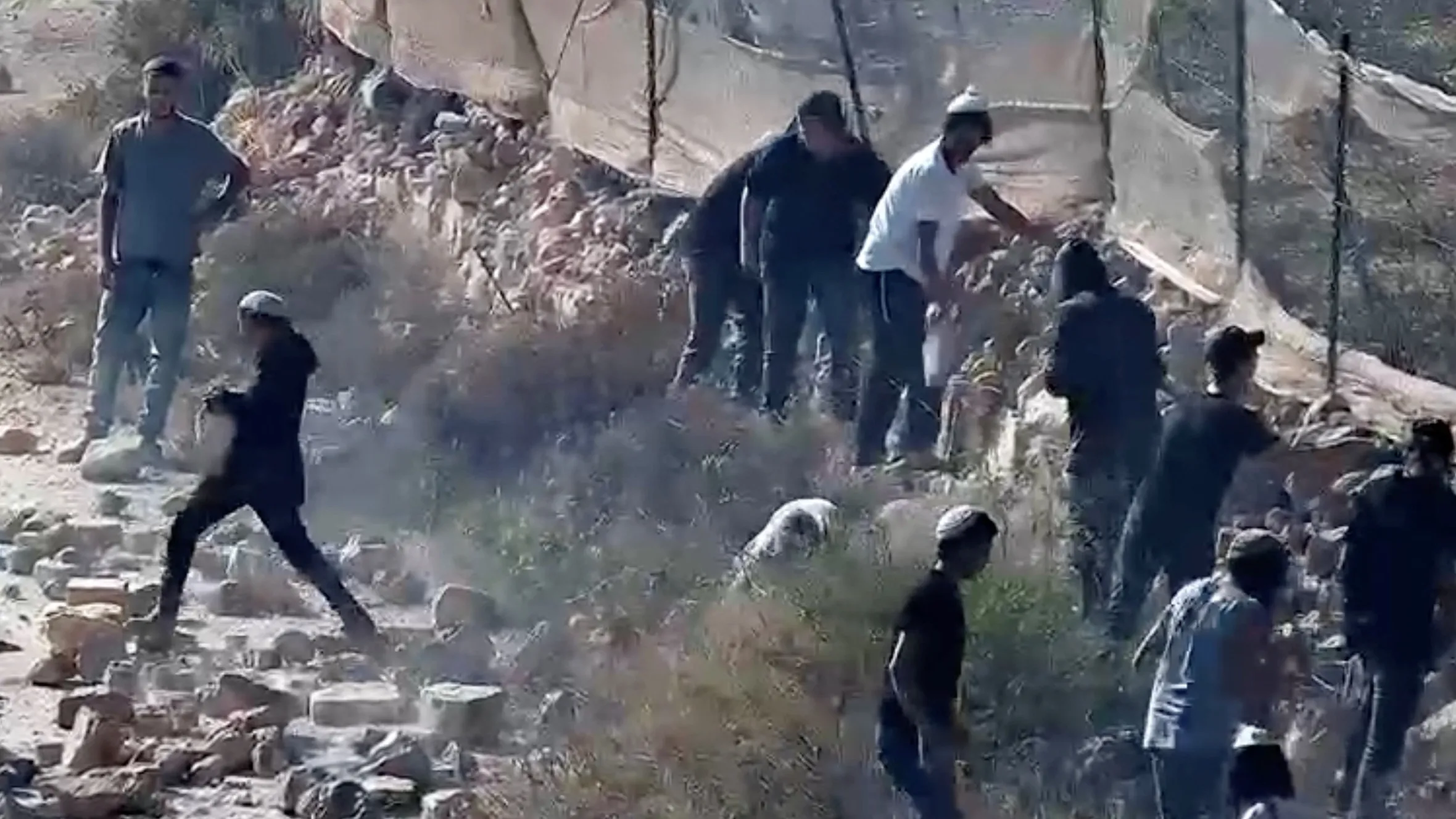
In the village of Qusra, settlers converted a Palestinian home into something closer to a cell.
They built brick by brick, sealing off the only access road. Water and power were cut. Families living nearby found themselves trapped alongside the household at the centre of it.
Security camera footage captured dozens of settlers swarming a house constructed by a Palestinian-American. Inside were Qusai Ridi and his teenage son, Ahmed.
The siege did not lift at nightfall. Settlers remained outside overnight, and their presence pushed much of the surrounding village to flee.
A Warning Written in Ash
The confrontation did not arrive without precedent. Roughly two and a half weeks earlier, settlers set fire to the village mosque, gutting the interior.
On the blackened exterior they left a message declaring that the land of Israel is redeemed with blood, followed by a single word: revenge.
A Family That Left
Ruqaya Hassan, 28, fled with her daughters. Her husband stayed behind in an attempt to protect their home.
Speaking through an interpreter, she described nights broken repeatedly by the sound of stones striking the house — a noise she compared to gunfire.
The effect on her children was immediate and lasting. Her daughters were consumed by fear and panic while trapped inside. One has become so frightened that she will no longer use the toilet alone, afraid settlers might appear.
The Scale of the Problem
United Nations figures place settler violence at levels without precedent.
This year alone has produced more than 1,400 recorded incidents across 260 communities. The consequences include:
- More than 3,800 Palestinians displaced
- More than 75 Palestinians killed
Those numbers describe a pattern rather than a series of isolated confrontations.
Israel’s Public Position
Israeli leaders have offered a markedly different characterisation.
Speaking on CNN last month, Prime Minister Benjamin Netanyahu put the number of settlers involved in violence at roughly 150, describing them as juvenile delinquents. He also argued that Palestinians attack Israelis in the occupied West Bank, and Israeli officials cite more than 300 such attacks during May alone, noting that dozens of settlers have been arrested.
Netanyahu did pledge to reduce settler crime, stating that he neither wants nor accepts vigilantism regardless of whether it comes from Arabs or Jews, and that citizens cannot use violence against anyone.
At the United Nations this week, Israel’s government took a more assertive line on the territory itself. Ambassador to the US Danny Danon declared that Israel is not going anywhere and rejected the term settler outright, insisting Jews have never been and never will be settlers in the area he referred to by its biblical names, Judea and Samaria. He characterised those committing violence as a tiny fraction of residents.
The Question of State Involvement
Palestinians argue the distinction between settlers and the state is thinner than officials suggest.
Last weekend, outside the Ridi family home, an Israeli soldier was observed joining settlers in prayer.
The Israel Defense Forces responded on Tuesday with a statement vowing that any soldier involved would face disciplinary action. The same statement described settler seizure of land as illegal, reprehensible and unacceptable activity that harms residents and disrupts their daily lives.
That language is notably strong. It also sits uneasily alongside the continued presence of settlers on the ground.
The American Intervention
By Thursday the IDF had fired tear gas at the settlers, yet the family remained besieged.
That night, Washington intervened. Huckabee issued a rare rebuke, labelling those responsible Israeli terrorists and calling their actions a horrific act of terror intended to intimidate and harass the family, describing the conduct as disgusting.
An American ambassador applying the word terror to Israeli civilians represents a significant departure from standard diplomatic practice — and it produced results within hours.
What Changed on the Ground
The following morning, Israeli soldiers evacuated the Ridi family, who have since returned to their home.
The IDF said it is reinforcing the area with an additional battalion and has dismantled nearby settler outposts, which are illegal under Israeli law.
But video supplied by the Ridi family the same day showed settlers still moving around outside the house.
What the Episode Reveals
Several things emerge clearly from this sequence.
Israeli institutional statements condemning settler activity exist and use forceful language. The gap lies between those statements and enforcement on the ground, where outposts persist and sieges continue until external pressure arrives.
American influence, when exercised directly and publicly, produces rapid movement. That fact cuts both ways — it demonstrates leverage, and it raises the question of why the leverage is applied so rarely.
And for the families involved, the resolution remains partial. The Ridis are back in their home. The settlers have not left the area. The mosque is still burned, and the message on its wall is still legible.
Author
-
Lucienne Albrecht is Luxe Chronicle’s wealth and lifestyle editor, celebrated for her elegant perspective on finance, legacy, and global luxury culture. With a flair for blending sophistication with insight, she brings a distinctly feminine voice to the world of high society and wealth.