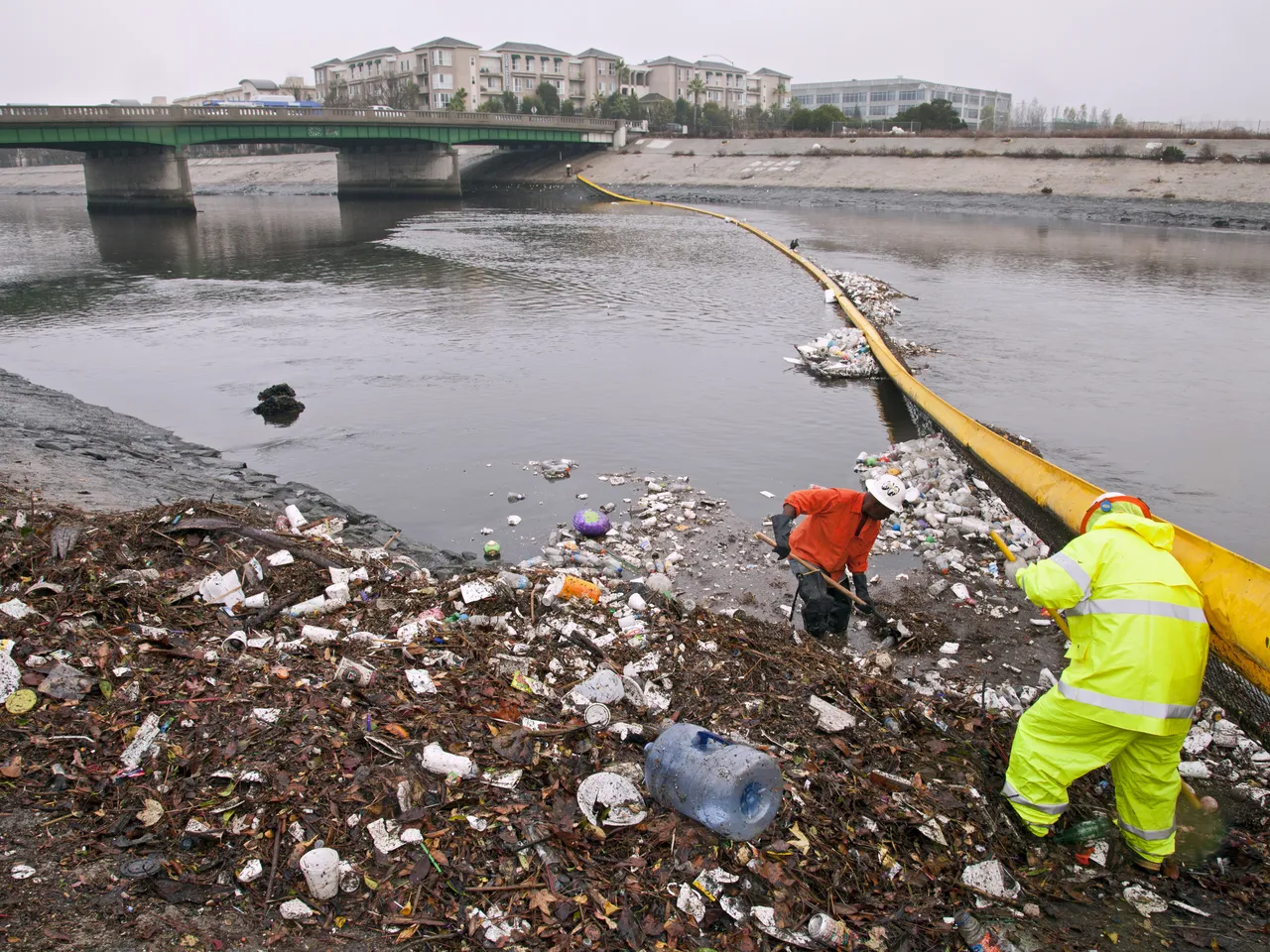
The California plastics law has landed in court, caught in an unusual crossfire. One group of lawsuits claims the law goes too far, while another insists it doesn’t go nearly far enough. Now fully in effect after launching last month, the sweeping legislation finds itself attacked from opposite ends of the political and environmental spectrum.
A Law That Once Had Broad Support
When California passed these plastics restrictions back in 2022, the law was celebrated as some of the most ambitious in the nation. Environmentalists praised it, and even some industry groups signed on at the time.
That early consensus has since fractured. With the law now active, opposition has surged from other states, a major business group, and even some of the environmental advocates who once supported similar goals.
At its core, the law requires manufacturers to make products like shampoo bottles and food wrappers using less plastic, while also demanding that plastic products be recycled at higher rates.
The States That Say It’s Too Strict
This week, a coalition of 17 states sued California, arguing the law amounts to overreach that will drive up the cost of goods well beyond California’s borders. The plaintiffs include Texas, Florida, and Georgia.
Their concern hinges on a familiar dynamic: California often sets the standard for the rest of the country. That happens both because other Democratic-leaning states tend to follow its lead and because the state’s market is simply too large for manufacturers to ignore. The classic example is California’s strict vehicle emissions standards, which have effectively shaped what carmakers build nationwide for decades.
In their complaint, filed Monday in the U.S. District Court for the Eastern District of California, the states argue that the law reflects California’s unique environmental preferences, ones they say clash with the priorities of many other states. They warn the law will force revolutionary and costly changes on producers, expenses that will ultimately be passed down to consumers buying everyday necessities.
Nebraska Attorney General Mike Hilgers, who is leading the lawsuit, accused California of once again pushing a policy that harms the rest of the country. The plaintiffs, which include the National Association of Wholesaler-Distributors, are asking a judge to immediately block enforcement. The group’s chief executive, Eric Hoplin, argued that California is not entitled to dictate nationwide policy.
The Environmentalists Who Say It’s Too Weak
On the opposite side, environmental groups sued California earlier this month for a completely different reason. They argue that state officials have watered down the law through loopholes that blunt its effectiveness.
To understand the complaint, it helps to look at what the law actually requires. The benchmarks include:
- By January 2027: Producers must cut the amount of plastic in packaging by 25 percent, whether by shrinking package sizes, switching materials, or making products reusable.
- By 2030: The recycling rate for single-use plastics must reach 40 percent.
- By 2032: All packaging must be either recyclable or compostable.
Environmental advocates note that reducing plastic production lowers greenhouse gas emissions and keeps waste out of landfills. But they contend that the specific regulations written to implement the law undercut its ambitions.
A key sticking point is pyrolysis, a process that breaks down plastic at high temperatures. The regulations count pyrolysis as a form of recycling, even though, according to the groups’ complaint, only a tiny fraction of the plastic processed this way actually becomes new plastic. Tara Brock, legal campaign director with the ocean conservation nonprofit Oceana, added that pyrolysis also generates a significant amount of hazardous waste. Oceana joined the Natural Resources Defense Council and the Californians Against Waste Foundation in the lawsuit.
These groups allege that the recycling rules conflict with what the law was meant to accomplish when Governor Gavin Newsom signed it in 2022.
Why the Stakes Reach Beyond California
Brock framed the issue as a matter of national importance. She argued that California bears a special responsibility to get this right because other states may eventually follow its lead. As the fourth largest economy in the world, she said, California sits at the forefront of environmental policy and needs to implement these rules forcefully to set a strong standard for the country.
That argument cuts both ways. The very influence that worries the 17 states challenging the law is the same influence environmentalists want California to wield more aggressively.
California’s Department of Resources Recycling and Recovery, the agency overseeing how the law is carried out, declined to comment on the ongoing litigation.
A Law Pulled in Two Directions
The dual lawsuits leave California defending its plastics law on two fronts at once, accused simultaneously of regulatory overreach and of caving to industry. How the courts resolve these competing claims could shape not only the future of plastic regulation in California but also the direction other states take in the years ahead. For now, a landmark environmental law sits in legal limbo, its ultimate scope and survival uncertain.
Author