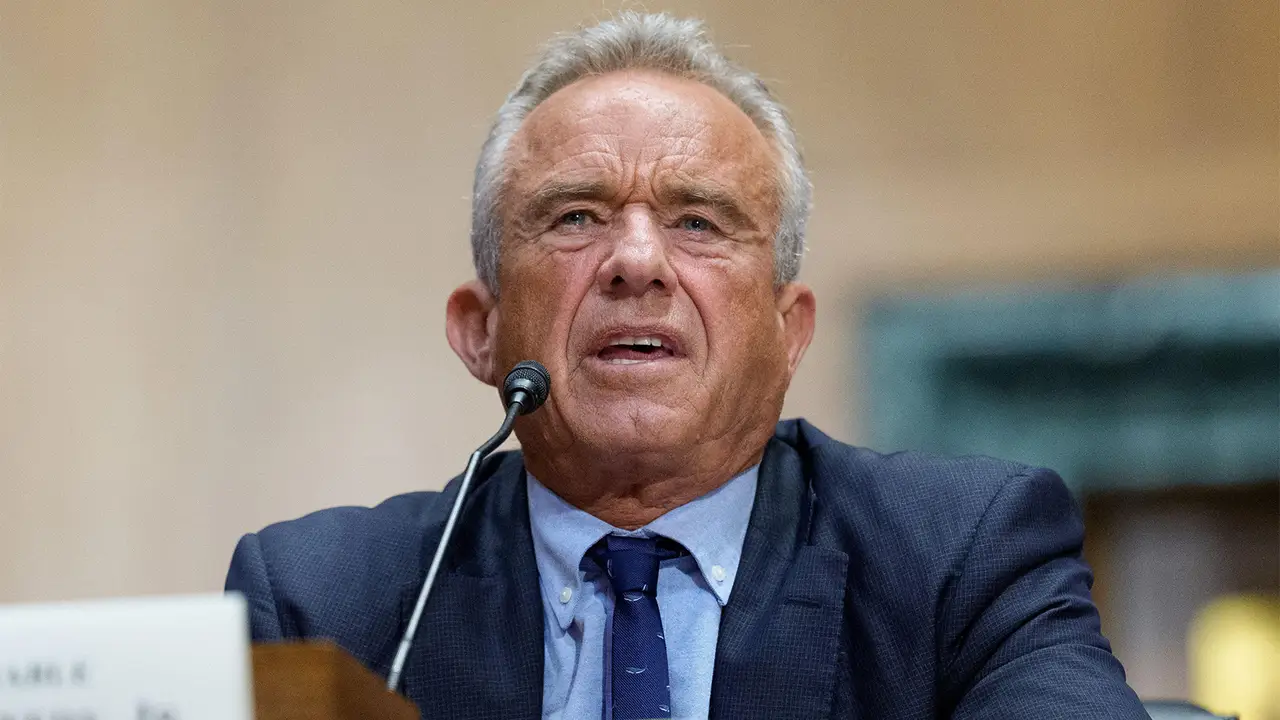
The relationship between the AMA and RFK Jr. has reached a breaking point. At the American Medical Association’s annual meeting in Chicago this week, the nation’s most powerful doctors’ lobby signaled it is done playing nice with Health Secretary Robert F. Kennedy Jr., even if standing up to him carries a financial cost.
The message from the group’s House of Delegates was blunt: stop softening the criticism and start confronting Kennedy directly.
A Telling Election
Nothing captured the shift more clearly than the choice of the AMA’s next leader. Members elected Sandra Fryhofer, an Atlanta internist and outspoken Kennedy critic, as president-elect. She defeated Michael Suk, who as board chair had emphasized protecting doctors’ Medicare fees and pledged to keep dealing with Kennedy through pragmatism.
Fryhofer framed accommodation as a betrayal of physicians’ moral obligations. She had advised the vaccine committee whose members Kennedy dismissed last year, and she made her stance unmistakable.
In a rallying message to members, she listed a litany of grievances: measles spreading unchecked, public health institutions gutted, a trillion dollars pulled from Medicaid, inadequate physician pay, and immigration policies she dismissed as senseless. Her promise was to call out Kennedy and the Trump administration on every front.
A Profession at the End of Its Patience
Conversations with roughly two dozen AMA physicians this week revealed an organization deeply frustrated with Kennedy. Doctors, historically a Republican-leaning group, began drifting leftward decades ago during fights over managed care. For many, Trump’s alliance with Kennedy, a longtime vaccine-safety skeptic and critic of mainstream medicine, was the final breaking point.
Under outgoing President Bobby Mukkamala, the AMA had taken a mixed approach. It criticized Kennedy at moments, praised him at others, and tried to steer him away from undercutting the group’s influence over Medicare fee-setting while courting him as an ally against insurers.
Fryhofer dismissed that posture as far too quiet and timid.
Other Groups Lead the Fight
The AMA’s restraint has stood out against more aggressive peers. The American Academy of Pediatrics took the lead in challenging Kennedy and persuaded a federal judge in March to halt his rewrite of the vaccine schedule. The AMA was not a plaintiff in that case, though it backed the pediatricians with a supporting brief.
By elevating Fryhofer, the AMA’s leadership, speaking for more than 320,000 physicians nationwide, signaled that financial concerns are increasingly taking a back seat. The timing matters, with Kennedy moving to shrink the vaccine schedule and Republicans cutting Medicaid spending for low-income Americans.
Former board member Mario Motta warned that around 20 million people stand to lose coverage under the Medicaid cuts, acknowledging he sounded like Bernie Sanders but insisting the problem was real. He added that most delegates want a more progressive and active organization. Another committee member predicted a full-scale advocacy push reminiscent of the AMA’s 2017 campaign against the GOP’s failed attempt to repeal Obamacare.
Cracks With Republican Allies
The AMA’s ties to Capitol Hill Republicans had already started fraying. Senate Health Committee Chair Bill Cassidy, himself a gastroenterologist, has attacked the AMA’s control over medical billing codes, calling it a price-inflating monopoly. The AMA rejects that characterization. His likely successor, Senator Roger Marshall, an OB/GYN, has voiced similar frustrations.
These tensions complicate the AMA’s annual battles over physician payment, where it has long relied on Republican partners.
Mukkamala’s Delicate Balancing Act
Mukkamala spent his term trying to weigh his members’ competing interests alongside CEO John Whyte, who shapes the group’s strategy. After a rocky start, he managed to reach an uneasy truce with Kennedy.
The détente didn’t come easily. Even before taking office, Kennedy had eyed ways to dismantle the AMA’s role in the committee that helps determine Medicare payments. A report from his Make America Healthy Again Commission accused physicians of overprescribing under pharmaceutical influence and failing to address the root causes of disease. For a time, Mukkamala couldn’t even land a meeting.
His opening came in January. Two days after the AMA condemned Kennedy’s sudden overhaul of the childhood vaccine schedule, Mukkamala seized on Kennedy’s push to revise national dietary guidelines as common ground.
The AMA praised the new guidelines, which encouraged Americans to eat more meat, drink milk, and consume more vegetables. It pledged to expand nutrition education and champion Kennedy’s food agenda in Congress, including efforts to define ultraprocessed foods and broaden food labeling, both opposed by manufacturers.
That goodwill earned Mukkamala an invitation to Kennedy’s announcement, where the two exchanged compliments over their suits and posed for a thumbs-up photo. Mukkamala recounted the friendly small talk, telling Kennedy that while they disagreed on vaccines, they could agree on nutrition.
For Mukkamala, the moment represented a hard-won seat at the policy table. Many members saw it as appeasement.
A Leadership Transition in Limbo
The AMA’s pragmatists now have a window to argue for continued diplomacy. Fryhofer, who branded Kennedy the “anti-vax HHS secretary” and regretted that the AMA didn’t fight his confirmation, won’t take office until next summer.
In the meantime, incoming president Willie Underwood III leads the group. His instincts don’t neatly align with Kennedy or Trump. Described as a charismatic urologist with a sharp wit, Underwood earned respect by demanding early action on Medicaid cuts. Health equity is his signature cause, and in his inaugural speech he urged doctors to serve the most vulnerable, pointing to structural failures that block families from basic care.
Competing Priorities
Mukkamala used his farewell address to highlight the AMA’s opposition to Trump’s Medicaid cuts, though some doctors grumbled that the group spoke up only as the legislation neared passage. Whyte, meanwhile, previewed a renewed focus on public health.
Throughout the year, leadership prioritized Medicare fees. The same legislation that slashed Medicaid also raised physician Medicare pay, yet doctors worry another cut looms next year. Whyte’s ties to Mehmet Oz, the famous-doctor-turned-Medicare official, drew scrutiny when Oz was invited to speak at an AMA meeting. Talk of a protest fizzled into quiet disapproval.
The AMA has also leaned on Representative Greg Murphy, chair of the GOP Doctors Caucus, who has repeatedly pressed House leaders to prioritize physician payment reform. He called such reform nonpolitical and praised the AMA’s advocacy. His caucus notched a win when a House committee advanced a bill to more permanently address declining Medicare reimbursements.
Not everyone welcomes the leftward drift. Some veteran physicians and red-state associations worry about alienating reliable allies. A Florida plastic surgeon and former state medical leader complained that while the AMA is progressive on public health, it isn’t doing enough for rank-and-file doctors.
Defending the Record
Mukkamala pushed back hard against the criticism, insisting his approach was never silent. He pointed to repeated statements raising concerns about Kennedy’s vaccine policies and noted that polls show Americans trust the AMA’s vaccine guidance over the government’s. The group is now launching its own initiative to review vaccine safety.
Many frustrated doctors said they sympathized with leadership, caught between a divided membership and a hostile administration. Still, pressure from the left mounted all year.
The Transgender Care Flashpoint
Gender-affirming care became another source of internal turmoil. After the Trump administration likened such care to “chemical and surgical mutilation,” and Oz convened doctors’ groups to criticize it, the issue split the profession.
When the American Society of Plastic Surgeons moved to discourage gender-related surgeries for people under 19, the AMA board issued a statement deferring to the surgeons, contradicting its own policy supporting the care. Members revolted. The board chair fielded furious calls and launched what insiders called a reconciliation effort. One leader bluntly described the episode as a disaster.
The fallout left the AMA in an awkward position. At a recent Senate hearing, both Cassidy and ranking member Bernie Sanders claimed the group supported their opposing views on transgender care. One AMA leader said a broad sense had taken hold, well beyond the loud left flank, that the organization’s resolve had grown feeble.
No More Silence
Fryhofer, a polished former television commentator, vowed to speak out against the administration everywhere she goes, even if Republicans retaliate against the AMA’s revenue streams.
She told members the AMA must be ready with top attorneys to fight and win, declaring she would not be silenced. Like her colleagues, she said, she took an oath to protect patients regardless of who holds power in Washington.
That defiant note now defines the AMA’s posture heading into a confrontation it once tried hard to avoid.
Author