Ebola Outbreak in Congo: A Race Against Time and Public Distrust
The Ebola outbreak in Congo has rapidly turned into one of the most dangerous health crises the country has seen in years. With suspected cases approaching 1,000, aid workers in the eastern region face two enormous challenges. The first is a rare and deadly form of the virus known as Bundibugyo Ebola, which has no approved vaccine or treatment. The second is the rising hostility from residents who often respond to outreach efforts with anger, suspicion, and even violence.
Aid Workers Face Stones, Insults, and Threats
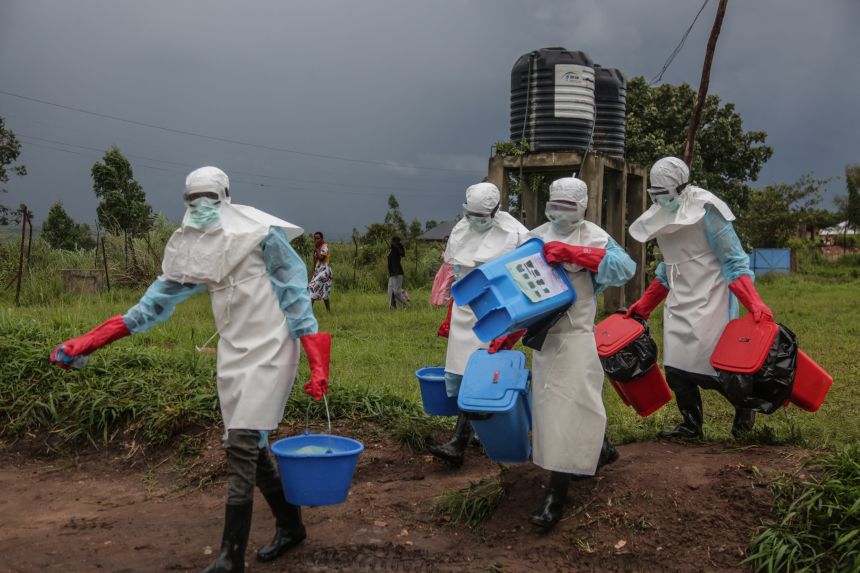
Vanny Birungi, a Red Cross volunteer in eastern Congo, knows these dangers firsthand. Each time she steps into a community to spread awareness about Ebola, she risks being attacked. People in Bunia, the city at the center of the outbreak, have thrown stones at her and shouted abuse, even though she is trying to save their lives.
She told reporters that some residents accept the message, but many refuse to believe that Ebola is real. Despite the daily hostility, she continues to walk through neighborhoods, often in extreme heat, reminding people of the threat they face.
The atmosphere in eastern Congo is already tense due to years of conflict involving armed groups that have killed thousands and displaced even more. For aid workers, navigating both the disease and the unstable environment has become a daily ordeal.
A Population That Has Lost Trust
In communities that have lived through repeated violence, trust is in short supply. Many residents view outsiders, even medical teams, with suspicion. Some openly reject the idea that Ebola exists at all.
One Bunia resident, 56-year-old Pierre Basola, dismissed health workers entirely, calling Ebola a foreign invention and accusing aid groups of trying to profit from the crisis. His sentiment is far from unique.
This deep mistrust is making it nearly impossible for health teams to track suspected cases, isolate patients, and provide safe burials. Cultural traditions involving the handling of deceased loved ones also clash with strict virus prevention rules, fueling more frustration and anger.
Hospitals Burned and Patients on the Run
The outbreak has been worsened by repeated attacks on healthcare facilities. In just one week, three different medical centers have come under assault.
On Sunday, an angry crowd of young men stormed a hospital treating Ebola patients, forcing staff to evacuate amid the sound of gunfire. The day before, residents set fire to a tent in Mongbwalu run by Doctors Without Borders, allowing more than a dozen suspected Ebola patients to escape. Earlier in the week, another treatment center in Rwampara was burned after relatives were prevented from collecting the body of a suspected victim.
These incidents not only delay the response but also place patients and medical staff in even greater danger.
A Deadly Virus With No Cure
The Bundibugyo strain of Ebola is especially dangerous because there is no vaccine or proven treatment. The virus spreads through close contact with bodily fluids such as sweat, blood, vomit, or feces. Healthcare workers and family members caring for patients are at the highest risk of infection.
According to the World Health Organization, the outbreak now includes more than 900 suspected cases and over 220 suspected deaths. Director-General Tedros Adhanom Ghebreyesus warned that responders are struggling to keep up with what he described as a fast-moving epidemic.
Heather Kerr of the International Rescue Committee said that building trust is just as important as the medical response. Without community cooperation, people will avoid clinics, hide symptoms, and continue spreading the virus.
Conflict and Limited Resources Make Things Worse
Eastern Congo presents one of the toughest environments imaginable for fighting an outbreak. Aid groups traveling from Bunia to Mongbwalu risk being caught in the middle of armed clashes. The region lies more than 1,000 kilometers from Kinshasa, the capital, making logistics complex and expensive.
A major airport that once served as a humanitarian hub has been under rebel control for more than a year. Many clinics rely on generators because there is no consistent electricity. Testing for the Bundibugyo strain is also extremely limited.
To make matters worse, cuts to international aid from the United States and other countries have weakened the surveillance networks that normally help detect outbreaks early. Experts believe this outbreak was identified weeks later than it should have been.
Health Workers Are Falling Sick
The strain on the medical workforce is growing. A Congolese doctor reportedly died on Sunday in Rwampara, according to Rubens Dhedgia, the regional Ebola response coordinator. In neighboring Uganda, where the virus has begun to spread among travelers from Congo, at least three health workers have already been infected.
Even more troubling, the International Federation of Red Cross and Red Crescent Societies believes three of its volunteers died in Mongbwalu after handling bodies in late March. If confirmed, this would mean the outbreak started long before the first official case was recorded in Bunia in late April.
Misinformation Continues to Fuel the Crisis
Among the biggest obstacles facing aid teams is widespread misinformation. Some residents continue to insist that Ebola is a hoax. Others believe that hospitals only worsen the situation because patients sometimes die there.
Mado Nditamba, a 70-year-old resident of Bunia, said this outbreak feels far worse than past ones. She shared that her community is frightened and feels powerless. With no clear answers, many people, she said, have begun leaving everything to God.
Action Aid has also reported that residents still show high levels of skepticism, especially in Ituri province. Country director Yakubu Mohammed Saani emphasized that community engagement is the only effective path forward.
A Long Road Ahead
Both the WHO and the Africa Centers for Disease Control and Prevention warn that the true scale of the outbreak is likely larger than current numbers suggest. Without rapid improvements in community trust, security, and resources, the crisis could grow significantly worse in the coming weeks.
The Ebola outbreak in Congo is not only a medical emergency. It is a test of how the world responds when fear, conflict, and misinformation collide with one of the deadliest viruses known to humanity.
Author