






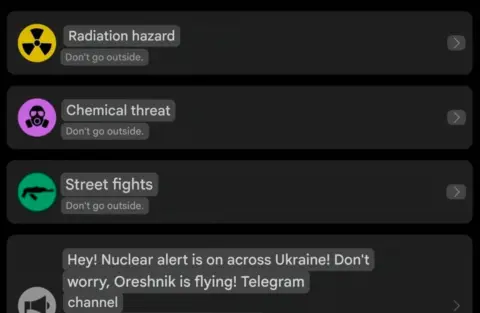
Fake nuclear attack alert messages were pushed to phones across Ukraine late on Sunday after hackers broke into the country’s public air raid warning application. The notifications, which warned of radiation, chemical weapons and even combat in the streets of Kyiv, spread alarm before Ukrainian officials moved quickly to confirm that no such threats existed and that the app had been compromised.
What the False Alerts Said
The breach took place on the night of November 1, 2026. Users in the capital and other regions began receiving a series of disturbing notifications through the app they normally rely on for genuine warnings about incoming attacks.
Among the fabricated claims was a message asserting that Russia had fired its Oreshnik hypersonic missile, a weapon capable of carrying a nuclear warhead, according to Reuters. Another alert suggested that a nationwide nuclear emergency had been declared. Further messages raised the spectre of a chemical attack and fighting inside Kyiv itself.
For a population that has lived under the threat of missile and drone strikes for years, the content of the alerts was designed to provoke maximum fear.
Authorities Move to Calm the Public
Ukraine’s Air Force responded within a short time, telling citizens that the application appeared to have been hacked and urging them to stay calm. It confirmed that there was no radiation danger and advised people to disregard the notifications and instead follow official sources for accurate updates.
The country’s emergency service subsequently verified that unauthorised actors had tampered with the app. As a precaution, its alert channel was temporarily shut down. Officials also cautioned users not to click on any links embedded in suspicious messages, a standard warning given that such links can be used to spread malware or harvest personal data.
Importantly, authorities emphasised that the attack had not compromised Ukraine’s broader security and emergency infrastructure. Air raid sirens and other warning methods remained fully operational throughout the incident.
Mixed Reactions on the Ground
Public response to the false alerts varied. The Guardian reported that many residents were quick to suspect something was wrong and simply ignored the warnings. The messages reportedly contained odd phrasing and spelling errors, which made them look suspicious to experienced users who have learned to recognise the tone and format of legitimate alerts.
Others were not so quick to dismiss them. One woman told the newspaper that she experienced a moment of genuine terror upon reading the notification before realising it was likely fake. For people living with the constant possibility of attack, even a few seconds of believing a nuclear strike is underway can be deeply traumatic.
The BBC also covered the incident, noting both the content of the false warnings and the speed with which officials worked to reassure citizens.
Russia Reports a Similar Breach
In a striking parallel, Russia’s emergency ministry announced that its own mobile application had been hit by a separate cyberattack. According to Reuters, the breach led to false warnings about nuclear attacks and other dangers being distributed to Russian users.
Whether the two incidents were linked remains unknown. No group has claimed responsibility for either attack, and Reuters stated that it was unable to independently confirm who was behind them. The near-simultaneous targeting of emergency apps in both countries has nonetheless fuelled speculation about a coordinated operation or a tit-for-tat exchange.
Why Emergency Apps Matter
Alert applications have become a vital part of civilian protection in Ukraine. They provide near-instant warnings of incoming missiles and drones, giving people precious minutes to reach shelters. Millions depend on them daily, and their reliability is closely tied to public safety.
That reliance is precisely what makes them attractive targets. By injecting false information into a trusted channel, attackers can sow confusion, erode confidence in official warnings and potentially cause people to ignore real alerts in the future. Even if no physical harm results, the psychological impact on an already stressed population can be significant.
A Reminder of the Digital Front
The war between Russia and Ukraine has always had a cyber dimension, with both sides accusing the other of attacks on government systems, infrastructure and media. Sunday’s incident is a reminder that this front remains active and that civilian-facing tools are not exempt.
Security experts have long warned that emergency communication platforms require the same level of protection as military and government networks. The breach of Ukraine’s app, and the reported attack on Russia’s, will likely prompt reviews of how such systems are secured and how quickly compromised channels can be isolated.
Advice to Citizens
In the aftermath, Ukrainian officials issued clear guidance. Residents were told to remain calm, refrain from forwarding unverified messages and rely exclusively on information released through official government channels. The emphasis on not sharing suspicious content reflects an understanding that panic can spread faster through social media than through any single hacked app.
The Bigger Picture
While the false alerts turned out to be baseless, the episode has raised legitimate concerns about the vulnerability of the systems designed to keep civilians safe. In a country where the difference between life and death can hinge on a timely warning, any erosion of trust in those warnings carries real consequences.
For now, the app’s alert channel has been suspended pending security checks, and the investigation into who orchestrated the attack continues. The incident stands as a stark example of how misinformation, when delivered through a trusted emergency platform, can generate fear and chaos in a nation already enduring the hardships of war.
Author