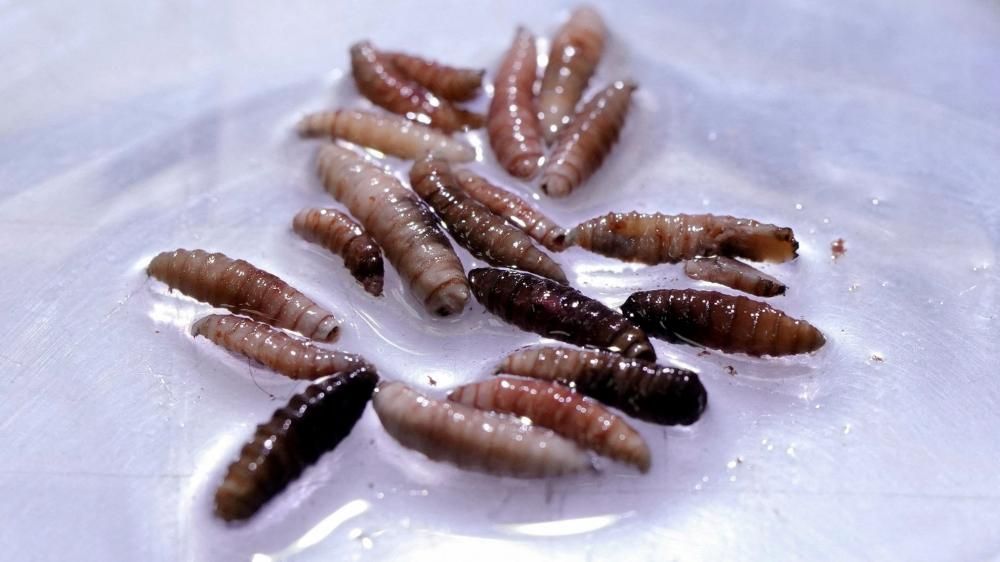
The New World screwworm, a flesh-eating parasitic fly the United States declared eradicated decades ago, is back. On Monday, the U.S. Department of Agriculture confirmed three new cases, including the first ever recorded in a dog and a goat, pushing the national total to five and prompting officials to accelerate their containment efforts.
A Pest Returns After Half a Century
The screwworm was eliminated from the U.S. in the 1960s, so its reappearance carries real weight. At a Monday briefing, federal and Texas state officials laid out an expanding response that leans on a mix of old and new tools, including:
- Artificial intelligence to track screwworm populations
- Training programs to help ranchers spot infections in their livestock early
- More facilities dedicated to producing and releasing sterile flies, the cornerstone of screwworm control
Officials are also weighing an emergency authorization for a genetically engineered strain of flies that could make sterile fly production faster and more efficient.
Texas Governor Greg Abbott struck a confident note, pointing out that the country has defeated this pest before and can do so again.
Where the New Cases Turned Up
The three latest infections were found in a calf in La Salle County, Texas; a goat in Gillespie County, Texas; and a dog in Lea County, New Mexico. The dog’s case raised questions about how the parasite is spreading. Officials first suggested it might have recently been in Mexico, but later said its travel history was actually unknown.
These follow the first two cases reported last week, both in calves in Zavala County, Texas.
Agriculture Secretary Brooke Rollins emphasized that the resurgence wasn’t a surprise. The insect has been steadily moving north through Central America for several years, and she credited monitoring and containment work with slowing its arrival. By her account, every model had predicted the screwworm would reach Texas by early last summer, meaning those efforts effectively bought the country an extra year to prepare.
What Makes the Screwworm So Dangerous
The screwworm is a blowfly with a gruesome life cycle. Adult females lay their eggs in the open wounds or orifices of warm-blooded animals. Once the eggs hatch, the larvae burrow into the wound and feed on living tissue. Left untreated, an infection can kill an animal within a week.
Human cases are rare. Last year, U.S. health officials confirmed a travel-related case in a Maryland resident who had recently visited El Salvador, but no infections acquired within the country have been reported.
The parasite was a major scourge for livestock across the southern United States in the early 20th century. It was ultimately wiped out using the sterile insect technique, which involved breeding flies in massive numbers, sterilizing them with radiation, and releasing them into the wild. Because wild females mate only once in their lives, pairing with sterile males caused the population to collapse.
The Promise of a Male-Only Strain
The sterile insect technique has a built-in inefficiency. It depends on releasing sterile males, but separating males from females in mass-rearing facilities has never been practical. As a result, both sexes are typically raised, sterilized, and released together.
A male-only strain would change that calculus dramatically. Scientists have recently moved closer to that goal with the NovoFly, a genetically engineered version of the screwworm. As USDA research official Scott Hutchins explained, the breakthrough could nearly double the number of sterile flies deployed in the fight almost overnight.
The NovoFly works through two unusual engineered proteins. In males, the proteins do little beyond causing sterility. In females, they prove fatal at the embryonic stage. The upshot is that the only NovoFly to survive to adulthood is a sterile male, unless the flies are given tetracycline, which acts as an antidote to the genetic modification.
Still, the technology remains untested in real-world conditions. Maxwell Scott, an entomologist at N.C. State University whose lab helped develop the NovoFly, noted that field testing is the necessary next step.
A Fast Track Through Regulation
Because the NovoFly is classified as a pesticide, it would normally face a lengthy approval process before any environmental release. But given the public health and economic threats a screwworm outbreak poses, the Environmental Protection Agency is considering an emergency exemption to speed things along.
If approved, the NovoFly would join a very short list of genetically engineered animals ever released into the wild. Past examples include a modified pink bollworm released in Arizona in 2006 and the Oxitec mosquito, engineered to curb diseases like malaria, Zika, and yellow fever, which has been deployed in places such as the Florida Keys.
Preparing for the Spring
Whether the NovoFly exemption is granted remains uncertain, but the USDA has signaled it will keep backing the effort along with any other measures that move the country toward total eradication.
John Bellinger, the agency’s senior adviser for screwworm preparedness, captured the urgency plainly, vowing to turn over every stone in the search for more sterile flies. The reason for the rush is clear: officials know they have to be ready by next spring, when warmer weather could give the pest fresh room to spread.
Author