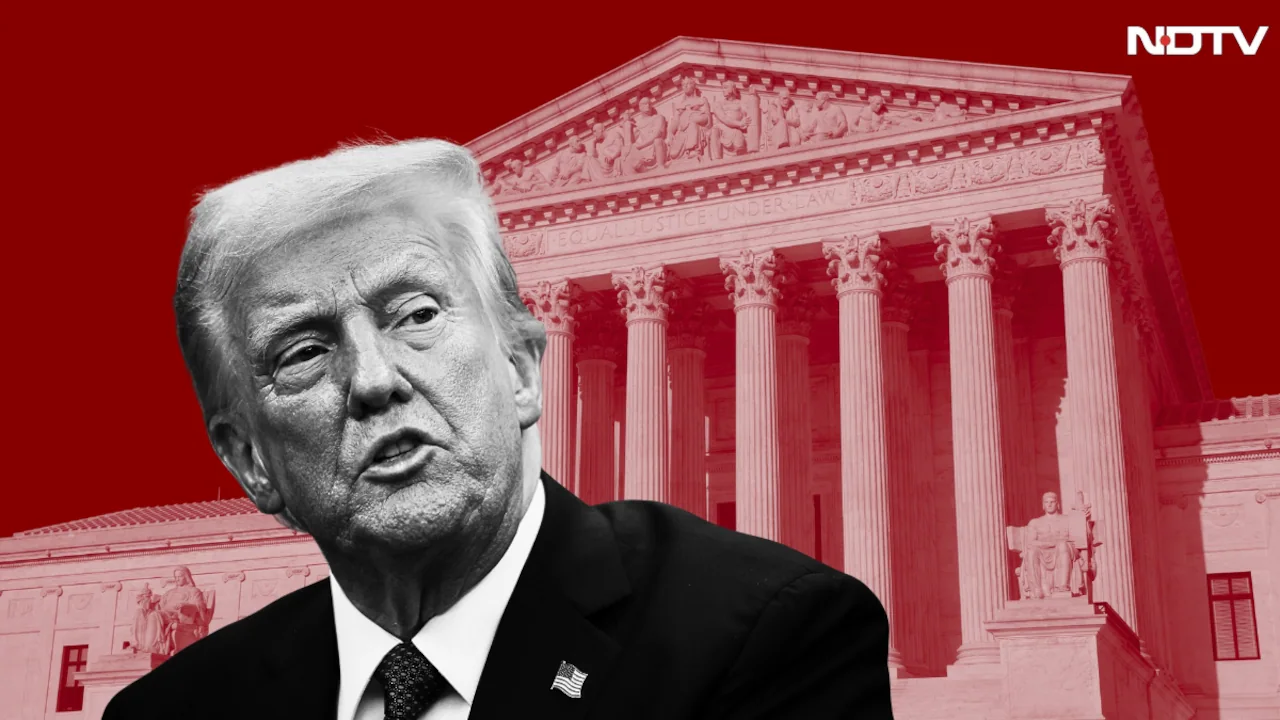
The latest batch of Supreme Court Trump rulings tells a story more complicated than any single headline can capture. On the surface, the term ended with a stinging defeat for the president on birthright citizenship. Look deeper, though, and the same conservative-leaning court quietly handed him some of the broadest executive authority any president has ever wielded.
It’s a paradox worth unpacking, and Trump’s own muted reaction to losing the citizenship case hinted that he understood the bigger picture.
A Surprisingly Subdued Response
For a president known for fiery reactions, Trump took Tuesday’s birthright citizenship loss in stride. He called the decision unfortunate for the country and then pivoted to urging Congress to pass legislation reviving his proposed limits on the principle that anyone born on U.S. soil is a citizen.
The odds of that succeeding are slim. Senate Democrats would almost certainly block such a bill, and even if it somehow became law, its constitutionality would be immediately doubtful. Still, the restrained tone stood in sharp contrast to how he’d handled earlier defeats, and it reflected a term that, on balance, expanded his reach far more than it constrained him.
The Big Losses: Where the Court Drew Lines
In a handful of high-profile cases, a few conservative justices crossed over to join the court’s three liberals, checking some of Trump’s most aggressive moves on immigration, trade, and law enforcement, issues central to his political brand for over a decade.
The most notable setbacks:
- Birthright citizenship. In Trump v. Barbara, the court rejected his executive order seeking to deny citizenship to children of undocumented immigrants and temporary visitors. The vote was 6-3, though only five justices grounded the right explicitly in the 14th Amendment; Justice Kavanaugh concurred on the narrower basis that the order violated federal law.
- Tariffs. Back in February, by a firmer 6-3 margin, the court struck down Trump’s attempt to impose sweeping tariffs on trading partners using existing emergency-powers law. This one drew genuine fury from Trump, who held a hasty press conference to declare himself ashamed of the conservative justices he branded “lapdogs.”
- The National Guard. In December, Chief Justice Roberts, Kavanaugh, and Barrett sided with the liberals to block Trump from deploying National Guard troops to Chicago for immigration enforcement over the objections of local and state officials.
In each instance, Trump’s team had stretched presidential authority using novel or rarely tested legal theories. His citizenship order cut against more than 125 years of precedent; his tariffs collided with rulings requiring major policies to have explicit congressional approval; and his Guard deployment was a rare attempt to override state leaders.
The Bigger Story: A Steady Expansion of Power
Beneath those headline defeats runs a far more consequential current. Across a long list of lower-profile decisions, the court methodically enlarged the president’s authority and advantaged his conservative allies.
As University of Pennsylvania law professor Kate Shaw observed, occasional deviations aside, this remains a deeply conservative court with the most expansive view of presidential power in American history.
Two developments stand out.
First, the court has largely shielded presidents from accountability for official actions, cementing a broad conception of executive immunity established during Trump’s first term.
Second, and more immediately impactful, the justices reshaped control over the federal bureaucracy. In a ruling this week, the six conservatives held that Trump can fire members of independent regulatory agencies over mere policy disagreements, overturning a 91-year-old precedent. The court carved out a narrow exception for the Federal Reserve, protecting its control over monetary policy. But everywhere else, the practical effect is enormous: presidents can now handpick the officials who set rules on labor, elections, communications, the environment, and finance.
Immigration: Losing the Battle, Winning the War
Although Trump lost his marquee citizenship case, the court repeatedly strengthened his hand on immigration enforcement overall.
Recent decisions in his favor include upholding his revocation of temporary protected status for Haitian and Syrian immigrants, many of whom have lived in the U.S. for over a decade. The court also tightened the asylum process, ruling that refugees must be physically present on American soil to claim political asylum.
So while the birthright headline read as a defeat, the broader trajectory on immigration continued moving Trump’s way.
Rewiring the Rules of Elections
Perhaps the most durable legacy of this term lies in election law, where the court delivered a series of wins for Republicans.
The court declined to block the counting of mail-in ballots postmarked by Election Day but received afterward, a ruling Trump criticized. But that loss was overshadowed by decisions cutting the other direction:
- Campaign finance. In a ruling nearly buried by the birthright news, the court loosened limits on how much political parties can spend coordinating with candidates. With the national Republican Party sitting on more than $125 million while its Democratic counterpart carries debt, this gives Trump’s side a real edge heading into the midterms.
- The Voting Rights Act. In April, the six conservatives ruled that congressional districts drawn to boost minority voting power are inherently unconstitutional, gutting a core provision of the 1965 law. The fallout was swift: Republican-controlled Southern states began redrawing House districts to favor their own candidates.
Together, these rulings could shape the balance of power in Congress for years.
A Complicated Relationship
Trump’s frustration with this court, including the three justices he appointed, has been real and at times loudly voiced. When decisions haven’t gone his way, he’s lashed out with unusually personal attacks on individual justices.
Yet the ledger is lopsided in his favor. Whatever irritation the occasional loss has caused, the court has granted him authority no previous president has been able to exercise, from control over the administrative state to a reshaped electoral landscape.
What Comes Next
The story may not be finished. With speculation swirling that one of the court’s senior conservative justices could retire soon, Trump may yet have another opportunity to shape the federal judiciary for a generation.
For now, the term stands as a study in contradiction. The president suffered visible, symbolically potent defeats. But when the full scope of the rulings is tallied, the Supreme Court leaves him more powerful than it found him, and that, far more than any single loss, is likely to define its lasting mark on the country.
Author