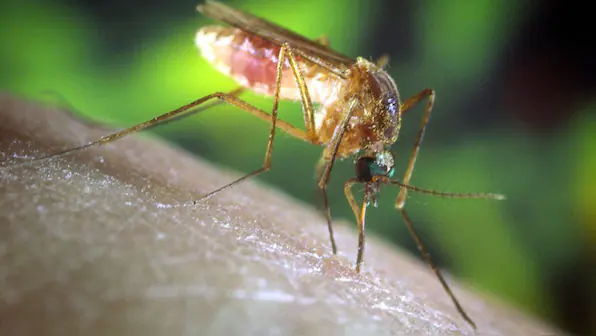
Google’s Debug Program Seeks Approval to Release 32 Million Sterile Mosquitoes in the US
Google sterile mosquitoes may soon be buzzing through parts of California and Florida, and not because of a science experiment gone wrong. The tech giant has formally asked the U.S. government for permission to release up to 32 million sterilized mosquitoes across the two states, all in the name of public health.
The pitch is catchy: Google wants to “stop bad bugs with good bugs.” This time, though, the bugs in question aren’t lines of faulty code. They’re real insects, bred deliberately to shrink the population of the disease carrying mosquitoes that threaten millions of people.
Fighting the World’s Deadliest Animal
It’s easy to underestimate the mosquito, but it holds a grim distinction as the deadliest animal on the planet. Every year, mosquitoes kill more people than any other creature by spreading devastating illnesses such as dengue, West Nile virus, Zika, chikungunya, and malaria.
This effort is part of Google’s Debug program, an initiative that channels the company’s engineering muscle into raising an army of sterile male mosquitoes. The logic is simple but clever: flood an area with males that can’t produce viable offspring, and the wild population gradually collapses.
What Google Is Asking For
A notice in the federal register reveals that the U.S. Environmental Protection Agency (EPA) is now reviewing Google’s request. The plan calls for releasing up to 16 million mosquitoes per year in Florida and California over a two year span, adding up to that headline figure of 32 million.
Before anything takes flight, the EPA must decide whether to grant an experimental use permit. That decision follows a public comment period, which closed on June 5.
How the Science Works
Here’s a reassuring detail for anyone picturing swarms of biting insects: male mosquitoes don’t bite, and they don’t carry disease. That’s exactly why they’re the focus.
One of Google’s key methods involves rearing male mosquitoes infected with a naturally occurring bacteria called wolbachia. When one of these treated males mates with a wild female, her eggs simply won’t hatch. As the company explains, the population shrinks with each successive generation. No genetic engineering of the insects themselves is required, just a clever use of a bacterium nature already provided.
Big Tech Meets the Lab
It might seem odd for a tech company to be breeding bacteria laden insects, but Google’s parent company, Alphabet, has deep roots in science. The Debug program grew largely out of Verily Health, an AI and health company that began as a “moonshot” inside Google X.
Verily, which spun out from Alphabet earlier this year, has long applied data science to tackle global health challenges. As of December 2024, Google fully acquired Debug, pulling it out of Verily’s portfolio. The program itself isn’t new either, having started exploring tech driven mosquito control roughly a decade ago, according to a 2016 blog post.
Why Not Just Use Pesticides?
Google argues that the usual tactics simply aren’t cutting it anymore. Spraying pesticides can be toxic, and mosquitoes tend to grow more resistant to them over time. Meanwhile, tracking down and eliminating every pool of standing water where mosquitoes breed is a nearly impossible chore.
The company’s approach, though, isn’t entirely original. It builds on a well established scientific method known as the sterile insect technique, which researchers have used against troublesome insects for decades. Eric Caragata, an assistant professor at the University of Florida who studies mosquito microbe interactions, noted that scientists have been using wolbachia for sterilization for about 15 years.
Targeting the Worst Offender
For now, Google is concentrating on a single species, Aedes aegypti, the mosquito responsible for most cases of dengue, Zika, yellow fever, and chikungunya. The engineering challenge is considerable.
Google’s scientists are building automated rearing systems for these delicate insects, leaning on data analytics and sensors. A particularly tricky piece involves using AI powered computer vision to accurately sort males from females, then releasing the males in precisely the right places and quantities to have an effect.
Proof It Can Work: The Singapore Success
Google’s confidence isn’t built on theory alone. Singapore, the program’s first international research and development hub, has shown promising results.
According to a Debug blog post citing Singapore’s national environment agency, releasing millions of wolbachia carrying male mosquitoes helped the country achieve an 80 to 90 percent suppression of the Aedes aegypti population, along with more than a 70 percent drop in dengue cases after six to twelve months of releases.
Those results have prompted Google to expand its Singapore operation. “When we first launched Debug in Singapore, our goal was to advance mosquito production and releases through technology and bring Debug to more communities in Asia, where 70% of the global dengue burden occurs,” said Linus Upson, head of Debug. “Our success in Singapore gives us the confidence to expand.”
If the EPA gives its blessing, that same confidence may soon translate into millions of harmless mosquitoes quietly working to make California and Florida a little safer from disease.
Author