A New Kind of Threat in the Skies
Hezbollah fiber-optic drones have become a serious headache for one of the world’s most advanced militaries. In recent weeks, these low-cost weapons have slipped through Israeli defenses with alarming success, killing soldiers, destroying equipment, and shaking public confidence.
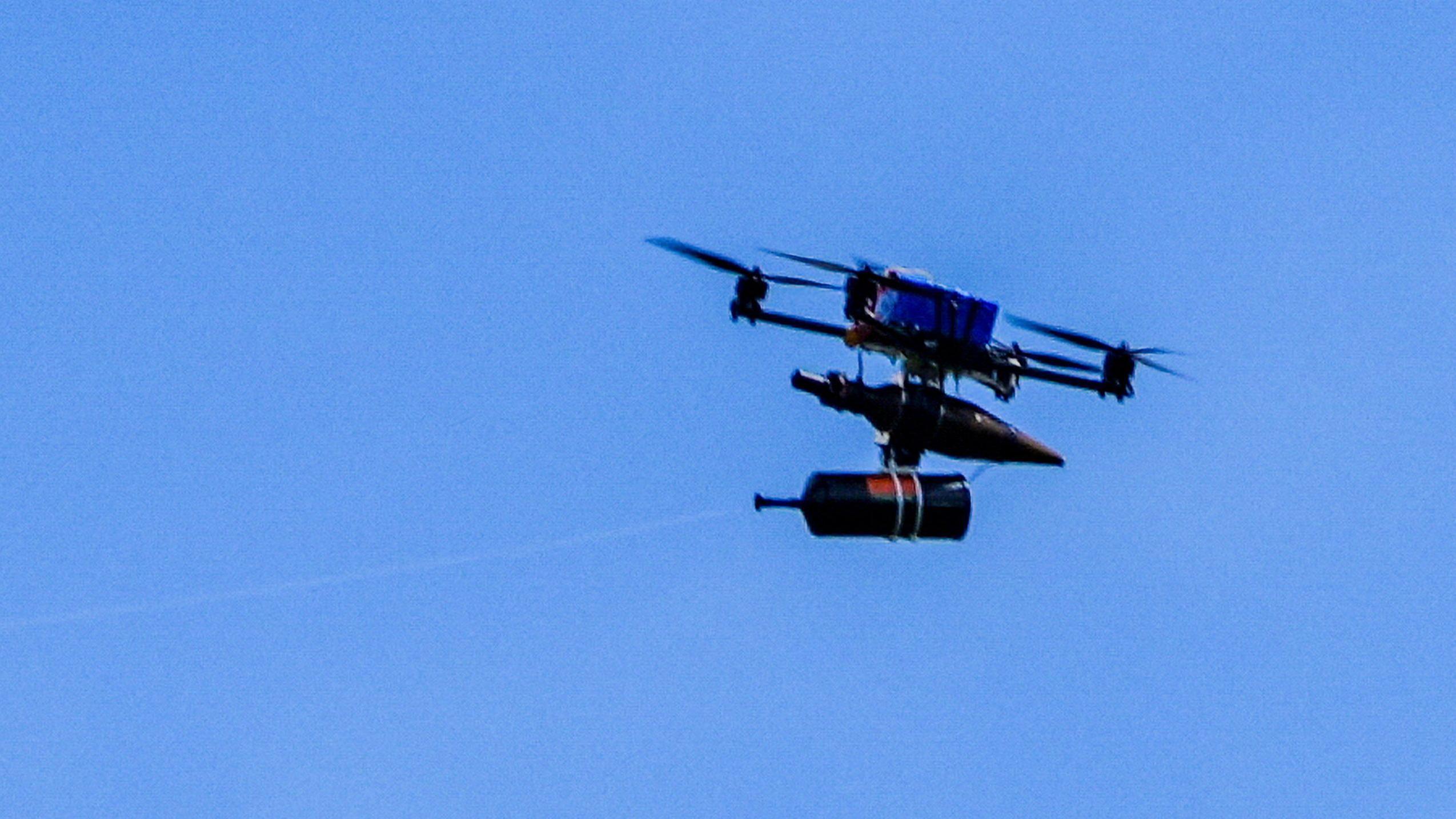
The attacks have unfolded with unsettling regularity. One explosive drone weaved through the hills of southern Lebanon before smashing into an Israeli armored personnel carrier. Days later, another struck a tank. Shortly after, a third hit a missile-defense system. Each strike chipped away at Israel’s sense of security.
Daily Attacks With Deadly Results
According to the Israeli military, multiple drones now target its forces every single day, and the toll has been heavy. In a single recent week, the strikes killed three soldiers. Since April, the drone campaign has claimed the lives of at least ten soldiers and one civilian on Israeli territory.
The relentless pace has rattled ground troops stationed in Lebanon and challenged a pillar of Israeli military strength: its long-standing dominance of Lebanese airspace. Suddenly, the skies no longer feel safe.
Cracks in a Carefully Built Strategy
The drone offensive has also undermined a key part of Israel’s plan in southern Lebanon. The goal was straightforward in theory: seize territory, establish a buffer zone, and push Hezbollah fighters far enough back that their antitank missiles could no longer threaten the tens of thousands of civilians living in northern Israel.
The drones have complicated that vision. They can reach where ground forces are most exposed, turning what was meant to be a protective strategy into a vulnerable one.
A Warning That Went Unheeded
Perhaps the most troubling part of the story is that this threat was anticipated. As early as 2024, Israeli military officers reportedly warned that Hezbollah would likely turn to drones guided by thin fiber-optic cables, a method that neatly sidesteps electronic jamming.
These same drones had already become a familiar feature of the battlefield in Ukraine. Yet despite the warnings, senior Israeli commanders appeared to do little to prepare, according to officials speaking anonymously.
When daily drone attacks began in April, the military still had not adopted basic countermeasures that Ukrainian forces use routinely, such as draping protective nets over stationary troops and equipment.
One reserve brigadier general, Guy Hazut, who led an internal effort to learn battlefield lessons, captured the frustration bluntly. He recalled discussing exactly this scenario two years earlier and lamented that the security establishment seemed to need a jolt before taking the danger seriously.
How the Fiber-Optic Drones Work
Hezbollah’s tactics have evolved in a clever and difficult-to-counter way.
In the past, the group relied on radio-controlled drones, which Israel could neutralize through electronic jamming. The new generation works differently:
Each drone carries explosives along with a spool of fiber-optic cable.
The cable unwinds as the drone flies toward its target.
A human operator controls it from the other end of the line.
Because these drones do not depend on radio signals, jamming is useless against them. The only real defenses are shooting them down or cutting the cables, and soldiers on the ground often have just seconds to react before impact.
Hezbollah’s Resurgence
Hezbollah, the Iran-backed Lebanese militant group, had been significantly weakened by a 2024 war and largely held its fire for a year, even as Israel carried out repeated strikes. But the group has clawed its way back into the fight.
After the U.S.-Israeli war on Iran began in late February, Hezbollah resumed firing rockets and drones at Israel. In response, Israeli forces pushed deeper into Lebanon, taking over dozens of villages and carrying out widespread demolitions in an attempt to halt the attacks.
A Heavy Human Cost
The conflict has inflicted staggering losses. According to Lebanon’s health ministry, which does not separate combatants from civilians, more than 3,400 people have been killed. The government reports that over one million people have been displaced.
Israel’s defense minister, Israel Katz, said the approach in southern Lebanon mirrors tactics used in Gaza, where entire neighborhoods were leveled, underscoring the scale of the destruction.
A Propaganda Victory
Beyond the physical damage, Hezbollah has scored a powerful psychological win. The group has openly boasted about wounding a technologically superior military with cheap, simple weapons.
In May alone, Hezbollah released more than 30 dramatic videos showing drones bearing down on Israeli soldiers and equipment, set to intense music for maximum effect. One clip, recorded on May 9, shows a drone closing in on a military post in the northern Israeli town of Shlomi as a soldier sprints toward a fortified room. The footage cuts off the instant the drone crashes, leaving the outcome unknown.
A Hezbollah spokesman claimed the drones have eroded the morale of Israeli troops, and a Hezbollah-affiliated media figure described the campaign as beginning to shake the Israeli army.
Scrambling for Solutions
Facing mounting public criticism, Israeli leaders have begun searching urgently for answers. The military issued a statement saying it takes the threat “very seriously” and is grappling with what it called a complex technological and operational challenge.
Prime Minister Benjamin Netanyahu announced the creation of a special expert team to tackle the problem. In a meeting with ministers in mid-May, he said he had given them something that surprised them: an essentially unlimited budget, telling them that whatever it costs, it costs.
Lessons From Ukraine
Much of this drone warfare was pioneered in the brutal fighting between Ukraine and Russia. While drones in that conflict can travel around 50 miles, Israeli officials say Hezbollah’s fiber-optic versions currently reach only about 12 miles.
Ukraine’s experience has become a valuable resource. In January of last year, Ukrainian officers visited Israel to share how they confront Russian drones. More recently, Israel asked for a second delegation, but Ukraine reportedly tied another visit to Israel boosting support for Ukrainian air defenses.
What Comes Next
Experts warn that the next challenge may already be on the horizon. Ukrainian forces have started fitting drones with SIM cards, like those in mobile phones, allowing them to strike targets hundreds of miles away by riding cellular networks. In some cases, Russia had to shut down entire regional networks to fight back.
If Hezbollah adopts similar technology, the threat to Israel could grow dramatically.
A Tactical Threat, Not a Strategic One
For all the alarm, some former officials urge perspective. They note that the drone danger was overlooked partly because attention was focused on more pressing concerns, such as Iran’s ballistic missile program.
Brigadier General Shachar Shochat, a former commander of Israel’s air and missile defense forces, offered a measured assessment. He acknowledged that the drones can kill and cause damage but described them as a tactical threat rather than a strategic one. In his words, they will not defeat Israel, but they can harm its morale.
The Bottom Line
Hezbollah’s fiber-optic drones have proven that ingenuity and low cost can sometimes outmaneuver advanced technology. They have exposed real gaps in Israel’s defenses, dented public confidence, and forced a frantic search for solutions.
Whether Israel can adapt quickly enough remains an open question. But one lesson is already clear: in modern warfare, even the smallest weapon can reshape the battlefield, and ignoring early warnings can come at a steep price.
Author