The Houston ICE shooting that ended the life of Lorenzo Salgado Araujo has now been formally classified as a homicide by the Harris County Medical Examiner, adding a new layer of scrutiny to an already contested case. The determination, released this week, does not accuse anyone of a crime — but it does sharpen the questions surrounding what happened on a quiet Houston street early Tuesday morning.
What the Medical Examiner Actually Found
According to records from the Harris County Medical Examiner’s office, Salgado Araujo died from a penetrating gunshot wound to the torso.
The word “homicide” in this context is worth pausing on, because it is frequently misunderstood. In forensic terminology, a homicide ruling simply means one person’s actions resulted in another person’s death. It is a medical classification, not a legal verdict. It carries no implication of murder, manslaughter, or criminal intent. Prosecutors, not medical examiners, make those calls.
Still, the ruling is significant. It establishes an official, independent finding about how Salgado Araujo died — and it arrived just two days after the shooting itself, keeping public attention firmly fixed on the case.
How the Shooting Unfolded
U.S. Immigration and Customs Enforcement says the incident occurred around 6:50 a.m. Tuesday in the 6800 block of Canal Street. Agents were carrying out what the agency described as a targeted enforcement operation, attempting to arrest Salgado Araujo, whom ICE identified as an undocumented immigrant from Mexico.
By the federal account, the encounter escalated quickly. ICE officials say Salgado Araujo drove his vehicle into an ICE vehicle and then attempted to strike an agent with it. That, the agency says, is when an officer opened fire — an action ICE has characterized as self-defense.
Salgado Araujo was transported to Ben Taub Hospital, where he was pronounced dead.
A Disputed Account
That version of events has not gone unchallenged. Family members and civil rights advocates have publicly questioned key elements of the federal narrative and are pressing for an independent investigation, arguing that the agency involved in the shooting should not be the sole arbiter of what happened.
Their demand centers on a familiar principle: when a law enforcement agency investigates its own use of deadly force, the public deserves outside verification.
The Missing Body Camera Footage
Here is where the case becomes especially complicated. There is no body camera video.
On Thursday, the Department of Homeland Security confirmed that the officers involved had not been issued body-worn cameras at the time of the shooting. The agency attributed the gap to funding disruptions.
DHS said the rollout of body cameras across ICE field offices was interrupted by repeated government shutdowns, which the department blamed on Democrats. According to the agency, cameras have already been deployed to more than half of ICE’s field offices, with the remaining offices expected to receive them within the next 60 days.
DHS also framed the camera program as an ongoing priority, pointing to what it described as a more than 1,300 percent increase in assaults against ICE officers. The department said new funding under the Secure America Act would allow the agency to finish equipping personnel with cameras and other resources.
Why the Footage Gap Matters
Whatever one makes of the political finger-pointing, the practical consequence is the same: investigators have no video record from the officers’ perspective.
That absence changes how the case will be reconstructed. Instead of reviewing footage, investigators will have to rely on:
- Statements from witnesses who were present on Canal Street
- Physical evidence at the scene, including vehicle damage and ballistics
- Any third-party video that may exist, such as surveillance or bystander recordings
- The accounts of the agents involved
Each of these can be valuable. But none of them offers the immediacy of body camera footage, which has become a central tool in resolving disputed use-of-force incidents. In cases where the official account and the community’s account diverge, video often settles the matter. Here, there is nothing to play back.
Two Investigations, One Jurisdictional Wall
The shooting remains under federal investigation. Separately, Harris County District Attorney Sean Teare has opened a parallel review and is asking anyone who saw the incident to come forward and speak with investigators.
Notably absent from the process is the City of Houston. City officials have explained that they lack jurisdiction, because the shooting involved federal agents rather than local police officers. That distinction has left local leaders in the uncomfortable position of demanding answers they cannot compel.
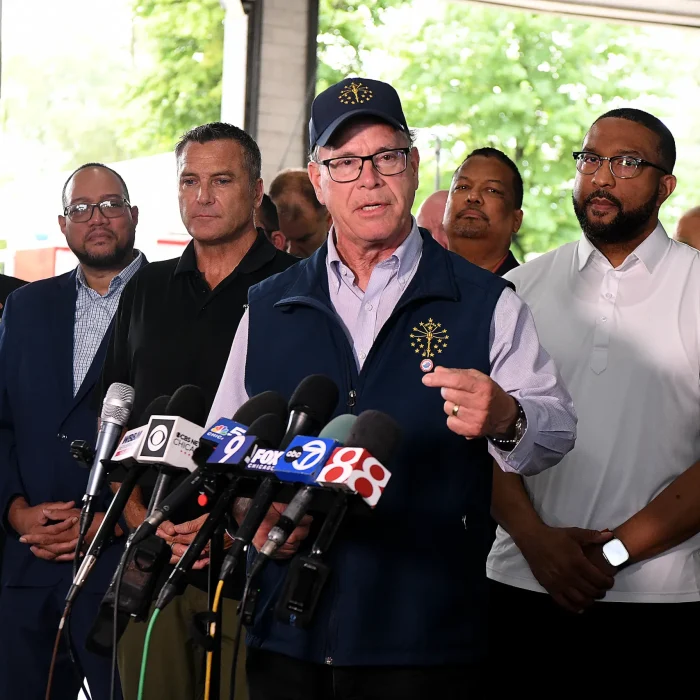
Mayor John Whitmire, joined by several members of the Houston City Council, has called for a transparent federal investigation and for the results to be made public once the review is complete.
The Bigger Picture
The Houston ICE shooting sits at the intersection of several ongoing national debates: immigration enforcement tactics, the accountability of federal agents, and the role of technology in policing.
Body cameras were never a cure-all, but they were meant to reduce exactly this kind of uncertainty — the gap between an official narrative and a grieving family’s disbelief. When cameras are absent, that gap widens, and trust becomes the casualty.
For now, the facts that are firmly established are narrow. A man was shot. He died from a gunshot wound to the torso. The medical examiner has classified the death as a homicide. Everything beyond that — the sequence of events, the threat level, the justification — remains contested and under review.
What Comes Next
Two investigations are underway. Local prosecutors are gathering witness accounts. Federal authorities are conducting their own review. And Houston’s political leadership is pushing for the findings to be released publicly rather than filed away.
Whether those investigations can deliver clarity without video evidence is the open question — and it is one that families, advocates, and the wider public will be watching closely.
Author