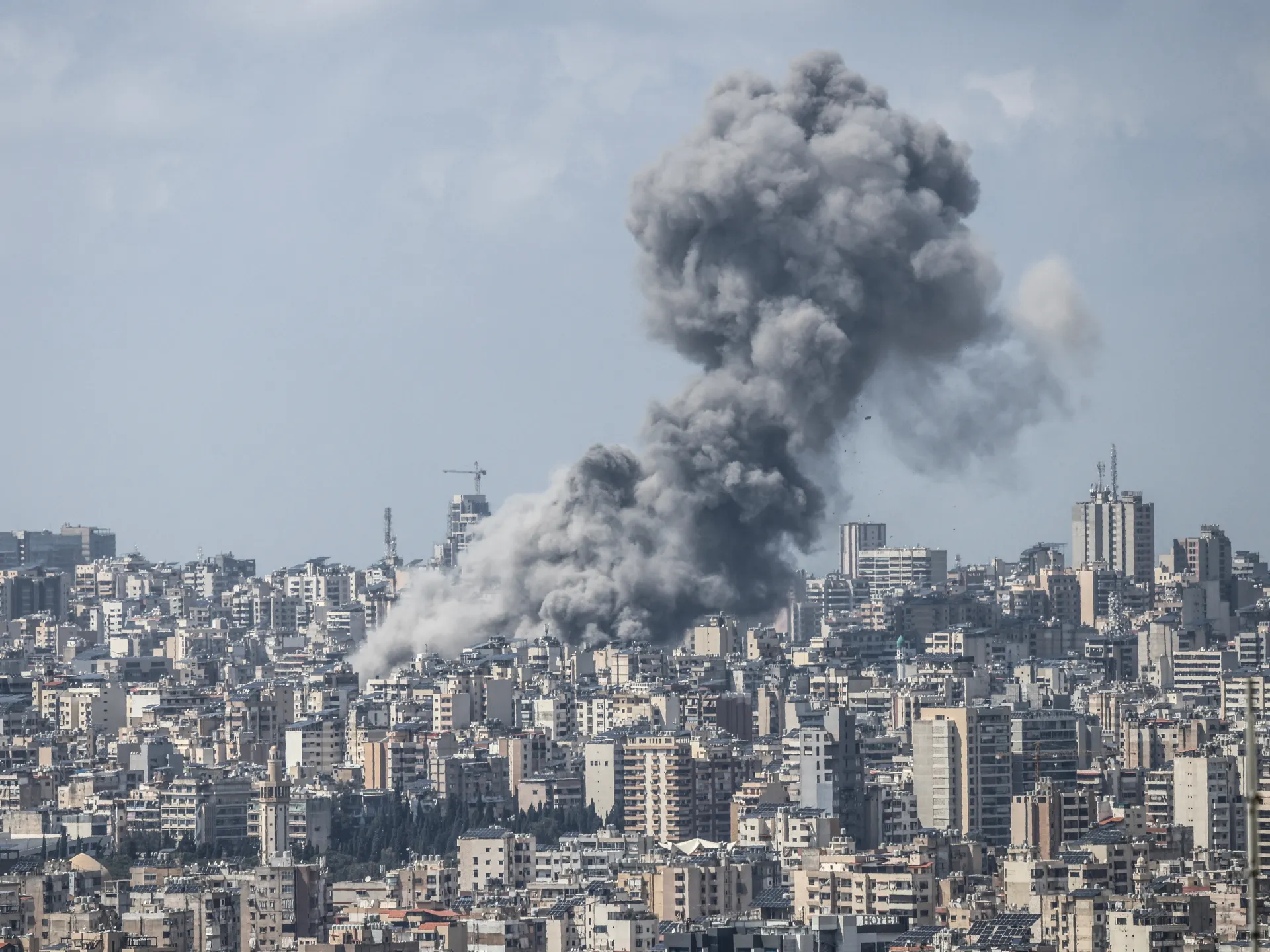
Israel strikes Beirut southern suburbs once more, killing at least three people and injuring several others, in an attack that has deepened uncertainty around a fragile push for peace. The strike on the Lebanese capital’s southern district came in response to Hezbollah firing into Israeli territory, intensifying fears that the wider regional conflict could escalate just as a US-Iran deal appeared close at hand.
The Latest Strike on Dahiyeh
According to Israel, its military targeted Hezbollah positions in Beirut’s southern suburbs on Sunday after the armed group launched fire into Israel. Lebanon’s Civil Defense Ministry confirmed that three people were killed in the attack.
The Israeli military had earlier reported that Hezbollah fired three projectiles toward communities in northern Israel, condemning the move as a blatant violation of the ceasefire. In a joint statement, Prime Minister Benjamin Netanyahu and Defense Minister Israel Katz said the Israel Defense Forces had struck Hezbollah targets in the Dahiyeh neighborhood of Beirut specifically in response to that fire.
The Civil Defense Ministry reported that the strike, which hit an apartment in Dahiyeh, killed three people and wounded six others. Lebanese security sources described the attack as a targeted operation involving two missiles, while the Israeli military characterized it as a precise strike on a Hezbollah command centre.
Hezbollah’s Response
Hezbollah did not immediately address the Israeli statements directly. However, the group confirmed that it had launched missiles and drones toward Israeli troops stationed in southern Lebanon, signaling that the cycle of cross-border fire was far from over.
This exchange marks the latest flashpoint in a conflict that has repeatedly threatened to spiral beyond Lebanon’s borders.
A Threat to the Peace Process
The timing of the strike is especially significant. Just last week, an Israeli attack on Dahiyeh triggered an exchange of fire between Israel and Iran, raising the danger of derailing a US-Iran deal aimed at ending the broader war.
That deal now appears tantalizingly close. Washington and Tehran seem to be nearing an agreement to end the conflict, which has stretched on for more than three months. U.S. and Pakistani leaders had forecast that a signing could take place on Sunday.
Crucially, Iran has long insisted that any wider agreement with the United States must include an end to the fighting in Lebanon, making the latest strike all the more sensitive.
Trump Urges All Sides to Stand Down
President Donald Trump weighed in directly through a post on Truth Social, expressing clear frustration over the timing. He said the strikes on Beirut should not have happened, especially on what he called a special day when a peace deal with Iran was so close.
Trump pressed for restraint across the board, emphasizing several points:
- A deal that could bring peace to the entire region, including Lebanon, was within reach.
- All sides should stand down to preserve that opportunity.
- There should be no further attacks by Israel anywhere in Lebanon.
His comments reflected a clear desire to keep the diplomatic process on track despite the renewed violence.
Iran’s Warning
Iranian officials responded with sharp warnings. The deputy commander of Iran’s top joint military command, the Khatam al-Anbiya Central Headquarters, declared on Sunday that Israeli “crimes” would not go unanswered, according to state media.
Iran’s chief negotiator, Mohammad Bagher Ghalibaf, went further, suggesting the strike exposed a troubling reality. He said Israel’s attack on Beirut’s southern suburbs demonstrated that the United States either lacked the will to fulfill its commitments or the ability to do so. In a post on X, he warned that continuing along the current path would be impossible if those commitments could not be met.
Netanyahu Stands Firm
Israel showed no sign of backing down. Writing on X after the attack, Netanyahu stated plainly that Israel would not tolerate fire into its territory, underscoring the government’s determination to respond forcefully to any provocation.
Earlier that same day, the Israeli military had issued a wide-scale evacuation warning for residents of at least 30 towns and villages in southern Lebanon, a sign of the intensity of operations in the region.
The Situation in Southern Lebanon
Israeli forces have occupied large portions of southern Lebanon, with Israel stating that its objective is to dismantle Hezbollah’s infrastructure along its borders. Despite ceasefire talks between the Lebanese government and Israel held in Washington, fighting in the area has not stopped.
Hezbollah has rejected those negotiations outright. The group insists that any ceasefire with Israel must guarantee an end to all hostilities, including in southern Lebanon, along with the withdrawal of Israeli troops. Earlier this month, Israel made clear that fighting in the south would continue and warned Lebanese residents against returning to the area.
How the Conflict Escalated
The roots of the current fighting trace back several months. Hezbollah entered the war by firing at Israel on March 2, just two days after the United States and Israel launched airstrikes against Iran.
Israel vowed to respond with force, and it has since carried out airstrikes that have killed thousands of people in Lebanon and displaced more than a million. The scale of that destruction helps explain why the path to any lasting ceasefire remains so contested and fraught.
Final Thoughts
As Israel strikes Beirut southern suburbs yet again, the fragile hope for a regional peace deal faces one of its toughest tests. With Iran issuing warnings, Hezbollah rejecting negotiations, and Netanyahu refusing to tolerate cross-border fire, the situation remains dangerously volatile. Trump’s appeal for all sides to stand down captures the stakes of the moment, but whether that call will be heeded, and whether the long-sought deal can survive, remains deeply uncertain in the days ahead.
Author