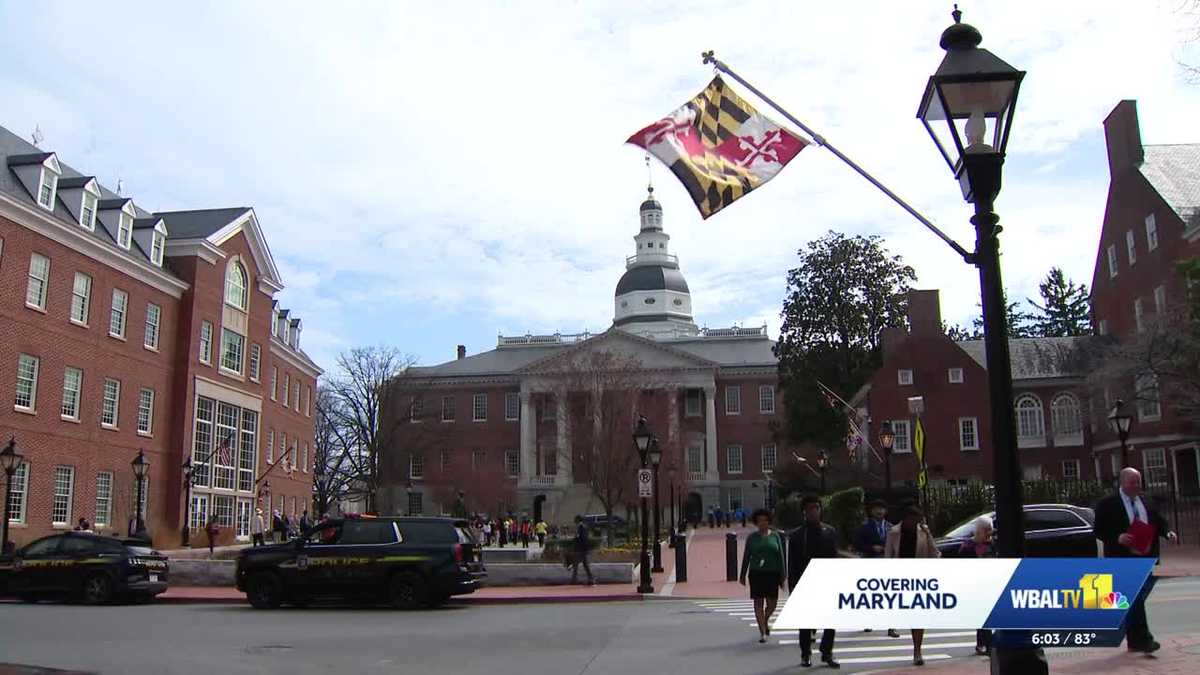
The Maryland redistricting amendment hit a wall Wednesday when an Anne Arundel County judge found serious flaws in both how the legislature passed it and how the ballot question was written. The ruling hands Republicans an early victory in a fight that is now headed straight to the state’s highest court.
What the Judge Decided
Circuit Judge Robert J. Thompson issued a ten-page opinion roughly a day after wrapping up a full-day hearing in Annapolis. The proceeding centered less on redistricting policy than on procedure, specifically whether lawmakers cut corners while rushing the measure toward voters.
Thompson acknowledged that nothing in the Maryland Constitution creates a blackout window restricting when the General Assembly may propose amendments. But he said that authority does not float free of everything else. It operates within both the calendar and the statutes the legislature itself has written.
He explained that lawmakers passed laws codifying how proposed amendments reach the public, and that those procedures establish the basic notice citizens are owed before being asked to alter their constitution.
His conclusion was direct. Because the legislature disregarded its own rules, the enactment of HB 2100 was legally deficient.
Thompson blocked the question from appearing on the ballot but paused his own injunction, anticipating an immediate appeal.
The Deadline Fight
At the heart of the case was a July 1 deadline.
Plaintiffs argued that state law establishes a firm timeline for ballot questions and requires that the wording be simplified enough for ordinary voters to grasp. Democrats in the General Assembly, they said, were bound by those requirements like anyone else.
The state countered that the legislature was not so constrained. Its attorney argued lawmakers could pass an amendment containing its own mandated ballot language along with notwithstanding provisions designed to exempt the bill from the deadline entirely.
Thompson sided with the challengers.
Who Brought the Case
The plaintiffs formed a coalition of conservative figures and Republican legislators, including Mike Howell of the group Project Oversight, members of the Maryland Freedom Caucus, and Senate Republican Caucus leadership.
Delegate Matt Morgan, who chairs the Freedom Caucus, framed the outcome as a limit on legislative power. He argued that holding three-fifths of the votes does not purchase an exemption from rules the same body wrote, adding that Maryland answers neither to kings nor to a legislature behaving like one.
Senate Minority Leader Stephen Hershey, also a plaintiff, described the ruling as a first win for the rule of law. He insisted the case was never about silencing voters, but about requiring the state to follow its own constitution before asking citizens to change it.
Problems With the Wording
Thompson devoted significant attention to how the question was framed.
Supporters had described the August measure as a clarification, contending it merely confirmed that compactness and contiguity standards apply to legislative maps rather than congressional ones.
Thompson found that characterization misleading. He said nothing in the record indicated such an understanding was ever widely shared, and concluded the word clarifying was deliberately deceptive enough to disqualify the question as drafted.
He identified a second defect as well. Beyond addressing compactness, the question also attempted to grant the Maryland Supreme Court original jurisdiction over congressional redistricting disputes. Thompson remarked that routing such cases to the state’s highest court would be sensible, but said it constitutes an entirely separate question that does not belong bundled with the first.
The Backstory
Understanding why any of this exists requires going back to 2022.
Judge Lynne Battaglia ruled then that congressional districts must be compact and contiguous and must account for geographic realities such as the Chesapeake Bay. That was a departure from the prior assumption that the standard governed only state legislative maps.
Democrats chose not to appeal. Instead they negotiated with then-Governor Larry Hogan, replacing a map with eight Democratic-leaning districts with the current arrangement that preserves one Republican seat.
Battaglia’s decision never became binding precedent. Even so, Senate President Bill Ferguson invoked it when declining to advance a February House bill that would have redrawn districts to put all eight seats within Democratic reach. Ferguson parked that measure in the Senate Rules Committee, where it died.
The August special session was the workaround.
Reaction From Democrats
Ferguson defended the legislature’s actions, saying the General Assembly operated squarely within constitutional bounds. He argued the amendment offered a chance to settle legal uncertainties in advance, rather than leaving courts to evaluate an actual map after the fact. He expects a quick review and a ruling affirming legislative authority.
Governor Wes Moore, who had publicly pressured Ferguson to move a maps bill during the regular session, disagreed with the decision through a spokesperson. His office argued that with states nationwide reshaping congressional maps in ways that undercut fair representation, Maryland cannot remain passive, and that voters deserve their say.
Delegate Kris Fair questioned why opponents would fear a public vote if they were confident in their position, calling on the Supreme Court to reverse what he characterized as a partisan ruling.
Fight Back MD, the campaign organization backing the measure, went further. Political director Joe Francaviglia accused opponents of importing outside operatives and steering the case toward a Hogan appointee he suggested was angling for a federal judgeship, rather than making their argument to voters directly.
What Happens Next
Assistant Attorney General Daniel Kobrin informed the State Board of Elections Wednesday afternoon that a notice of appeal had been filed. Oral arguments before the Maryland Supreme Court are anticipated September 3.
Time is the pressing problem. The Board of Elections faces an August 31 deadline to finalize roughly 1,200 distinct ballot versions used across the state. An appeal running into September squeezes that timeline severely.
A second challenge is also pending. A separate case filed in Dorchester County goes before Administrative Judge S. James Sarbanes in Cambridge on Thursday morning. Sarbanes reached the bench in 2014 through an appointment by then-Governor Martin O’Malley and is the nephew of former Senator Paul Sarbanes.
The Stakes
If the amendment ultimately reaches voters and passes, Republicans expect Maryland to join the wave of midcycle redistricting sweeping states controlled by both parties ahead of November.
Representative Andy Harris, the only Republican in the state’s congressional delegation, would be the obvious target. Moore and other Democrats have described the effort as making districts more competitive, though the February House map suggested a different goal: shifting additional Democratic voters into Harris’s district.
Author