Nuclear microreactors are coming to one of the largest military installations in the country. The U.S. Army and the Defense Innovation Unit have picked Antares to build and run reactors at Fort Bragg in North Carolina, chief executive Jordan Bramble confirmed to Axios.
The selection is part of a broader push that could reshape how American military bases keep the lights on.
Why the Military Wants Its Own Reactors
Modern military installations consume staggering amounts of electricity, and the appetite keeps growing.
Rechargeable battery systems, server farms processing enormous quantities of data, advanced radar arrays, weapons systems, and ordinary housing for tens of thousands of people all draw power continuously. Add emerging demands around artificial intelligence and autonomous systems, and the load curve only steepens.
That makes bases an unusually demanding proving ground for nuclear technology, which has been enjoying a resurgence after decades in the wilderness. If reactors can handle this, they can handle most things.
The Janus Program
The Antares contract is one of several announced Wednesday under Janus, the Army’s multibillion-dollar initiative launched in response to a White House executive order issued last year.
Janus has been watched closely across both the defense and energy sectors, partly because of its scale and partly because it represents the federal government putting real money behind small reactor deployment rather than study.
Antares is expected to deliver its units in what the service describes as three packs, suggesting a modular approach where reactors are grouped rather than installed individually.
A Different Way of Thinking About Power
Bramble described a longstanding problem in how the armed services approach energy.
He said the military has spent roughly a decade caught in an uncomfortable position, largely because most services split their thinking into two separate buckets: energy for deployed operations abroad, and energy for facilities at home.
His argument is that the domestic side needs to adopt the operational mindset. Critical functions on American soil should be able to keep running without the commercial grid and without depending on civilian supply chains.
For that purpose, he contends, nuclear offers something nothing else does. Capacity factor, the measure of how consistently a plant produces at full output, favors nuclear heavily over solar, wind, or generators requiring constant fuel deliveries.
Why Fort Bragg
The site selection is not incidental.
Fort Bragg hosts the XVIII Airborne Corps along with Army special operations command and the western hemisphere command. Tens of thousands of personnel, both uniformed and civilian, work there.
It is, in short, a place where a prolonged power failure would carry consequences well beyond inconvenience.
The Money Behind It
Antares would not disclose the specific value of its Janus award.
Bramble did say that across work for the Army, Air Force, and Space Force, the company now holds contracts totaling roughly a billion dollars, with that number climbing quickly.
He drew a distinction between his company and the many startups now pivoting toward defense customers. Antares, he said, was founded and engineered specifically for this market from the beginning rather than adapting to it later.
The company recently closed a $470 million Series C round, giving it substantial capital to scale manufacturing.
Proof It Works
The technical credibility behind the award traces to an event in June.
The Antares Mark-0 reactor achieved criticality on June 4 at Idaho National Laboratory. It was the first reactor to reach that milestone under the Energy Department’s Reactor Pilot Program, and Army officials were tracking progress throughout.
The reactor runs on tri-structural isotropic fuel, commonly shortened to TRISO. This fuel design encases uranium particles in layers of ceramic and carbon, creating a structure engineered to contain fission products even under extreme conditions.
Bramble noted that Antares deliberately built its fuel to match the specification developed for Project Pele, the Pentagon’s mobile reactor effort run by the Strategic Capabilities Office. Enough TRISO fuel has already been produced to supply multiple reactors.
That alignment matters practically. Sharing a fuel specification with an existing government program simplifies supply, qualification, and logistics.
Four Other Bases, Four Other Companies
Antares is not alone. The Janus awards spread across five installations and five very different firms:
- BWXT Advanced Technologies at Fort Campbell, Kentucky
- General Atomics Electromagnetic Systems at Fort Hood, Texas
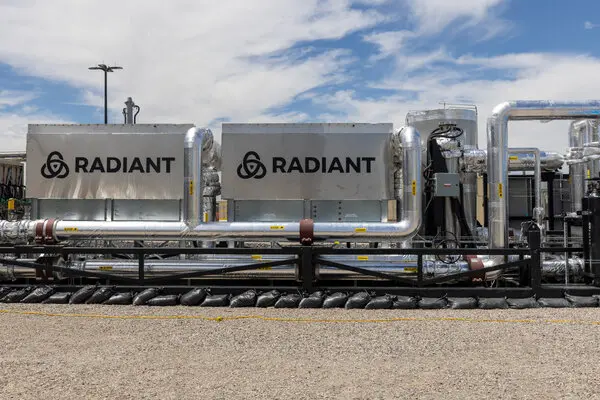
- Radiant at Fort Benning, Georgia
- Westinghouse Government Services at Fort Drum, New York
- Antares at Fort Bragg, North Carolina
The lineup mixes established nuclear engineering houses with newer entrants, which appears to be intentional.
A Deliberate Portfolio Approach
Jeff Waksman, the Army’s principal deputy assistant secretary for installations, energy and environment, emphasized the diversity of the selected companies to reporters Wednesday.
He described the program as the leading edge not merely for microreactors but for advanced nuclear technology across the United States generally.
The logic behind backing multiple designs simultaneously is straightforward. Nobody yet knows which technical approach will prove most reliable, most economical, or fastest to license at scale. Running several in parallel produces real comparative data instead of speculation.
The Broader Significance
If these projects succeed, the implications reach well past military fences.
Small reactors have faced a persistent chicken-and-egg problem. Utilities hesitate to commit without operating examples, and manufacturers cannot produce operating examples without commitments. The military, with deep pockets and a genuine need for grid-independent power, can break that cycle.
Successful base deployments would generate regulatory precedent, manufacturing experience, and operational track records that commercial developers could build on.
Considerable work remains between contract award and reactors producing electricity. Licensing, construction, fuel loading, and testing all lie ahead. But the Army has now placed serious money on the proposition that this technology is ready to leave the laboratory.
Author