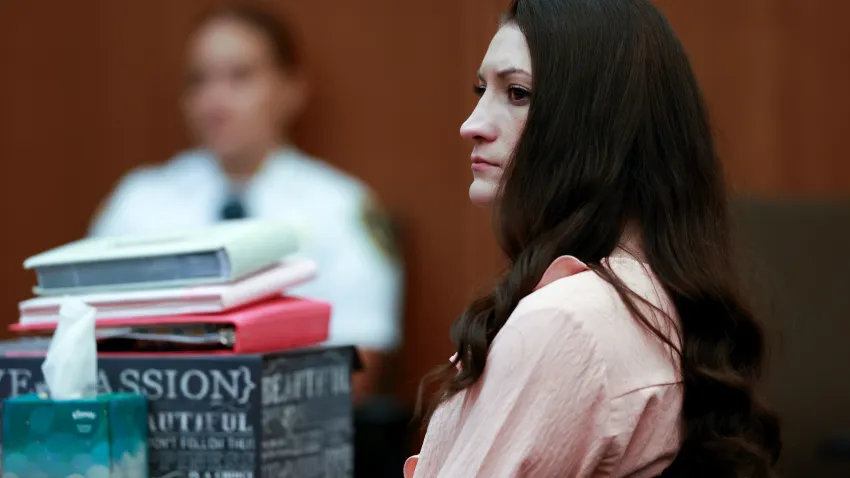
The Lindsay Clancy trial reached a significant turning point Friday, when defense attorneys formally rested their case on Day 18 of proceedings and prosecutors immediately began building their rebuttal. With both sides now moving toward the final stage, closing arguments are expected to arrive early next week.
A Slow Week That Ended With Momentum
Thursday had been an unusually quiet day in the courtroom, with jurors hearing from just a single witness. Friday picked up the pace somewhat, though not without technical hiccups.
The morning began with testimony from forensic psychiatrist Dr. Phillip Resnick, who appeared remotely rather than in person. Problems with the video connection interrupted the schedule and pushed proceedings back, an increasingly common frustration in trials that rely on out-of-state expert witnesses.
Once Resnick concluded, the defense announced it had nothing further to present. That decision closed out weeks of testimony centered largely on the defendant’s mental state.
Prosecutors Begin Their Response
With the defense finished, the prosecution called psychiatrist Dr. Avram Mack as its first rebuttal witness. He is expected to be one of several experts the state will put forward before the case goes to the jury.
Mack’s testimony touched on the voice the defendant has described hearing, a claim that sits at the heart of the psychiatric dispute running through this case. Rebuttal witnesses serve a narrow but important function: rather than introducing an entirely new theory, they respond directly to the evidence and expert conclusions the opposing side has already placed before jurors.
In practice, that means the coming days are likely to feature dueling interpretations of the same clinical records, the same behavior and the same statements, filtered through experts who reach opposite conclusions.
The Allegations at the Center of the Case
Prosecutors allege that on Jan. 24, 2023, Lindsay Clancy killed her three children at the family’s home in Duxbury, Massachusetts, after sending her then-husband, Patrick, out of the house to run errands. The children were Cora, 5, Dawson, 3, and Callan, who was 8 months old.
Following the deaths, Clancy fell from a second-story window of the home. She survived the fall but sustained injuries that left her paralyzed from the waist down.
The case shook the community and drew national attention, in part because of the questions it raised about maternal mental health and how the legal system handles severe psychiatric illness.
The Defense Argument
Clancy’s attorneys have not disputed that the children died. Their argument rests instead on her mental condition at the time.
According to the defense, she was experiencing bipolar disorder alongside postpartum psychosis, and the combination left her unable to be held criminally responsible for her actions. Under Massachusetts law, that standard turns on whether a defendant, because of mental disease or defect, lacked the substantial capacity to appreciate the wrongfulness of their conduct or to conform their behavior to the law.
That framing shifts the trial away from questions of what happened and toward a far more contested question: what was going on in her mind while it happened.
Why Expert Testimony Dominates This Trial
Cases built on criminal responsibility almost always come down to psychiatric evidence, and this one has followed that pattern closely. Jurors have spent much of the trial listening to specialists analyze medication history, clinical notes, reported symptoms and the timeline leading up to the deaths.
Postpartum psychosis, while rare, is recognized as a serious condition that can involve hallucinations, delusions and profound disorganization of thought. It is medically distinct from postpartum depression, which is far more common and far less severe. Establishing whether it was present, and whether it reached the threshold required by law, is the task now facing the jury.
The difficulty is that psychiatric evaluation is retrospective. Experts on both sides are working backward from records and interviews to reconstruct a mental state that existed years earlier, which leaves considerable room for professional disagreement.
What Happens Next
With the defense case complete, the remaining schedule is fairly predictable. Prosecutors will finish presenting rebuttal witnesses, after which the judge will handle any outstanding legal matters before instructing the jury.
Closing arguments are anticipated early in the coming week. Both sides will then have their final opportunity to shape how jurors interpret weeks of dense clinical testimony.
After that, the case moves out of the attorneys’ hands entirely. Jurors will be asked to weigh competing expert opinions and decide whether the legal standard for criminal responsibility has been met.
A Case That Has Drawn Wide Attention
Beyond the courtroom, the trial has prompted broader conversation about how severe perinatal mental illness is identified, treated and understood. Advocates have pointed to the case as evidence of gaps in screening and follow-up care, while others have emphasized the enormity of the loss suffered by the family.
Coverage of the proceedings has been extensive, including daily recaps and analysis from courtroom observers and legal experts who have tracked each stage of testimony.
Whatever verdict emerges, the outcome is likely to be discussed well beyond Massachusetts, particularly among clinicians and legal scholars who work at the intersection of psychiatry and criminal law.
This case touches on serious mental health issues. Anyone struggling with symptoms during or after pregnancy is encouraged to reach out to a healthcare provider or a maternal mental health support line.
Author