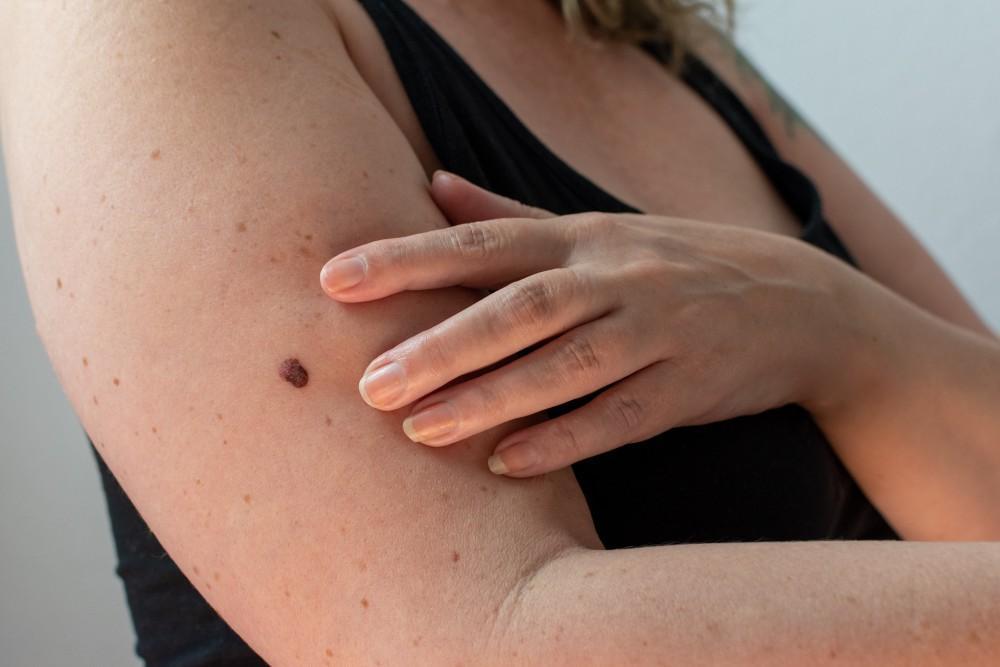
Mind Your Moles: A Complete Guide to Performing a Skin Cancer Self-Exam at Home
A skin cancer self-exam is one of the simplest and most powerful tools you have for catching skin cancer early, when it is most treatable. With one in five people expected to develop skin cancer at some point in their lifetime, understanding how to inspect your own skin can quite literally save your life. The good news is that this practice does not require any special equipment, and it only takes a few minutes each month.
Why Skin Self-Checks Matter
Although the U.S. Preventive Services Task Force has not issued official recommendations for routine skin cancer screening, organizations like the Skin Cancer Foundation strongly encourage regular self-monitoring. For people at average risk, this typically means a yearly professional skin exam performed by a primary care physician or dermatologist, paired with monthly self-checks at home.
If you have a personal or family history of skin cancer, your provider may suggest more frequent screenings. Either way, being aware of your skin’s normal appearance is the first line of defense in detecting changes early.
How to Perform a Skin Cancer Self-Exam
The best time to examine your skin is right after a shower or bath when your body is clean and free of lotions or makeup. You will need a well-lit room, a full-length mirror, and a hand-held mirror. Having a partner, spouse, or close friend nearby can be especially helpful for checking areas that are difficult to see on your own, like your back or scalp.
The American Academy of Dermatology recommends breaking the exam down into sections so you do not miss anything. Here is a simple step-by-step approach:
Full Body Check
Stand in front of a full-length mirror with your arms raised. Look at the front, back, and both sides of your body. Take note of anything that stands out as unusual.
Arms and Hands
Carefully inspect your forearms, underarms, and armpits. Check both sides of your hands, look around and between your fingers, and don’t forget your fingernails.
Legs and Feet
Sit down and examine the back of your legs, the tops and bottoms of your feet, the spaces between your toes, and your toenails.
Neck and Head
Look at the front of your neck and your face, including your lips and eyelids. Use a hand-held mirror to check the back of your neck, your ears, and the top of your head. Part your hair carefully to examine your scalp.
Back and Buttocks
This is where a partner or hand-held mirror really comes in handy. Make sure these often-overlooked areas are inspected thoroughly.
Once you become familiar with your skin, the entire self-exam should only take about five to ten minutes per month.
What You Should Be Looking For
The goal of a skin self-check is to identify any new growths, unusual marks, or changes in existing moles that could indicate cancer. The first time you do this exam, spend a little extra time familiarizing yourself with your unique pattern of moles, freckles, and blemishes. This baseline knowledge will make it much easier to spot anything new or different in future checks.
Understanding the Most Common Types of Skin Cancer
There are several types of skin cancer, and knowing how each one typically presents can help you identify potential warning signs.
Melanoma
Melanoma is the most dangerous form of skin cancer because it can spread to other organs if not caught early. It begins in melanocytes, the cells responsible for producing skin pigment, and often appears as a mole. According to the American Academy of Dermatology, nearly 20 Americans lose their lives to melanoma every day.
Basal Cell Carcinoma
This non-melanoma skin cancer develops in the upper layer of the skin and tends to grow slowly. It often appears as a small bump or shiny lesion. While not as deadly as melanoma, it can cause damage to surrounding tissue if ignored.
Squamous Cell Carcinoma
Another non-melanoma skin cancer, squamous cell carcinoma typically presents as a rough, scaly patch of skin. Like basal cell carcinoma, it tends to grow slowly but can become serious if left untreated.
The ABCDE Rule for Spotting Melanoma
Melanoma often hides in plain sight, disguised as an ordinary mole. To help people recognize potentially dangerous moles, experts developed the easy-to-remember ABCDE rule. Each letter stands for a key warning sign:
A is for Asymmetry: One half of the mole does not match the other half. B is for Border: The edges of the mole appear ragged, irregular, or blurred. C is for Color: The mole has multiple colors, including different shades of brown, tan, or black, sometimes mixed with white, pink, or gray. D is for Diameter: While some melanomas are small, most are larger than the size of a pencil eraser, or about a quarter-inch wide. E is for Evolving: Any change in the size, shape, color, or texture of a mole is a cause for concern.
Normal moles tend to be small, round, evenly colored, and have smooth borders. They are usually a single shade of brown, tan, or black.
Watch Out for Dysplastic Nevi
Some moles, known as dysplastic nevi, have an irregular appearance and carry a higher risk of turning into melanoma. Identifying and removing these moles early can help prevent the development of skin cancer entirely. If you notice a mole that looks unusual or changes over time, it is worth bringing it to your doctor’s attention.
When to See a Doctor
Anytime you notice a new growth, an unusual change in an existing mole, or anything that just does not look right, schedule an appointment with your primary care physician or a dermatologist. If you cannot see a doctor right away, the American Cancer Society recommends taking close-up photos of the suspicious area every few days. This visual record can help your doctor assess how quickly the spot is changing.
What to Expect at Your Appointment
When you visit a healthcare provider for a suspicious mole, be prepared to answer questions like:
- When did the spot first appear?
- Has the growth or mole changed in size, shape, or color?
- Is the area painful, itchy, or bleeding?
- How much time do you typically spend in the sun?
- Have you used tanning beds or other tanning devices?
- Do you have a history of severe sunburns?
- Is there a family history of skin cancer?
If your physician finds the mole or growth concerning, they may perform a skin biopsy. This involves removing a small sample of skin to examine under a microscope for signs of cancer.
Prevention and Early Detection Are Key
Practicing daily skin protection and staying alert to changes are the most effective ways to reduce your risk of skin cancer. Wearing sunscreen, avoiding tanning beds, and staying in the shade during peak sun hours all play important roles. But equally important is your habit of self-monitoring and keeping up with regular professional checkups.
Skin cancer that is caught early is highly treatable, often with simple in-office procedures. The longer it goes undetected, however, the more aggressive the treatment can become.
Taking the Next Step
If you have noticed any changes to your skin, do not wait to seek professional advice. Early detection truly saves lives. Whether you choose an in-person appointment or a virtual visit with your primary care physician, the most important thing is to take action.
By committing to a quick monthly skin self-exam and staying tuned in to your body, you are giving yourself one of the best chances possible to catch skin cancer in its earliest, most treatable stages. Your skin is the largest organ in your body, and giving it just a few minutes of attention each month is one of the smartest investments you can make in your long-term health.
Author