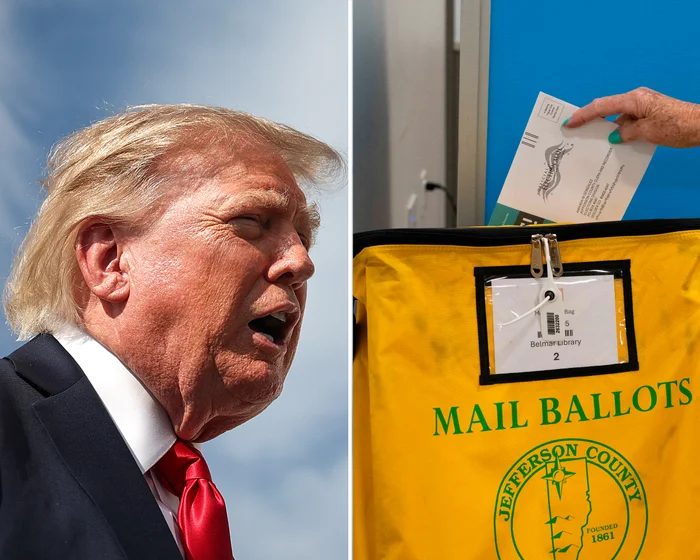
The mail voting rule pushed by the Trump administration is now clear of its biggest legal roadblock. A federal judge in Massachusetts lifted the nationwide injunction that had been holding it back, moving quickly after the Supreme Court signaled where it stood earlier in the week.
The practical effect is significant. The last broad court order standing between the policy and implementation is gone. What has not disappeared is the litigation surrounding it, which is arguably intensifying rather than winding down.
The Judge Reverses Her Own Order
U.S. District Judge Indira Talwani vacated the preliminary injunction she herself had issued in August.
She pointed directly to a Supreme Court decision handed down Monday in a related case. Talwani had presided over that matter as well, and after reading the justices’ reasoning, she concluded the same logic would almost certainly be applied to her broader nationwide order if it reached them.
In her written order, she noted the tension in the high court’s position. The justices acknowledged that their ruling did not guarantee every step the government takes to implement the executive order will turn out to be lawful. Yet they also found that reviewing the substance of the dispute was simply not available at this stage.
Faced with that, Talwani chose not to wait for reversal.
An Important Detail: Without Prejudice
The wording of her order matters enormously.
Talwani dismissed the injunction without prejudice, which leaves the door wide open. The states that brought the challenge can amend their filings and request a fresh injunction now that circumstances have shifted.
And circumstances have shifted. The Postal Service has issued its final rule, which changes the legal picture in a fundamental way.
What the Supreme Court Actually Decided
It is worth being precise here, because the ruling has been widely misread.
The justices did not evaluate whether Trump’s executive order is constitutional or lawful. They did not weigh the policy’s merits at all. What they decided was narrower and procedural.
The majority concluded the challenge arrived too early for the states to demonstrate any actual injury. Their reasoning drew a clear line: federal courts examine final rules, not proposals, and certainly not internal directives instructing an agency to draft a proposal. If the Postal Service’s completed rule ends up harming the states, the majority wrote, the states remain free to challenge that rule.
That was less a green light for the policy than an instruction about timing.
The States Take the Court Up on Its Offer
The Postal Service has since published its final rule, and a coalition of states responded almost immediately with a new lawsuit.
Their complaint focuses on the operational chaos they say the rule creates. Election officials would need to redesign ballot envelopes across multiple jurisdictions. They would have to build entirely new systems for transmitting mail voter lists to the Postal Service. They would need to write fresh guidance for both election workers and voters.
The states describe these as monumental undertakings that must somehow be completed within weeks, using resources that were never budgeted for a sudden overhaul.
The complaint’s framing is blunt. Each task is necessary to manage the disruption the rule causes, and there is nowhere near enough time to do any of it properly.
An Awkward 24 Hours
The sequence of events over two days captures how strange this moment has become.
On Tuesday, Talwani ruled that the administration had violated her nationwide injunction by going ahead and finalizing the mail voting rule. That order had specifically barred enforcement of a central piece of Trump’s executive order.
On Wednesday, she removed the injunction the administration had just been found to have violated.
Neither decision contradicts the other in legal terms. The first addressed conduct that occurred while the order was in force. The second responded to a Supreme Court ruling that arrived afterward. But the whiplash is real, and it illustrates how unsettled this area of law currently is.
The Calendar Is the Real Pressure
Everything about this dispute is being compressed by the midterm elections.
Election administration is not something that can be redesigned casually. Envelope specifications, voter list formats, staff training, and public communication all take months to implement well. Changing them close to an election introduces risk regardless of the merits of the change itself.
That timing concern sits at the heart of the states’ case. They are arguing less about whether the federal government has authority over mail voting procedures and more about whether it can exercise that authority on this schedule without causing genuine harm.
Where Things Stand
For now, the administration can proceed. No nationwide order restrains it, and the Supreme Court has declined to intervene on the substance.
But the new lawsuit means courts will be examining the final rule directly, which is exactly what the justices said was the proper path. A district judge could issue relief again, this time on a record the Supreme Court indicated it would find reviewable.
The states have the procedural opening the high court described. Whether they can move fast enough to use it before ballots go out is the question that will define the next several weeks.
This remains an actively developing situation, with filings and rulings likely to come in quick succession.
Author