Nepal PM Calls For Grant-Based Aid, Not Loans, To Rebuild After Deadly Glacier Flood
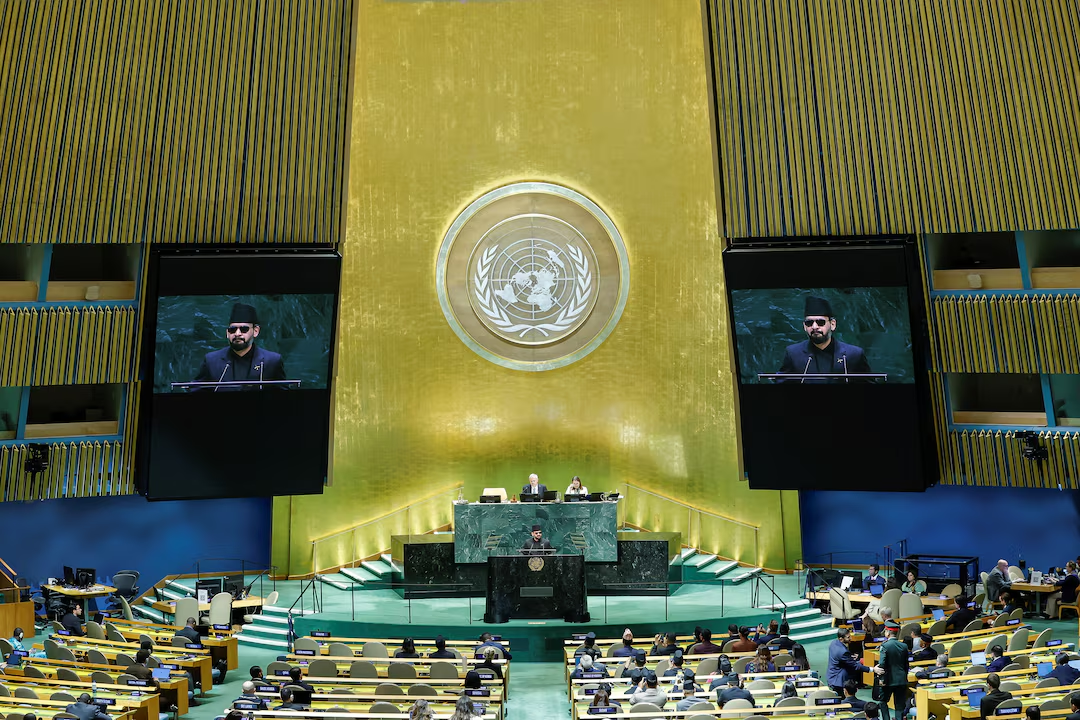
Nepal grant-based flood recovery efforts took center stage Thursday when Prime Minister Balendra Shah addressed the United Nations General Assembly, explicitly calling for international support in the form of grants rather than loans to help the Himalayan nation rebuild after a devastating glacier flood that killed at least 1,450 people.
The Scale Of Nepal’s Recovery Needs
Speaking in New York, Shah explained that Nepal’s recovery and reconstruction needs following the flood, which struck mountain communities four weeks earlier, amount to approximately 10 percent of the country’s entire gross domestic product. He argued forcefully that vulnerable nations like Nepal shouldn’t be forced to take on additional debt burdens simply to rebuild after catastrophic climate-driven events beyond their control.
Shah articulated his core argument clearly, stating that when a climate-driven disaster destroys infrastructure in a poor country, the appropriate response cannot simply involve another massive loan or a fragmented patchwork of smaller grants. He emphasized that Nepal needs genuinely adequate grant-based support from the international community.
Calling For Regional Cooperation
Beyond immediate financial assistance, Shah urged closer cooperation between Nepal, India, and China specifically focused on climate resilience measures. He called for establishing an urgent Himalayan mechanism designed to share satellite data, monitor glacial lakes throughout the region, strengthen early-warning systems, and coordinate disaster response efforts across national borders in this geologically sensitive mountain region.
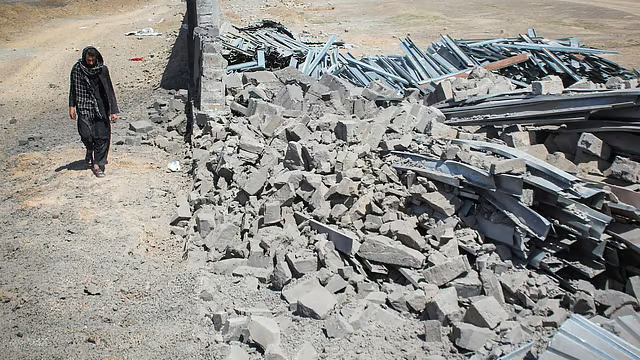
The Nepalese leader characterized the flood as a clear warning about the growing risks posed by climate change more broadly. He described how the disaster swept away roads, bridges, schools, homes, and livelihoods throughout affected areas, fundamentally interrupting Nepal’s broader development progress and setting back years of accumulated infrastructure investment.
What Triggered The Disaster
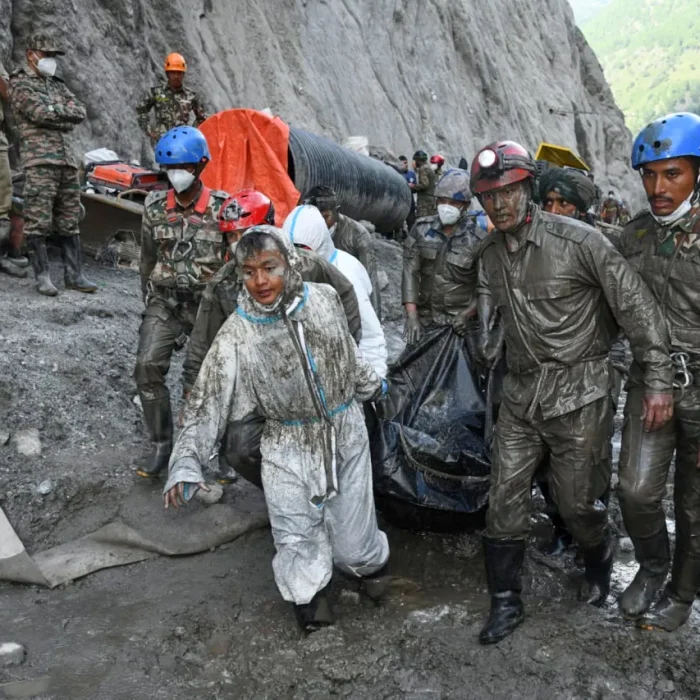
The catastrophic flooding originated from the collapse of a glacier located near the border between Nepal and China’s Tibet Autonomous Region in late August. This collapse triggered a cascade of landslides and a flash flood that tore violently through valleys located downstream from the initial glacier failure.
Even weeks after the initial disaster, search and recovery operations remained actively underway, with more than 6,000 people still reported missing in the affected region. Shah acknowledged the grim reality that many of these missing individuals may never actually be found, given the scale and violence of the flooding that swept through the area.
International Financial Response
The World Bank took action earlier this week, making available up to 170 million dollars in emergency financing specifically designed to help Nepal respond to the immediate disaster and begin longer-term recovery efforts. While this financing represents meaningful international support, Shah’s broader appeal for grant-based rather than loan-based assistance reflects growing concern among climate-vulnerable nations that repeated borrowing to address disasters they didn’t cause risks trapping these countries in cycles of debt that further undermine their long-term development prospects, even as they work to rebuild from immediate humanitarian and infrastructure crises.
Author