Quetta Railway Bombing 2026: Powerful Blast Kills 19 Near Passenger Train in Pakistan
The Quetta Railway Bombing 2026 has once again shaken Pakistan, exposing the deepening security challenges in the southwestern province of Balochistan. A powerful suicide attack near a railway track in Quetta has left at least 19 people dead and more than 70 others wounded, sending shockwaves across the region. The blast, which occurred as a passenger train was passing through the area, has reignited concerns about the persistent insurgency in the country’s most resource-rich and politically sensitive province.
A Devastating Blast in the Heart of Quetta
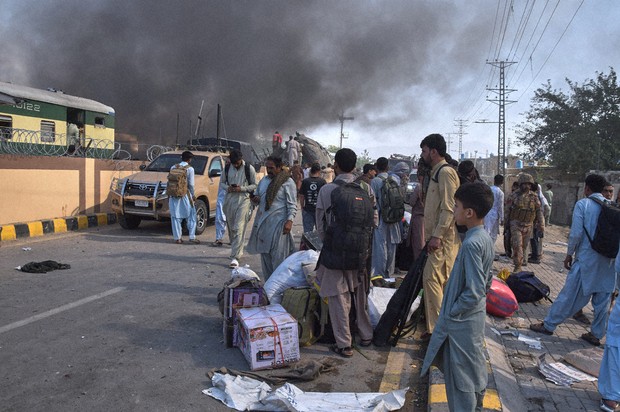
The deadly attack took place when a suicide bomber detonated an explosives-laden vehicle close to a railway track just as a passenger train was moving through the area. The intensity of the blast was so severe that two of the train’s coaches overturned and caught fire, with thick black smoke pouring into the sky.
Witnesses described scenes of chaos as emergency teams rushed to the site. Footage and images shared on social media showed extensive destruction, with several nearby buildings damaged and more than a dozen parked vehicles destroyed. The area where the explosion happened is known to host a regular presence of security forces, making the location especially symbolic.
Local hospitals were quickly overwhelmed as the wounded began arriving in large numbers. Doctors confirmed that 20 of the injured were in critical condition, while emergency medical operations continued throughout the day.
A Region With a Long History of Conflict
Quetta is the capital of Balochistan, a province with a long and complicated history of insurgency. Despite being one of the most resource-rich regions in Pakistan, with substantial reserves of oil, gas, and minerals, Balochistan has remained the center of a low-level armed conflict for decades.
The outlawed Baloch Liberation Army (BLA), which has been demanding independence from Pakistan’s central government, quickly claimed responsibility for the attack. In a statement shared with media outlets, the militant group said it had targeted a train believed to be carrying security personnel. The group has carried out several major attacks in the region over the years, often targeting:
- Train stations and railway infrastructure
- Security forces and military convoys
- Government installations and offices
- Civilians caught in or near military zones
This latest attack has reignited fears about the resilience of the militant group and the limits of Pakistan’s counterinsurgency efforts.
Officials React to the Attack
Pakistani officials swiftly condemned the bombing. Balochistan government spokesperson Shahid Rind expressed sorrow over the loss of civilian lives, calling the attack inhumane and pledging strong action against the perpetrators. He confirmed that a medical emergency had been declared at hospitals in Quetta and that a full investigation had been launched.
Prime Minister Shehbaz Sharif also condemned the attack, calling it a “cowardly act of terrorism” in a post on social media. He extended condolences to the families of the victims and reaffirmed his government’s commitment to combating terrorism.
Balochistan Chief Minister Sarfraz Bugti went a step further, accusing the militants of targeting innocent civilians, including women and children. He vowed that those responsible would be hunted down, regardless of where they were hiding.
Officials, including Bugti and federal leaders in Islamabad, often refer to the BLA using a term that suggests external backing from India. New Delhi has consistently denied any involvement with the group.
Lives Lost and Lives Disrupted
The human cost of the bombing has been devastating. Many of the victims were ordinary passengers, while others were caught in the explosion simply because they happened to be near the railway track at the wrong time. Among the dead were civilians from various walks of life, and the high number of critically injured passengers means the death toll could rise further in the coming days.
For families across Quetta, the attack has brought yet another wave of grief. Hospitals filled quickly with relatives searching for loved ones, while emergency workers continued to recover victims and assess the damage hours after the explosion.
Why Balochistan Remains Volatile
The Quetta bombing highlights several long-standing factors that have kept Balochistan unstable. While Pakistani authorities have repeatedly claimed that the insurgency is under control, attacks continue to happen with troubling regularity.
Some of the key reasons behind the ongoing unrest include:
- Long-standing political and ethnic grievances among Baloch nationalists
- Disputes over the distribution of revenue from the region’s natural resources
- Resentment toward security operations conducted in the province
- The influence of armed separatist groups operating in remote areas
- Border-related security challenges and the presence of multiple militant networks
These deeply rooted issues have made Balochistan one of the most difficult regions in Pakistan to fully stabilize, despite repeated military and political efforts.
A Continued Pattern of Violence
The current bombing follows a long series of high-casualty attacks in the region. Notably, in 2024, a suicide bombing at a train station in Balochistan killed at least 26 people, including soldiers. That attack also drew condemnation from across Pakistan and international observers.
Train stations and railway tracks have become repeated targets for militants, partly because they often carry security personnel and partly because they symbolize national infrastructure. By targeting these locations, insurgent groups aim to attract maximum media attention while creating widespread fear.
Calls for Stronger Counterterrorism Measures
The Quetta Railway Bombing 2026 has reignited calls for stronger counterterrorism efforts in Balochistan. Both political leaders and security experts are now urging the government to:
- Increase intelligence operations in vulnerable regions
- Strengthen surveillance around critical infrastructure
- Improve coordination between provincial and federal security forces
- Invest in long-term political solutions to address insurgent grievances
- Boost protection for transport networks across the province
While military operations have historically played a major role in counterinsurgency, many analysts argue that lasting peace will require addressing the underlying economic and political causes of unrest.
Final Thoughts
The Quetta Railway Bombing 2026 is a tragic reminder that Pakistan’s southwestern province remains one of the most dangerous regions in the country. With more than a dozen lives lost and dozens more injured, the latest attack underscores the ongoing struggle between the government and insurgent groups that continue to defy national authority.
As investigators work to uncover the full details of the attack, Pakistan once again finds itself at a crossroads. Restoring stability in Balochistan will require not just stronger security measures but also meaningful efforts to address the deeper political and economic grievances that have fueled decades of conflict.
For the people of Quetta, the road to recovery will be long and painful. Yet despite the violence, the resilience of the community continues to stand strong as the city begins healing from yet another devastating tragedy.
Author