Title: Russia Hypersonic Missile Attack on Kyiv 2026: Four Killed as Oreshnik Strikes Ukraine
Focus Keyword: Russia Hypersonic Missile Attack on Kyiv
SEO Tags: Russia Hypersonic Missile Attack on Kyiv, Oreshnik missile strike, Ukraine war 2026, Putin hypersonic missile, Zelenskyy Kyiv attack, Russian missile barrage, Bila Tserkva missile strike, Ukraine air defense, Kyiv airstrikes deaths, Russia Ukraine escalation
SEO Meta Description: The Russia Hypersonic Missile Attack on Kyiv killed at least four people as Moscow unleashed Oreshnik missiles and 600 drones, marking one of the war’s deadliest assaults.
Suggested URL: /russia-hypersonic-missile-attack-on-kyiv
Article:
Russia Hypersonic Missile Attack on Kyiv 2026: Four Killed as Oreshnik Strikes Ukraine
The Russia Hypersonic Missile Attack on Kyiv has once again pushed the war in Ukraine to a dangerous new level. In one of the most intense overnight assaults in recent memory, Russian forces unleashed a massive wave of missiles and drones, including the highly feared Oreshnik hypersonic missile. The attack killed at least four people, injured dozens more, and caused widespread destruction across Kyiv and surrounding regions.
For Ukraine, the strike serves as a stark reminder that even after years of war, the country continues to face threats that grow more advanced — and more deadly — by the month.
A Night of Devastation in Kyiv
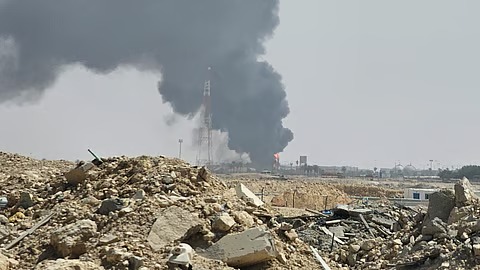
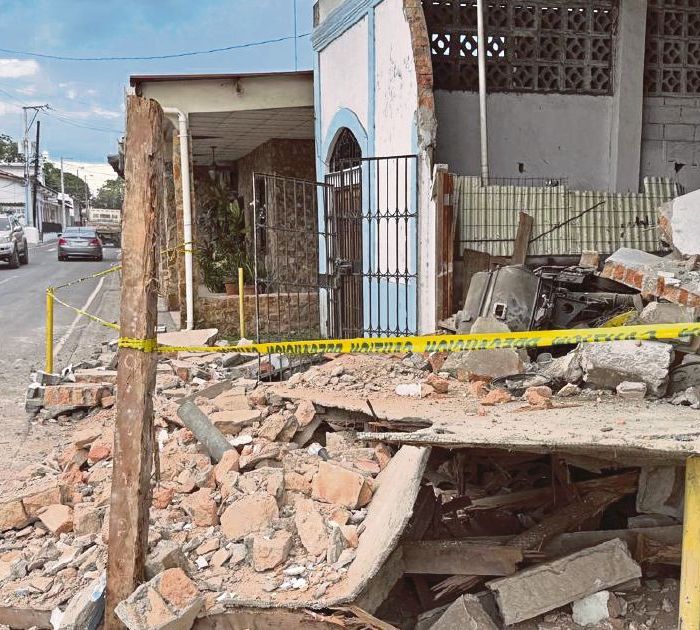
The deadly strikes hit the Ukrainian capital and its outskirts in the early hours of the morning. Two people lost their lives within Kyiv itself, while two more were killed in surrounding districts of the Kyiv region. The death toll could rise as rescue teams continue searching through the rubble.
Ukrainian President Volodymyr Zelenskyy confirmed that Russia had used the Oreshnik intermediate-range ballistic missile during the assault. He added that around 83 people were injured in the bombardment, which involved a staggering 600 drones and 90 missiles. The majority of those weapons were aimed at Kyiv, marking one of the most aggressive Russian attacks in months.
According to Zelenskyy, Russia also struck the city of Bila Tserkva, located in the wider Kyiv region, with the same Oreshnik missile.
What Is the Oreshnik Missile?
The Oreshnik missile has become one of Russia’s most talked-about weapons. It is a hypersonic, intermediate-range ballistic missile capable of carrying either nuclear or conventional warheads. President Vladimir Putin has previously claimed the weapon flies at ten times the speed of sound — fast enough to be nearly impossible to intercept with existing missile defense systems.
According to Putin, the Oreshnik travels “like a meteorite” and can destroy underground bunkers buried multiple floors deep. He has also claimed that multiple Oreshnik launches could rival the destructive force of a nuclear strike, even if conventional warheads are used.
Analysts at the Royal United Services Institute have warned that a missile flying at Mach 10, such as the Oreshnik, could reach Britain in roughly ten minutes if launched from western Russia. That estimate alone has put NATO defense planners on high alert.
A Massive Combined Assault
The attack was not limited to the Oreshnik. The Russian Defence Ministry later confirmed that several other powerful weapons were used in the assault, including:
- Iskander short-range ballistic missiles
- Kinzhal air-launched hypersonic missiles
- Zircon advanced cruise missiles
This combination of high-tech weaponry indicates a coordinated and carefully planned strike, designed to overwhelm Ukrainian air defenses.
Russia claimed the assault was a retaliatory action in response to recent Ukrainian drone attacks. Russian officials specifically pointed to a drone strike on a student dormitory in the Russian-controlled Luhansk region that reportedly killed 18 people.
However, Ukraine’s military denied involvement in that attack, insisting that its drone strike had targeted an elite Russian drone command unit, not civilian infrastructure.
Widespread Damage Across the Capital
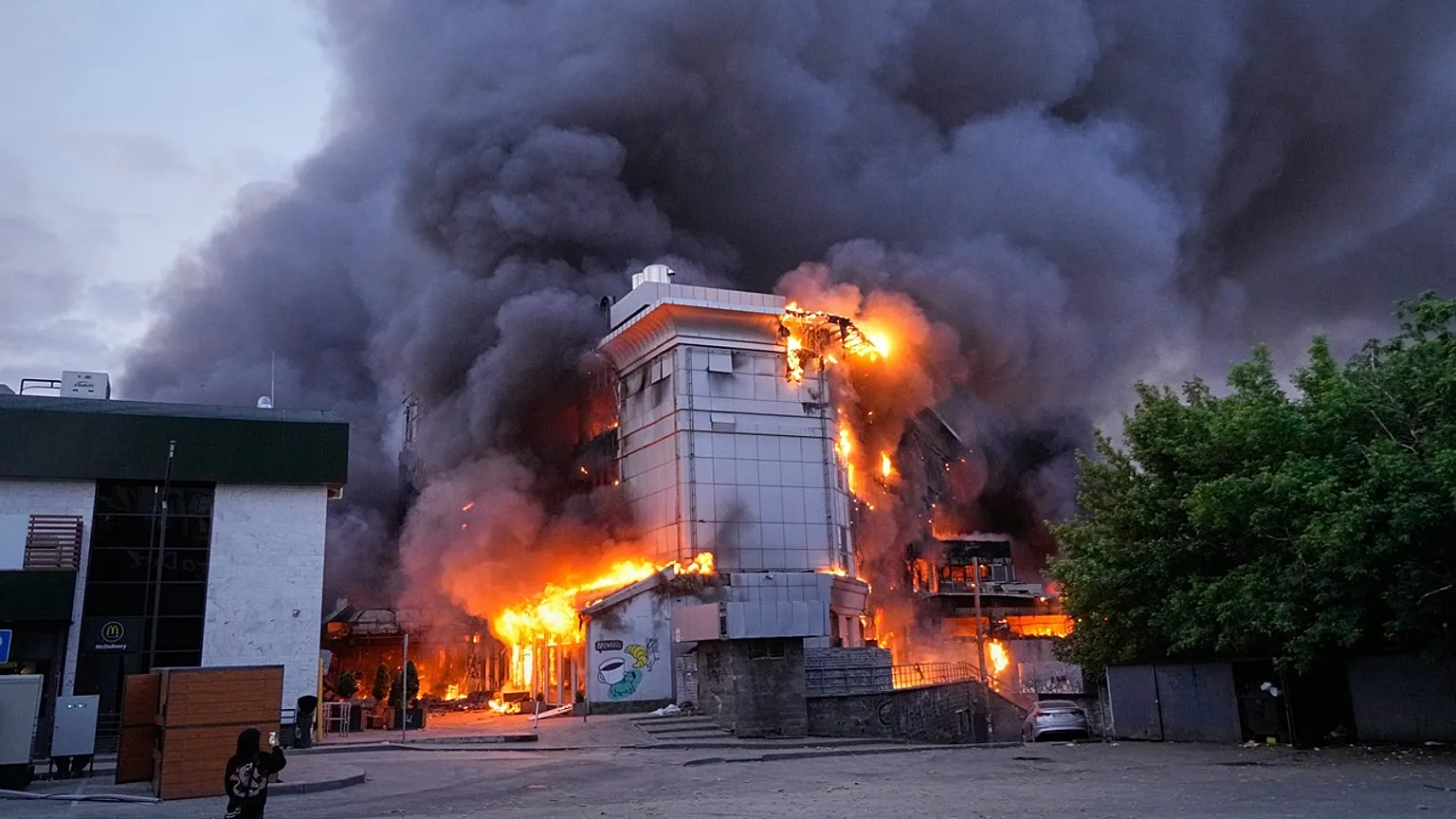
Damage from the overnight assault was extensive. Kyiv military administration chief Tymur Tkachenko reported that strikes hit at least 40 different locations across the city, including:
- Multiple residential buildings
- A school building being used as a shelter
- Supermarkets and warehouses
- Office buildings
- Public infrastructure
Kyiv Mayor Vitali Klitschko confirmed that emergency teams were working through the night to recover victims and contain fires across the affected districts. Many residents had taken refuge in metro stations and shelters as explosions echoed through the city.
The destruction once again underscored the heavy psychological toll the war has placed on Ukrainian civilians. Despite years of repeated strikes, the unpredictability of the missile attacks continues to disrupt daily life and leave families fearing for their safety.
Earlier Warnings From Zelenskyy
In a public address the previous day, President Zelenskyy had warned that Russia was preparing to launch the Oreshnik missile in the coming hours. He revealed that this warning was based on shared intelligence from the United States and Western allies.
The fact that Russia followed through with the strike soon after the warning confirms how close intelligence agencies are now operating with the Ukrainian government. It also highlights the difficulty in actually stopping such advanced weapons, even when their use is anticipated.
A History of Oreshnik Strikes
Sunday’s strike was not the first time Russia used the Oreshnik against Ukraine. The weapon was previously deployed against the western city of Lviv on January 8 as part of a massive overnight bombardment. That attack alone included 278 missiles and drones, hitting western, central, and southeastern Ukraine.
The repeated use of the Oreshnik signals Russia’s growing willingness to deploy its most advanced weapons systems against Ukraine, despite international criticism.
NATO and Western Concerns Grow
The use of hypersonic missiles in such an intense bombardment has alarmed NATO allies. Concerns include:
- The Oreshnik’s ability to evade most modern air defense systems
- The risk of escalation into a wider conflict involving NATO countries
- The potential threat such weapons pose to European security
- Russia’s growing comfort with deploying advanced strategic systems
Neighboring Poland responded by activating its military aviation forces during the attack as a precaution. However, no violations of Polish airspace were detected during the bombardment.
How Ukraine Continues to Cope
Despite the devastation, Ukraine continues to display remarkable resilience. Emergency teams, volunteers, and government officials worked together throughout the night to evacuate the injured, extinguish fires, and provide shelter for displaced residents.
President Zelenskyy used the moment to call once again for stronger international support, particularly in the form of advanced air defense systems capable of intercepting hypersonic threats. He emphasized that without faster Western action, Ukraine’s cities will continue to be vulnerable to weapons designed to terrorize civilians.
What This Attack Signals for the War
The latest Russia Hypersonic Missile Attack on Kyiv could mark a turning point in the war. By deploying its most advanced missiles, Russia appears to be sending a message — that despite years of war, sanctions, and global condemnation, it remains willing to escalate its tactics.
For Ukraine, the attack represents another reminder that survival depends not only on resistance on the battlefield, but on its ability to defend its skies. For the world, it raises serious questions about how to manage a war that increasingly involves the most powerful weapons of the modern era.
Final Thoughts
The Russia Hypersonic Missile Attack on Kyiv has once again pushed Ukraine into a moment of profound grief and heightened danger. With Oreshnik missiles, drones, and other high-tech weapons being unleashed in coordinated attacks, the threat to Ukrainian civilians continues to grow.
As the war drags on, the resilience of the Ukrainian people remains unwavering, but the world is watching with rising concern. Whether through diplomacy, defense support, or international pressure, the global community now faces the challenge of preventing further escalation in a conflict that shows no signs of slowing.
Author