South Korea joint military drills have become the center of an uncomfortable moment between Seoul and Washington, after President Donald Trump instructed his defense secretary to scale them back substantially. President Lee Jae Myung responded Tuesday by saying peace remains his country’s highest priority — while adding that South Korea must also prepare for the worst case scenario.
That pairing of sentiments captures the position Seoul now occupies. It cannot afford to escalate, and it cannot afford to assume the American security commitment will hold in exactly its current form.
What Trump Ordered
Trump directed Defense Secretary Pete Hegseth to significantly reduce the joint exercises, explaining that continuing them at full scale would transmit what he called a totally inappropriate and hostile signal toward North Korea.
Writing on Truth Social from the United States on Sunday, he pointed to what he described as a very good relationship with North Korean leader Kim Jong Un and characterized the country as unthreatening and respectful.
The framing is a significant departure from how Washington has traditionally justified its posture on the peninsula.
Lee’s Careful Reply
Lee did not push back directly. Speaking Tuesday, he emphasized that the exercises — known as Ulchi Freedom Shield — are defensive in nature, not designed to attack North Korea and not intended to increase tension in the region, according to a CNBC translation of the Korean-language statement.
His broader message balanced two things at once: peace as the overriding goal, and readiness for a scenario in which peace fails.
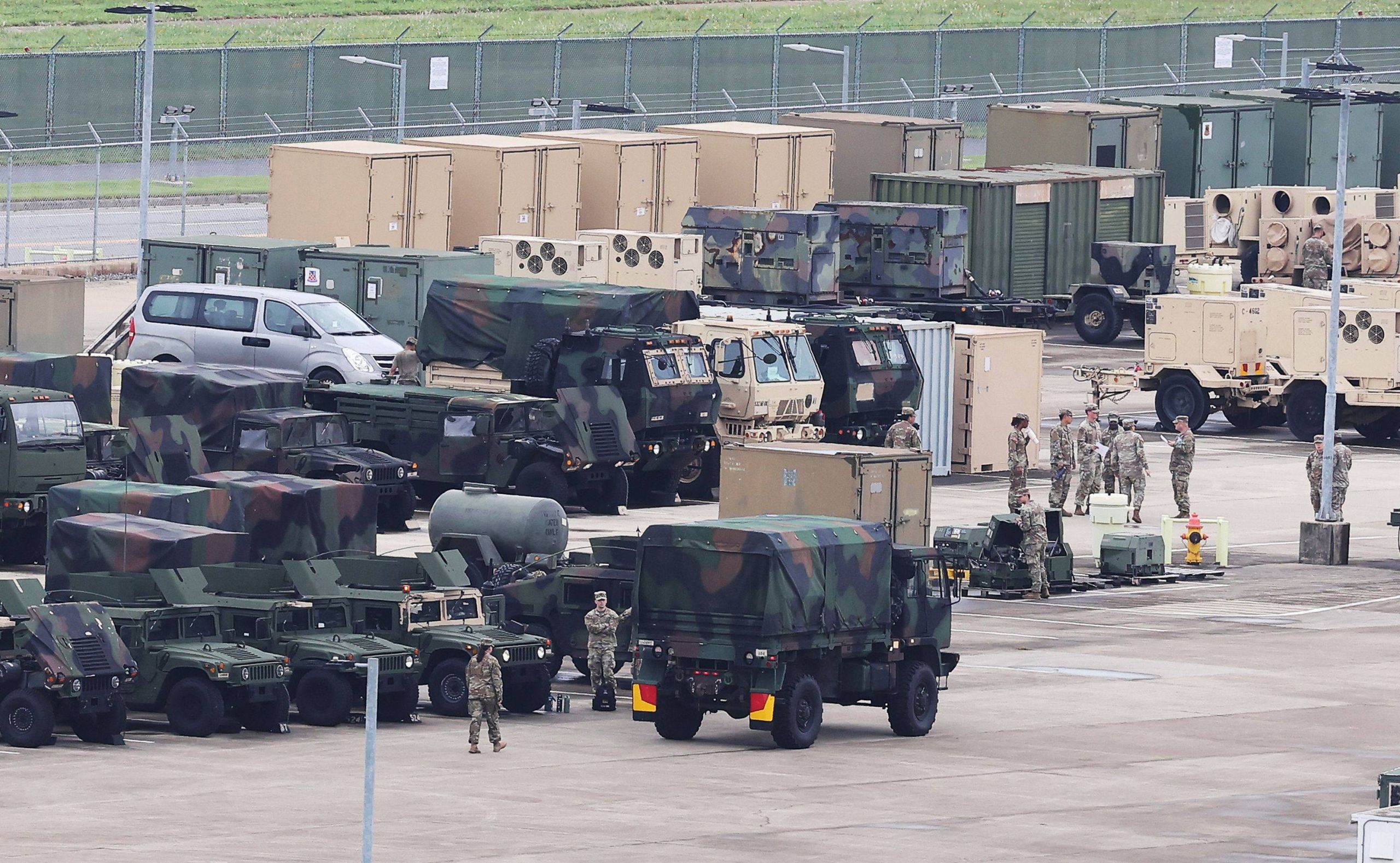
The drills began Monday and are scheduled to continue through Aug. 27, with roughly 18,000 South Korean personnel taking part.
Pyongyang’s Standing Objection
North Korea has denounced these exercises for decades, characterizing them as preparation for an invasion.
Its foreign affairs ministry issued a statement last week arguing that the United States had made no effort to disguise its intention to finalize preparations for genuine military confrontation. That, the ministry contended, effectively confirms that drills described by Washington and Seoul as annual and defensive amount to a rehearsal for aggressive war.
The rhetoric is familiar and largely unchanged year to year. What has changed is that the American president has now offered a partial echo of the underlying complaint.
A Second Front: Iran
Trump raised a separate grievance on Monday, accusing Seoul of failing to support the United States in its conflict with Iran.
He pointed to American troops stationed on the peninsula, saying 39,000 soldiers are there guarding South Korea from its next-door neighbor while Seoul declines to assist with what he characterized as a straightforward military operation in Iran.
The actual figure is lower. U.S. Forces Korea, the command overseeing American personnel in the country, numbers around 28,500.
South Korea’s presidential office responded with deliberate ambiguity. Officials said they are engaged in close discussions with the American side about practical and military contribution measures, weighing factors that include readiness on the peninsula and domestic legal requirements, according to South Korean media reports Monday.
Translated from diplomatic language, that means Seoul is neither refusing nor committing.
A Familiar Playbook
Victor Cha, Korea chair at the Center for Strategic and International Studies, sees a recognizable strategy at work. Speaking on a CSIS podcast, he said Trump is using both rhetoric and timing around the exercises to draw Kim toward a meeting.
Cha noted this is not unusual behavior. The president has previously treated military exercises as a bargaining instrument.
The precedent is concrete. In 2018, Trump suspended drills with South Korea while negotiations between Washington and Pyongyang were underway.
Cha offered a second explanation as well. Part of the reason this is surfacing now, he suggested, is that the exercise calendar gives Trump a convenient opportunity to deliver a tangible signal — and to move coverage away from Iran. Trump has grown tired of that subject, Cha said, and is shifting toward something else.
Why the Drills Matter Operationally
Ulchi Freedom Shield is not primarily a display. It exists to test whether two militaries with different languages, command structures and equipment can function as a single force under pressure.
Combined exercises serve several concrete purposes:
- Rehearsing command handoffs between allied leadership
- Testing communications systems under simulated wartime conditions
- Training personnel who rotate through their posts every few years
- Validating logistics and reinforcement planning
Skills built through this kind of coordination degrade when practice stops. That is the practical concern behind Lee’s insistence on preparing for the worst — not an expectation of imminent conflict, but recognition that readiness is perishable.
The Deeper Uncertainty
For Seoul, the episode raises a question larger than the size of any single exercise. The alliance has functioned for seventy years on a shared assessment of the threat. Trump’s description of North Korea as unthreatening breaks from that assessment publicly.
South Korean planners cannot base national defense on a characterization that could reverse with the next social media post. Nor can they openly contradict an ally whose troops and nuclear umbrella underpin their security.
Lee’s statement was an attempt to hold both realities simultaneously — affirming the pursuit of peace while quietly signaling that his government intends to be ready regardless of how Washington’s posture evolves.
The exercises continue through Aug. 27, presumably in reduced form. What happens after that depends less on the Korean Peninsula than on whether Kim Jong Un decides to take the invitation being extended.
Author
-
Lucienne Albrecht is Luxe Chronicle’s wealth and lifestyle editor, celebrated for her elegant perspective on finance, legacy, and global luxury culture. With a flair for blending sophistication with insight, she brings a distinctly feminine voice to the world of high society and wealth.