The dramatic South Korean stocks plunge on Tuesday sent shockwaves through global markets, as the country’s benchmark index nosedived and even triggered an emergency trading halt. At the center of the turmoil sat the nation’s semiconductor giants, whose stunning declines reflected deepening doubts about whether the record profits fueled by artificial intelligence can truly last.
A Steep and Sudden Drop
The scale of Tuesday’s selloff was remarkable. The benchmark KOSPI index closed down 395.02 points, representing a sharp 4.9 percent decline that brought it to 7,656.31. The situation had looked even more dire earlier in the session, when the index plummeted by a staggering 8.2 percent at one point.
This retreat marks a significant shift from the market’s recent highs. The index has now fallen 16 percent from its record close of 9,114.55 reached on June 22. Despite this pullback, it’s worth noting that the KOSPI remains up an impressive 82 percent for the year, underscoring just how extraordinary the earlier rally had been.
The volatility was severe enough to activate one of the market’s safety mechanisms. Circuit breakers, which impose 20-minute trading halts to calm frenzied activity, have been triggered six times across the exchange this year. That figure highlights the intense turbulence that has gripped semiconductor stocks throughout 2026.
Chip Giants Lead the Decline
The heaviest losses fell squarely on the shoulders of South Korea’s two chipmaking titans. Samsung Electronics and SK Hynix spearheaded the downturn, sinking 6.9 percent and 6.1 percent respectively by the close. During intraday trading, both companies had shed more than 10 percent of their value.
What made these declines especially puzzling was the timing. Just before the selloff, Samsung had delivered exceptionally strong news. The company forecast a 19-fold surge in its second-quarter operating profit, an eye-popping figure that would ordinarily send shares climbing.
Instead, the stock tumbled. This counterintuitive reaction laid bare a growing concern among investors: that the impressive results may have already been fully reflected in stock prices following a blistering rally in memory-chip shares.
When Good News Isn’t Good Enough
Market analysts scrambled to make sense of the paradox. Seo Sang-young, an analyst at Mirae Asset Securities, captured the prevailing sentiment succinctly. He explained that while Samsung’s results qualified as good news, they couldn’t be viewed as entirely positive.
The issue, according to Seo, is that market expectations had climbed so high that they left little room for further optimism. This dynamic sparked worries that such elevated earnings might not prove sustainable over time. In other words, investors had already anticipated stellar performance, so even outstanding numbers failed to provide fresh reasons to buy.
Regional Contagion Spreads
The pain didn’t stay confined to South Korea. Chip stocks across neighboring Japan also suffered sharp losses, demonstrating how tightly connected the region’s semiconductor industry has become.
Among the notable casualties was Japanese memory-chip maker Kioxia, which fell more than 10 percent. This regional spillover illustrated that the anxiety surrounding AI-related chip stocks extends well beyond any single company or country.
Han Ji-young, an analyst at Kiwoom Securities, offered valuable perspective on the situation. He emphasized that the chip sector’s underlying fundamentals remain sound, with no genuine problems in that regard. However, he noted that demand for profit-taking persists, while recurring concerns about AI and the chip sector keep surfacing. These repeated worries, he suggested, have amplified market volatility.
The Retail Investor Story
One of the most fascinating aspects of this year’s market saga involves the role of individual investors. Retail investors have been the driving force behind the KOSPI’s remarkable climb throughout 2026.
Their bets have paid off handsomely. Under their enthusiasm, Samsung shares soared more than 130 percent, while SK Hynix rocketed up by over 220 percent. These gains reflect the powerful influence that everyday investors have exerted on the market’s trajectory.
Tuesday’s trading revealed a clear divergence between different types of investors:
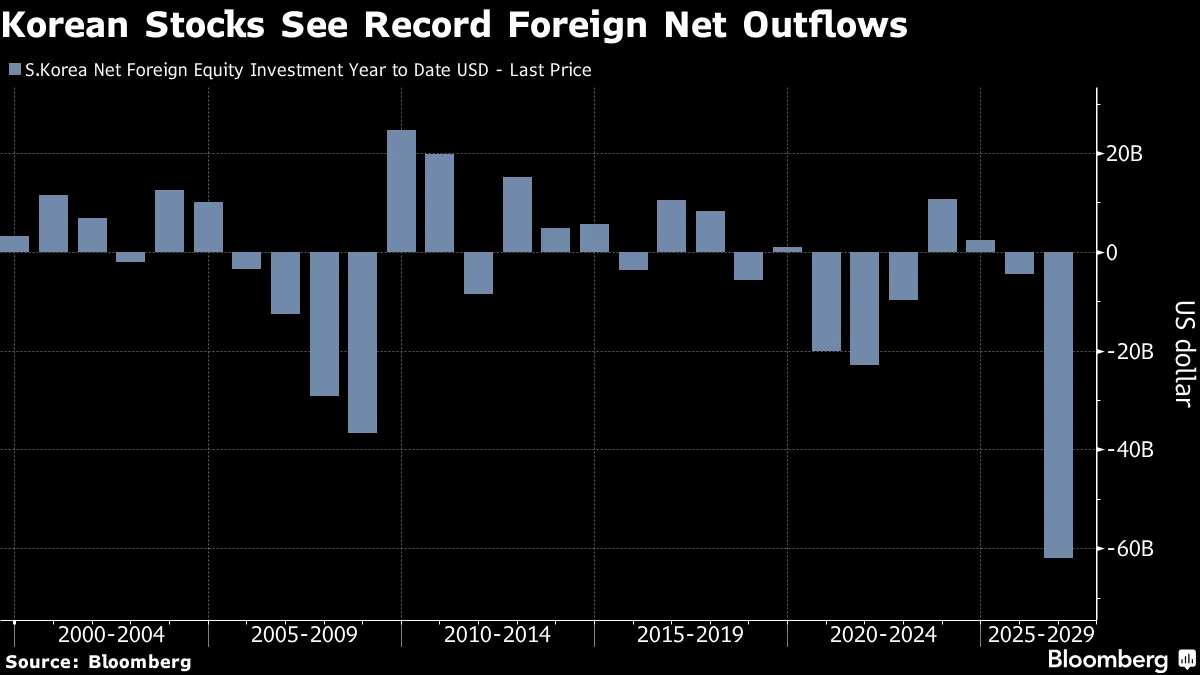
- Foreign investors turned into net sellers, unloading shares worth 2.9 trillion won, equivalent to roughly $1.9 billion
- Retail investors moved in the opposite direction, purchasing 3.2 trillion won worth of stock
This pattern suggests that while foreigners rushed to lock in profits or reduce exposure, domestic individual investors saw the drop as a buying opportunity.
Buying the Dip
The appetite of retail investors for beaten-down shares was evident in the data. Their borrowed investment in KOSPI shares stood at 29.7 trillion won as of Friday, sitting just below the record high of 29.8 trillion won set in late June.
Kim Seok-hwan, an analyst at Mirae Asset Securities, described the behavior he observed. He noted that retail investors appeared to be actively purchasing the dip and placing long bets, both in the spot market and through exchange-traded funds. This aggressive stance reflects confidence among individual investors that the decline represents a temporary setback rather than a lasting reversal.
Policymakers Take Notice
The extreme volatility has caught the attention of government officials. South Korean Finance Minister Koo Yun-cheol addressed the matter during a parliamentary session, revealing that policymakers were actively discussing ways to reduce the harmful effects of sharp price swings.
Of particular concern were single-stock leveraged exchange-traded funds. These financial products, introduced earlier in the year and tied to chipmaker stocks, have the potential to magnify volatility. The government’s willingness to examine their impact signals genuine unease about the risks they may pose to market stability.
Trouble Beyond the Chip Sector
While semiconductors dominated the headlines, other major companies faced their own challenges on this difficult trading day.
LG Energy Solution, a prominent battery maker, slid 6.4 percent after delivering discouraging news. The company projected that its April-to-June operating profit would tumble by 77 percent, blaming weak electric-vehicle demand for dragging down its battery sales. This forecast added to the gloomy mood permeating the market.
Meanwhile, Hanwha Ocean suffered an even more brutal blow, plunging 22.7 percent. The steep drop came after Canada chose German submarines over South Korean competitors in a hotly contested defense contract. Losing out on such a significant deal dealt a serious setback to the company’s prospects.
Final Thoughts
Tuesday’s dramatic sell-off underscores the delicate balance facing investors caught up in the AI-driven chip boom. Samsung’s record-breaking profit forecast, which might normally have sparked celebration, instead served as a trigger for profit-taking and renewed skepticism.
The episode reveals a market grappling with sky-high expectations, where even phenomenal results struggle to satisfy. As foreign investors head for the exits and retail investors defiantly buy the dip, a fascinating tug-of-war has emerged over the sector’s future direction.
With policymakers now watching closely and volatility showing no signs of abating, the coming days will test whether the semiconductor rally can regain its footing or whether Tuesday’s plunge marks the beginning of a more prolonged reckoning. For now, the South Korean market stands as a vivid illustration of both the immense potential and the inherent risks of the AI investment frenzy.
Author