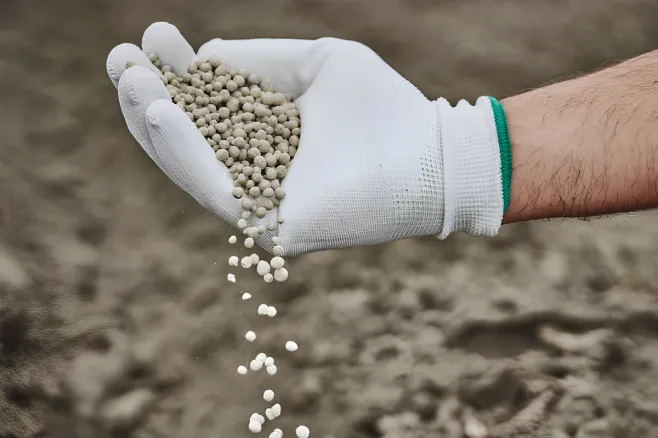
President Donald Trump declared an emergency on Monday aimed at safeguarding the U.S. food supply, temporarily lifting import duties on certain Moroccan fertilizer products in a move designed to keep American farmers supplied with a critical resource.
What the Declaration Does
Under the presidential emergency declaration, phosphate fertilizer imported from Morocco will be exempt from tariffs for up to eight months, or until the emergency declaration is brought to an end, whichever comes first.
The proclamation framed the action as a response to threats facing the availability of enough fertilizer to meet America’s agricultural needs. According to the document, the goal is to ensure that American farmers can access a sufficient and timely supply of phosphate fertilizers in the near term, reducing any serious risks to the nation’s food supply.
The Reasoning Behind the Move
The declaration, provided exclusively to FOX Business, pointed to recent overseas conflicts and trade disputes as forces that have disrupted global supply chains and strained access to the fertilizers U.S. farmers depend on.
The administration tied the decision directly to national security and food stability. The proclamation stated that Trump believes American farmers must maintain reliable access to key fertilizers in order to protect food production, safeguard national security, and ensure a steady domestic food supply.
A Short-Term Fix With Longer-Term Goals
Officials describe the tariff suspension as a temporary measure rather than a permanent shift. While the exemption is in place, the administration says it will work alongside American companies to expand domestic fertilizer production and lessen the country’s dependence on foreign suppliers.
The White House cast the move as one piece of a broader effort to support farmers and bring down costs for working families. According to a fact sheet, the action sits among several steps the president has taken to ease financial pressure on agricultural producers and households alike.
Tying It to Tax Relief
The administration also used the announcement to spotlight Trump’s Working Families Tax Cuts Act, which it credited with delivering historic relief to farmers. The White House highlighted provisions that let farmers write off the cost of new equipment, established a permanent 20 percent tax deduction for small businesses, and allowed farmers to defer capital gains taxes when selling farmland to another farmer.
The fact sheet further emphasized that the law made the near-elimination of the so-called death tax permanent, a change the White House said benefits more than 2 million family farms.
A Pattern of Agricultural Action
Monday’s declaration builds on a series of related moves over the past several months. In February 2026, Trump invoked the Defense Production Act to protect the U.S. supply of elemental phosphorus, a material critical to both farming and military equipment.
Then in June 2026, he signed an executive order intended to speed up the development of agricultural technologies and reinforce the nation’s food security. The White House also touted the administration’s broader trade approach, asserting that its America First Trade Agenda has expanded global market access, boosted farmer incomes, supported rural jobs, and narrowed the agricultural trade deficit.
The Bigger Picture
Taken together, these actions reflect an effort to shore up a vulnerable link in the food production chain at a time when global instability has made fertilizer supplies harder to secure. By temporarily removing tariffs on Moroccan phosphate while pushing to build up domestic capacity, the administration is attempting to balance an immediate need with a longer-term ambition to make American agriculture less reliant on foreign sources. Whether the eight-month window proves enough to stabilize supply will likely depend on how quickly domestic production can scale up to fill the gap.
Author