The Trump administration is preparing to use homeland security funds as a powerful bargaining chip, threatening to withhold tens of millions of dollars from states unless they agree to a sweeping overhaul of how they run elections. According to multiple sources and internal documents obtained by CNN, the strategy ties critical security money to a series of mandatory election reforms.
The move represents a significant escalation in President Donald Trump’s ongoing effort to combat what he describes as widespread voter fraud, even though studies have repeatedly shown such fraud to be far rarer than he claims. It also reflects a broader push to expand federal influence over election administration, a domain traditionally controlled by the states.
What the New Rules Demand
At the center of the plan are new conditions attached to several homeland security grant programs. Under the proposed guidelines, states would be required to take a number of specific steps to remain eligible for full funding.
The key mandates include:
- Phasing out certain electronic voting systems in favor of hand-marked paper ballots.
- Running their complete voter rolls through a controversial Department of Homeland Security citizenship verification database.
- Conducting manual election audits using methods established by the administration.
- Using an approved government system to verify the citizenship of anyone working at a polling location.
States that decline to comply would face steep consequences. According to the documents, refusal would mean losing 20% of the grant money, a penalty that could amount to millions of dollars in lost security funding.
Why These Grants Matter
The stakes are high because of how important these funds are to state and local governments. The DHS grants, which states apply for, are expected to total more than $1 billion in the current fiscal year. They serve as one of Washington’s primary tools for helping communities prevent terrorism, protect infrastructure, and prepare for major disasters.
For years, these grants have required that at least 3% of the funds be devoted broadly to election security. The new guidelines, however, go much further by imposing a detailed set of mandatory reforms along with significant financial penalties for those who don’t fall in line.
The administration has framed the effort as a matter of national security. A DHS spokesperson emphasized that no changes to grant requirements or funding distributions become official until formally announced through proper agency channels, while adding that the administration views election security as a core national security priority. The spokesperson also stressed that any recipient of federal funding should expect accountability for how taxpayer dollars are spent.
A Familiar Playbook
This approach fits a pattern that has come to define the administration’s relationship with the states. Using federal funds as leverage to pressure states into adopting policies aligned with the president’s agenda has become a recurring tactic.
Similar strategies have been deployed to punish states over immigration policies and diversity, equity, and inclusion initiatives. In several cases, courts have stepped in to block those efforts, and legal observers expect this latest move could meet the same fate.
The legal foundation here is shaky for the administration. The Constitution gives states control over administering elections, and while Congress can pass election regulations, the president has very limited authority to impose election rule changes unilaterally. Courts have repeatedly affirmed this principle, and Trump’s earlier attempts to overhaul elections through executive orders and demands for sensitive voter data have run into legal obstacles.
David Becker, a former Justice Department lawyer who now advises election officials, predicted that the new requirements would likely be blocked in the courts.
The Push Toward Paper Ballots
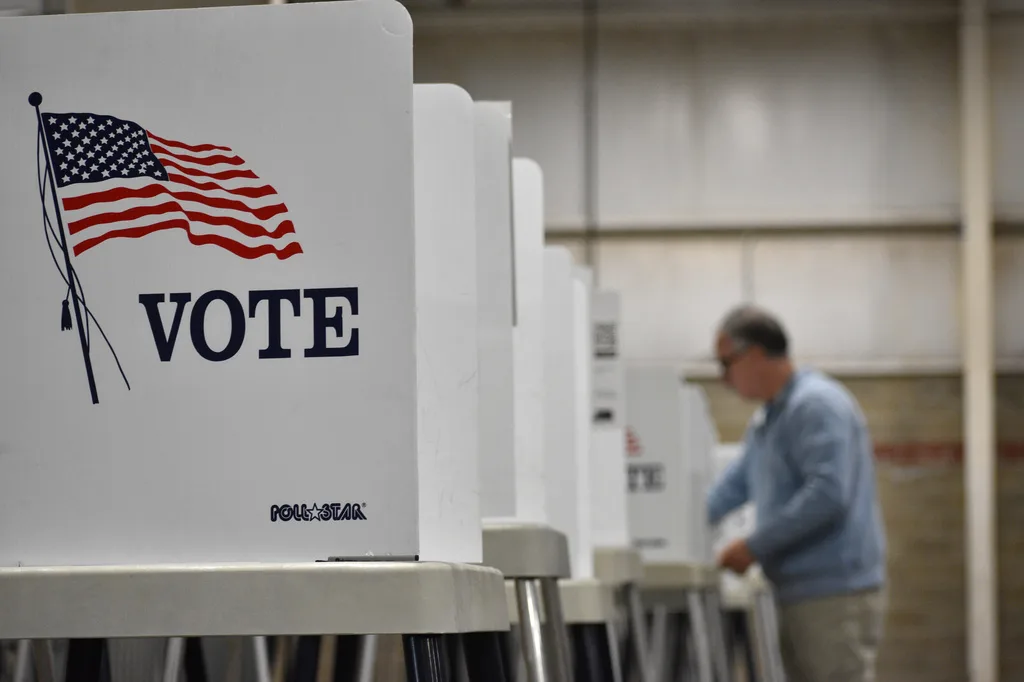
One of the most consequential elements of the plan involves voting equipment. States would be required to submit a plan to phase out voting systems that don’t use paper ballots marked by hand and tabulated during elections.
While most jurisdictions already offer hand-marked paper ballots, the change would still affect a substantial portion of the electorate. About 30% of voters live in places that rely entirely on ballot-marking devices, which record choices and print a paper ballot for counting, or on direct-recording systems that store votes electronically.
Several places would be forced to transition under the new rules, including Delaware, Georgia, Nevada, South Carolina, and Los Angeles County. For many of these jurisdictions, the shift would represent a major operational and financial undertaking.
The Controversial SAVE Database
Another contentious requirement involves verifying voter rolls through a federal system. The grant conditions would compel states to run their full voter rolls through SAVE, short for Systematic Alien Verification for Entitlements, a tool designed to identify potential noncitizen voters.
Critics have raised serious concerns about the system’s reliability. They argue that SAVE can produce false matches and may wrongly flag eligible voters for removal, potentially disenfranchising legitimate voters.
The political landscape around SAVE is already fraught. While many states already use the system to vet their voter rolls, others have refused. The Justice Department has gone so far as to sue 30 states for declining to hand over their voter lists for a federal audit using the tool.
A Costly Mandate
Beyond the legal and political questions, the proposed changes carry a hefty price tag. Upgrading election equipment to align with voluntary voting standards has been estimated to cost $2.7 billion nationwide.
The financial burden becomes clearer at the state level. In Georgia, where the legislature has also passed a law requiring hand-marked paper ballots, Republican Secretary of State Brad Raffensperger has estimated the transition will cost $66 million.
The new grant plan raises the stakes by tying a much larger share of homeland security funding to compliance. Yet there’s a notable irony: the cost of complying might ultimately exceed the total amount of money being withheld from a state. The guidelines do specify that states can request additional funding to help implement the changes, though questions remain about whether that would fully offset the expense.
A History of Funding Pressure
This isn’t the first time homeland security grants have been used as a lever. Last year, officials attempted to withhold money unless states submitted updated population counts reflecting the administration’s mass deportation campaign. Several states sued in response, and a court ultimately blocked the policy.
That precedent suggests the current effort could follow a similar trajectory, with states pushing back and courts being asked to weigh in once again.
What to Watch Going Forward
As the new guidelines prepare to go out to states later this month, several key questions loom:
- Whether states will comply, resist, or challenge the requirements in court.
- How quickly legal challenges materialize and whether courts block the mandates.
- The financial strain the changes could place on states already facing tight budgets.
- How the SAVE database requirement affects voter rolls and eligible voters.
The Bigger Picture
The administration’s plan to leverage homeland security funds in pursuit of election changes underscores a broader strategy of using federal money to shape state policy. Supporters frame it as a necessary step to protect election integrity, while critics see it as federal overreach into a constitutionally state-controlled process.
With courts having already blocked similar efforts and constitutional principles favoring state authority over elections, this latest gambit appears headed for a contentious legal battle. For now, states find themselves weighing the cost of compliance against the risk of losing vital security funding.
This remains a developing story, and further updates are likely as the guidelines are formally released and states begin to respond.
Author