Trump Administration Argues Lawsuit Against White House UFC Fight Was Filed Too Late
The legal fight over the upcoming White House UFC fight has intensified, with the Trump administration pressing a federal judge to throw out an effort to stop the event. At the heart of the government’s argument is timing: officials contend that the lawsuit, filed by two Virginia residents, came far too late to justify a court stepping in now, just days before the bout is scheduled to take place.
Justice Department attorneys laid out their position before U.S. District Judge Amit P. Mehta, warning that halting the event at this stage would unravel months of detailed planning and impose an unfair burden on numerous parties.
The Government’s Case for Letting the Event Proceed
The administration framed the request to block the fight as both impractical and unjust given how close the event is. According to the Justice Department, an order stopping the bout would harm a wide range of people who have relied on the assumption that it would go forward. Those affected, they argued, include:
- President Donald Trump
- Thousands of spectators planning to attend
- More than a dozen athletes preparing to compete
Government lawyers were pointed in their language, dismissing the plaintiffs’ complaints. They argued that no one was forcing the two residents to watch UFC Freedom 250 against their will and characterized the lawsuit as an attempt to exercise a “heckler’s veto” at the last possible moment.
The plaintiffs had claimed the event would cause them an “aesthetic injury,” among other harms. The administration countered that such concerns were vastly outweighed by the time, labor, and money already invested, not to mention the anticipation of fans and service members planning to attend or watch from afar. The plaintiffs, the government noted, had remained silent for months while those costs piled up, making the equities, in their view, decidedly one-sided.
A Health Argument for the Athletes
Beyond logistics, the administration raised a more unexpected concern: the wellbeing of the fighters themselves. The Justice Department warned that any delay could endanger the health of the 14 professional athletes set to compete.
The reasoning centers on the demands of weight cutting, the process fighters use to reach their target weight before a bout. Prolonging that process, the government argued, could lead to serious medical complications, including heat-related injuries, kidney problems up to and including kidney failure, seizures, and hypovolemic shock. In other words, postponing the event wouldn’t simply be inconvenient; it could pose real physical risks to the competitors.
Who Brought the Lawsuit and Why
The legal challenge was filed on Saturday by the Public Integrity Project, acting on behalf of two plaintiffs: a Vietnam War veteran and a civic activist.
Their central argument is that officials sidestepped federal rules to allow a privately run event to take place on government property. Specifically, they allege that the administration violated a law requiring congressional approval before any structure can be built on public land in Washington, D.C.
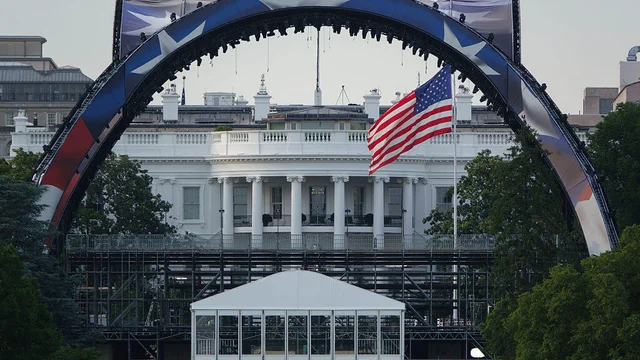
That concern is grounded in something very tangible. In recent days, a large structure was erected on the White House’s South Lawn to host the fight, which is scheduled for Sunday. A ceremonial weigh-in is planned for the day before at the Lincoln Memorial, adding another layer to the plaintiffs’ objections about the use of iconic public spaces.
How Judges Weigh Emergency Requests
When evaluating urgent requests like this one, judges typically consider several factors. These include whether granting the request would be unfairly harmful to one side, whether there’s a genuine public interest in halting a government action, and how strong the underlying legal claims actually are.
On that last point, the two sides are sharply divided. The Justice Department told Judge Mehta that all of the claims raised by the Virginia residents are without merit. The government maintained that federal law does not require congressional sign-off for temporary structures on the White House grounds, and noted that the cage, which it referred to as the “claw,” would begin to be taken apart on Monday, the day after the event.
The Stakes of Irreparable Harm
The plaintiffs, for their part, are emphasizing the permanence of what they’re trying to prevent. In their court filings, they argued that the harm at issue is irreparable in the most fundamental sense, because once it happens, it cannot be reversed.
Their position is that staging cage fights on the South Lawn and holding weigh-ins at the Lincoln Memorial would permanently violate the character and dignity of those landmark spaces. Once the event occurs, they contend, no later court proceeding could undo the damage to the symbolic integrity of the locations.
What Happens Next
As of now, Judge Mehta has not scheduled a hearing on the plaintiffs’ request for an emergency order to stop the event. The challengers have asked the judge, an appointee of former President Barack Obama, to rule on their request by Thursday, giving the court a narrow window to act before the weekend.
The outcome will hinge on how the judge balances competing interests: the plaintiffs’ claims about protecting the sanctity of national landmarks against the administration’s arguments about timing, practicality, and the wellbeing of the athletes involved. With the event just days away, the clock is very much a factor, and the decision, whichever way it goes, will likely come down to the wire.
Author