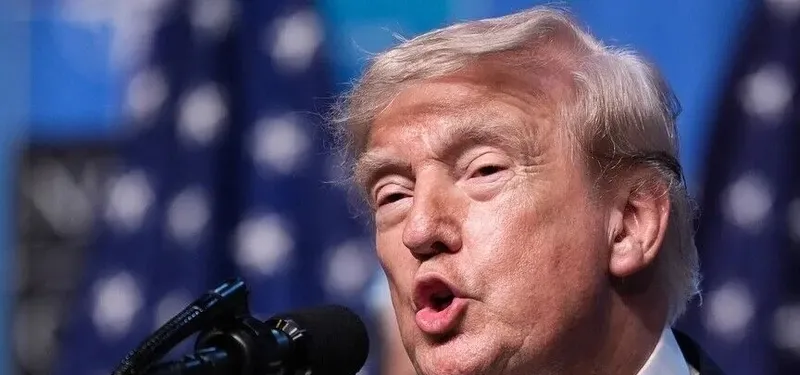
The state of America’s munitions stockpile has become an unusually public argument, with President Donald Trump attacking the reporting, threatening prosecution over the leaks, and then acknowledging in the same news cycle that some categories of advanced weaponry are indeed running tighter than usual.
According to a CNN report, Trump’s anger centers less on whether the information is accurate and more on when it emerged.
Timing, Not Truth
The concern, as described in the reporting, is negotiating leverage. Trump reportedly believes the disclosures weaken the American position at a delicate point in talks with Iran, particularly while he continues to threaten further military action as a pressure tactic to push Tehran toward an agreement.
The subject reportedly dominated last week’s Cabinet meeting at Camp David. CNN, citing six people familiar with the session, said Trump was frustrated that details about American munitions had reached the public.
One detail from that account stands out. Those sources said Trump had been aware of potential shortages for months and was not surprised by the substance of the reports. His frustration was about exposure, not revelation.
Officials described the core objection as one of image. The information surfaced precisely when the president wanted to project strength toward Iran, and public discussion of depleted inventories undercuts that posture.
The Public Response
Trump addressed the reporting directly on Truth Social, asserting that the United States holds massive quantities of munitions, particularly of certain types. He added that large amounts are being manufactured and delivered as needed, and claimed defense companies are building more plants and factories than at any point in the country’s history.
In the same breath, he acknowledged that some of the reporting was accurate, and said his administration would pursue long prison sentences for those responsible for the leaks.
That combination is the most revealing element of the response. Threatening prosecution over disclosures while simultaneously disputing their accuracy creates an obvious tension, since there is nothing to prosecute if nothing genuine was released.
The Oval Office Admission
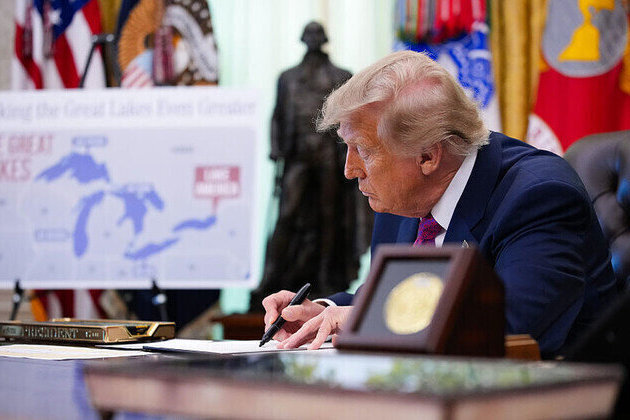
Speaking later in the Oval Office, Trump drew a distinction that clarified the picture considerably.
He conceded that some advanced munitions are in tighter supply, while maintaining that less sophisticated weapons remain available in what he described as virtually unlimited quantities.
That framing is more precise than the initial denial, and it aligns with how defense analysts typically describe the problem. General-purpose ordnance can be produced at scale relatively quickly. Advanced precision weapons and interceptors cannot.
The reason is structural. Sophisticated munitions depend on specialized components, limited numbers of qualified suppliers and multi-year production timelines. Announcing new factories does not shorten those timelines in the near term. Facilities take years to build, qualify and bring to full output.
So the accurate version of the situation may be that both claims are true simultaneously: overall stockpiles are large, and the specific categories that matter most for long-range strike and missile defense are strained.
Vance Sets Expectations Low
Vice President JD Vance offered a notably pessimistic assessment of the diplomatic track.
He described the Iranians as extraordinarily difficult people and criticized what he termed Tehran’s fracture system, a reference to divided or competing centers of authority within the Iranian government.
He went further, characterizing the Iranians as radicals who want the war to continue.
Those comments sit awkwardly alongside an administration actively pursuing an agreement. Public pessimism from the vice president can function as pressure, signaling that American patience is finite. It can also constrain the negotiators by narrowing the space for compromise.
What the Talks Are Actually About
Two issues remain central to the negotiations.
The first is maritime disruption through the Strait of Hormuz, a chokepoint through which a substantial portion of global oil shipments passes. Interference there produces immediate economic consequences well beyond the region.
The second is Iran’s nuclear program, a dispute that predates this conflict by decades and has survived multiple diplomatic frameworks.
Neither is easily resolved, and both involve verification questions that have historically been the hardest part of any agreement with Tehran.
The Underlying Problem
Strip away the dispute over leaks and a coherent picture emerges.
If advanced munitions are genuinely constrained, that constraint shapes what military options are realistically available. Threats carry weight in proportion to the capacity behind them, and an adversary who believes the arsenal is thinning has less reason to concede.
That is precisely why the disclosures irritated the administration. The information does not change the military balance, but it changes what Tehran believes about the military balance, and belief is what negotiations run on.
Whether the leaks meaningfully altered Iran’s calculations is unknowable from the outside. What is clear is that the administration considers the perception damaging enough to threaten prison time over it, while conceding the underlying facts in public remarks a day later.
Author
-
Lucienne Albrecht is Luxe Chronicle’s wealth and lifestyle editor, celebrated for her elegant perspective on finance, legacy, and global luxury culture. With a flair for blending sophistication with insight, she brings a distinctly feminine voice to the world of high society and wealth.