A Trump think tank lawsuit threat has escalated a dispute over crime statistics in the nation’s capital into a legal confrontation, with the president demanding a retraction and apology or promising to seek $5 billion in damages.
The target is the Center for American Progress, a progressive research organization whose published analysis reached conclusions the White House found unwelcome.
Why This Particular Issue Matters to the President
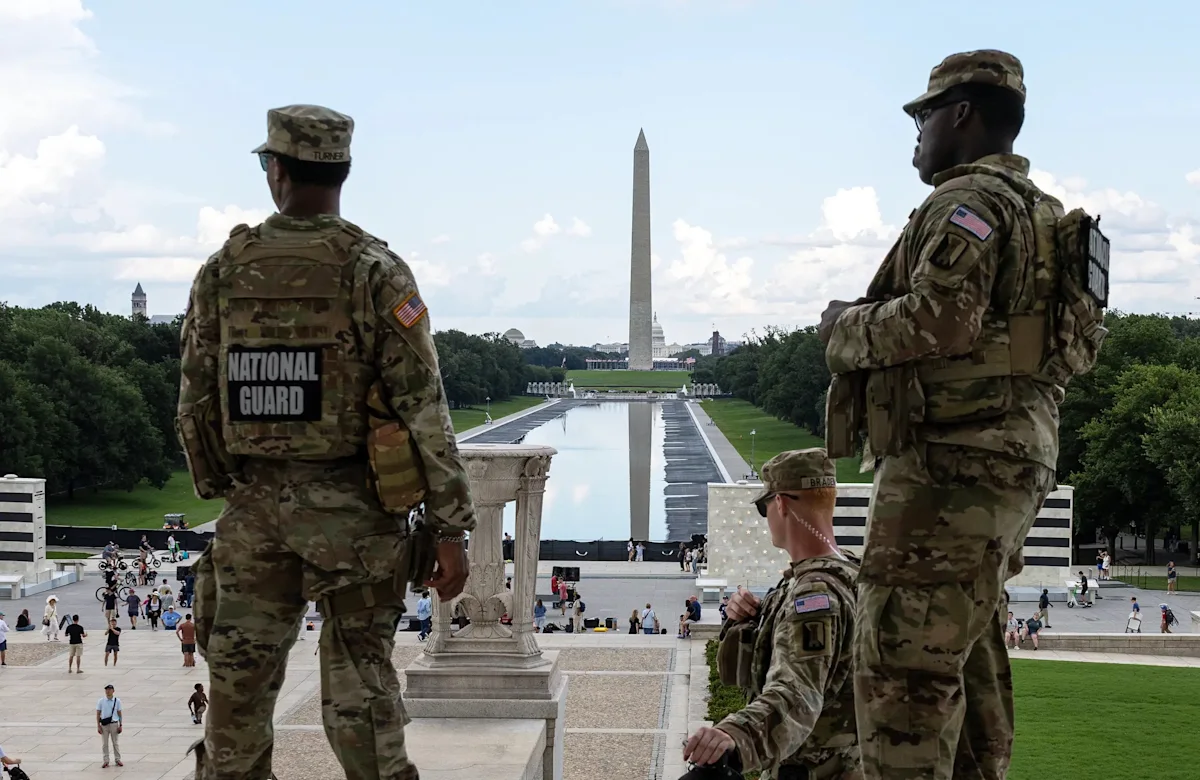
Crime in Washington occupies a special place in the president’s political messaging. He has treated the city as proof of concept for an approach combining deportations with National Guard deployments, and has repeatedly described the result as a transformation.
At a White House event several weeks ago, he claimed credit for turning the District into one of the safest places in the country. He characterized the city’s previous condition as a graffiti-covered, crime-ridden mess, and said his administration had converted it into something approaching paradise.
Those claims have been a consistent feature of his public remarks for nearly a year.
What the Research Actually Found
The difficulty for that narrative has come from independent analysis.
In the spring, NPR reported on findings from the Niskanen Center, a nonpartisan organization, which examined crime data and concluded that the policy had cut down minor property offenses while producing little or no measurable effect on violent crime. The report also emphasized the substantial expense borne by taxpayers.
Last month, the Center for American Progress published related work reaching a similar conclusion: the administration’s approach has delivered considerably less improvement in violent crime than the president has suggested.
The report went online July 13.
The Legal Threat
According to reporting from The New York Times, one of the president’s personal attorneys, Alejandro Brito, sent a letter Monday warning of a defamation suit unless the organization fully withdrew its report.
The letter went to Neera Tanden, who serves as the group’s president and chief executive and previously worked as a senior adviser to President Joe Biden, along with several board members.
Brito asserted that the report contained statements that were both false and malicious. He set a deadline of 5 p.m. Friday for a retraction accompanied by an apology directed at the president.
Failing that, the letter indicated, a $5 billion civil action would follow.
Notably, it remains unclear whether the president has actually read the analysis in question. He publicly attacked it as a radical left scam after seeing a television segment describing the findings.
The Organization Refuses to Fold
The pressure campaign has not produced the intended result.
Tanden issued a statement declaring that the organization would neither cower nor bend in response to legal threats. She defended the underlying work as grounded in rigorous, evidence-based research, while acknowledging that its conclusions are inconvenient for the administration.
That posture sets up a direct confrontation rather than the quiet retreat the letter appeared designed to produce.
The Broader Pattern
This episode fits into a larger sequence of legal threats directed at organizations that publish critical findings or coverage.
The mechanics tend to follow a similar shape:
A report or story produces unfavorable conclusions
A demand letter arrives citing defamation
An enormous damages figure is attached
A short deadline creates pressure to settle quickly
Legal scholars have noted that the size of such demands often serves a purpose independent of any realistic recovery. Even organizations confident in their position must weigh the cost of defending litigation, which can consume resources and attention for years.
The Evidentiary Problem
Defamation claims involving public figures face a demanding standard in American courts. A plaintiff must generally demonstrate that a statement was false and made with knowledge of its falsity or reckless disregard for the truth.
Research reports present a particular challenge in this context. Statistical analysis of publicly available crime data, presented with methodology disclosed, occupies territory closer to opinion and interpretation than to factual assertion about an individual.
Where two separate organizations, one nonpartisan and one progressive, reach broadly compatible conclusions from the same underlying data, establishing malicious falsity becomes considerably harder.
What Is Actually in Dispute
Stripped of the legal framing, the disagreement is fundamentally empirical.
The administration maintains that deployments and enforcement have dramatically reduced crime. The research suggests improvement concentrated in lower-level property offenses, with violent crime largely unchanged, at significant public cost.
Resolving that question requires examining data, methodology and time periods, which is ordinarily what policy debate consists of.
Why It Matters Beyond This Case
The stakes extend past one organization and one report.
Research institutions across the ideological spectrum produce work that governments dislike. If publishing inconvenient findings carries the prospect of billion-dollar litigation, the incentive structure shifts toward caution, softened conclusions and avoided topics.
Tanden’s refusal to retract means the question of whether the threatened suit materializes now moves to the president’s side. Whether it is filed, and how any court receives it, will say a great deal about how much force such threats actually carry.
Author