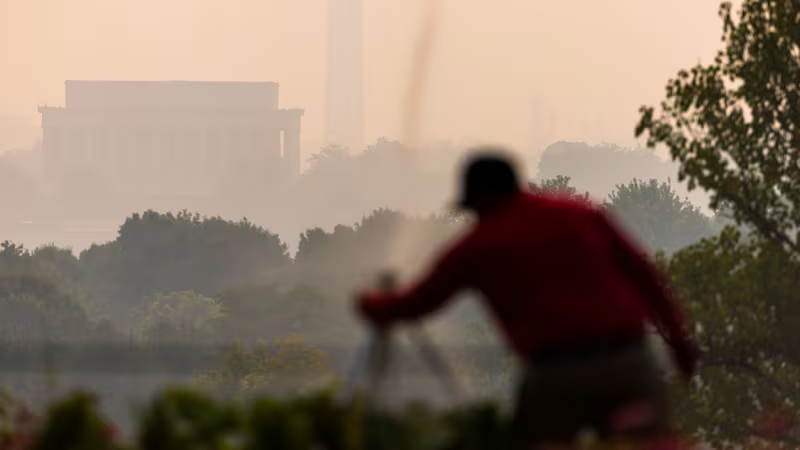
Canadian wildfire smoke drifting across the northern United States has become a trade dispute. President Donald Trump declared Friday that he intends to make Canada pay for the health and economic costs of the haze now sitting over a large portion of the country.
His proposed mechanism: adding those costs to the tariffs Canada already faces.
The Post That Started It
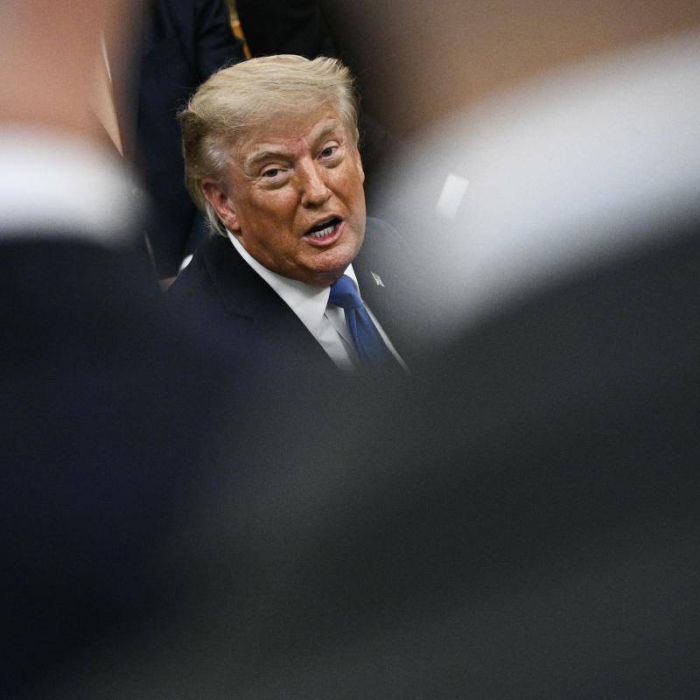
Writing on Truth Social, Trump described the expense to the U.S. as incalculable and characterized the situation as willful negligence on Canada’s part.
He argued the problem has become an annual event costing the United States billions of dollars, and said the price of that pollution should necessarily be folded into existing tariffs on Canadian goods.
He was blunt about the underlying accusation — that Canada is failing to properly maintain its forests and the brush within them, leaving the United States subjected to air he called filthy, polluted, and dangerously unhealthy.
Trump also said he would call Canadian Prime Minister Mark Carney directly to ask what Canada plans to do about it.
Who Actually Pays a Tariff
There’s a mechanical detail worth stating plainly, because it complicates the framing of tariffs as punishment.
Tariffs are paid by importing businesses and, ultimately, by consumers. They function as a tax collected at the U.S. border, not a bill sent to a foreign treasury.
Trump has consistently deployed tariffs as leverage in disputes with other governments. Whether that leverage transfers the cost to the targeted country or to American purchasers is a question economists have debated throughout his tenure.
Carney’s Response Points Back Across the Border
Speaking to reporters Thursday in French, Carney addressed criticism of Canada’s handling of the fires by redirecting attention to U.S. climate policy.
His argument was that each country bears its own responsibility. He said Canada is currently emphasizing investment in clean energy, while certain modes of production in the United States actively work against it. He characterized Canada as expanding its efforts globally while the U.S. reduces its international footprint.
The exchange sets up a fundamental disagreement about causation. Trump frames the smoke as a forest management failure. Carney frames it as a climate problem with shared responsibility.
The Climate Policy Backdrop
Carney’s remarks carry additional weight given the administration’s record since returning to office.
Trump has suspended U.S. participation in dozens of international climate initiatives and research programs. In March, a coalition of universities filed suit against the administration over its effort to dismantle the country’s largest federal climate research center.
That context makes the argument about wildfire causes politically charged in both directions.
Where the Smoke Is
The air quality alerts affect an extraordinary number of people — more than 100 million as of Friday.
Smoke from fires burning in both Minnesota and Canada has settled over a corridor of major population centers: Minneapolis, Chicago, Detroit, Cleveland, Pittsburgh, Philadelphia, and New York City.
That’s a substantial share of the country’s urban population breathing degraded air simultaneously.
The World Cup Complication
The timing has created a specific problem for Sunday.
The World Cup final is scheduled in New Jersey, where poor air quality is expected to persist into the weekend. Trump plans to attend.
The venue offers no protection — it’s a large open-air stadium with tens of thousands of spectators expected. There’s no roof, no filtration, and no practical way to shield a crowd of that size from ambient conditions.
Trump has been enthusiastic about the tournament throughout. At a FIFA reception Friday, he suggested the United States should host the World Cup again, adding a joke that next time the country should leave Mexico and Canada out of it.
Given the current dispute, the remark landed with more edge than it might have a week earlier.
A Trade Relationship Already Strained
Friday’s tariff threat arrives against a deteriorating backdrop.
On July 1, the administration announced plans to withdraw from the U.S.-Mexico-Canada Agreement, the trade framework that has served as a stabilizing structure across North America for the past six years.
Layering a wildfire-related tariff on top of a USMCA withdrawal compounds pressure on a relationship already under considerable strain.
The Practical Problems With the Proposal
Several obstacles stand between the threat and any actual implementation.
Calculating the cost is the first. Attributing specific economic and health damages to smoke from foreign fires — separating them from domestic fire contributions, background pollution, and ordinary seasonal variation — is a genuinely difficult exercise.
Attribution is the second. Fires are burning in Minnesota as well as Canada. Smoke doesn’t sort itself by origin once it enters the atmosphere.
Legal authority is the third. Tariffs are typically justified on trade or national security grounds, and using them to recover environmental damages would be an unusual application likely to face challenge.
And the fourth is efficacy. Even a successfully imposed tariff does nothing to extinguish a fire or clear the air.
What Happens Next
Two things to watch. The first is whether the promised call to Carney takes place and what emerges from it. The second is whether the threat translates into any formal action or remains rhetorical, as many tariff threats have.
The smoke, meanwhile, operates on its own timeline. It will clear when weather patterns shift and return whenever the fires flare — regardless of what either government announces.
Author