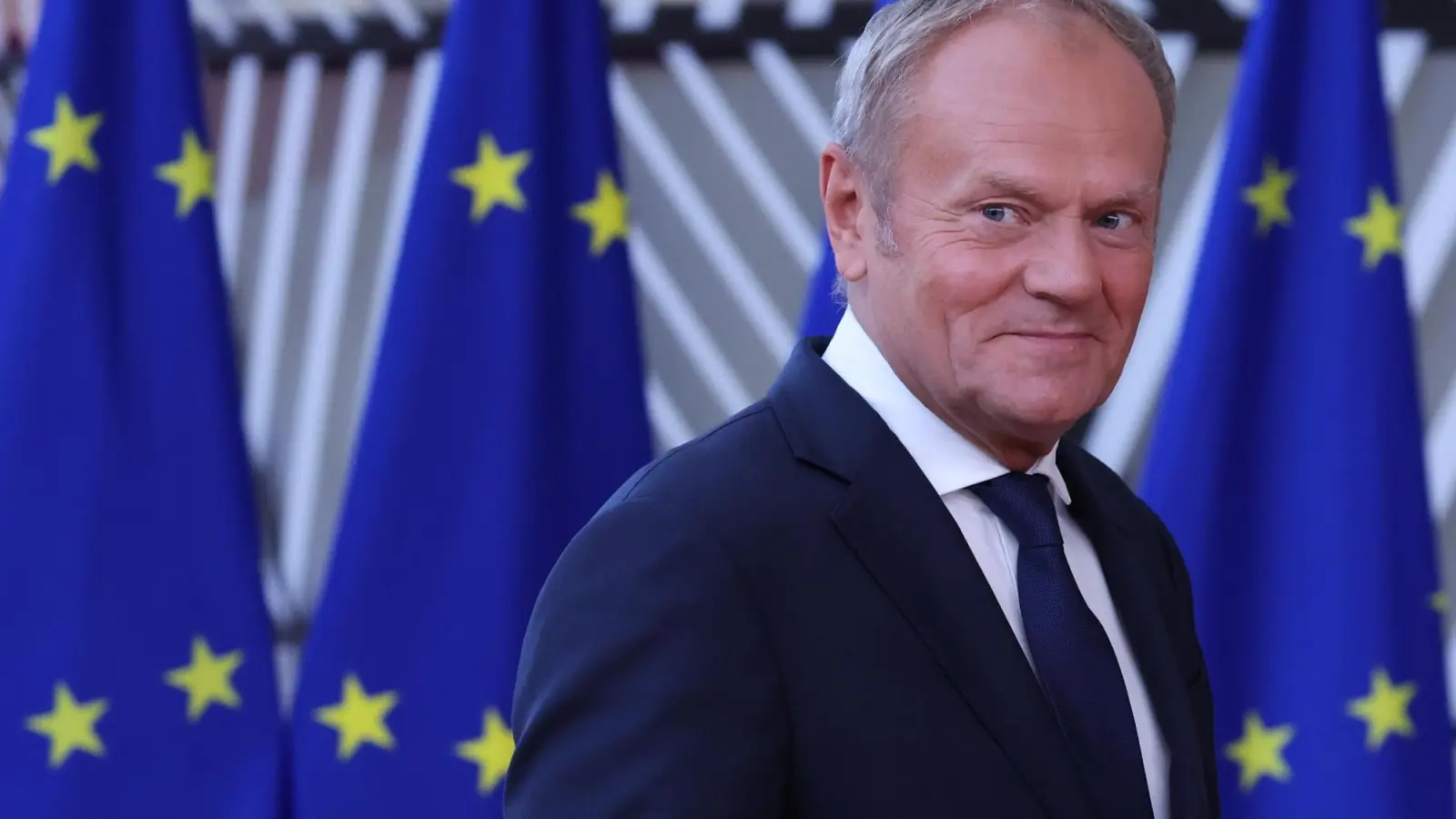
A Russian plot to kill an American citizen in Poland was intercepted before it could be executed, Prime Minister Donald Tusk announced Thursday — an accusation without recent precedent, and one that pushes an already tense security picture into new territory.
What Polish Officials Say Happened
According to Tusk, the intended target was a US citizen of Ukrainian origin living in Warsaw. The suspect, allegedly recruited by Russian secret services, was arrested on Friday 7 August.
Tusk described the intervention as narrowly timed, saying authorities managed to stop the execution at the last moment.
His explanation of motive was blunt: the target was inconvenient for the Putin regime. He added that Western governments must now work from the assumption that Moscow will attempt to eliminate individuals it finds troublesome for whatever reason.
Why This Case Is Different
Tusk was explicit about the significance. He characterised it as the first instance of someone acting on Russian orders attempting an attack against an American citizen on the soil of another NATO country.
That framing contains three elements, each of which matters:
- The target was American, not Russian, Ukrainian or European
- The location was NATO territory
- The operation was allegedly directed by a foreign state
Western officials have repeatedly warned that Russia intensified its programme of targeted killings after the 2022 invasion of Ukraine, and have disrupted plots across the continent. But the involvement of a US citizen represents a threshold that had not previously been crossed publicly.
American Involvement in the Operation
Tomasz Siemoniak, the Polish minister with oversight of intelligence services, said the disruption was carried out in cooperation with US agencies.
He confirmed the intended victim’s status as an American of Ukrainian background. Officials released no further identifying details.
The Russian Foreign Ministry did not immediately respond to a request for comment.
A Documented Pattern
The accusation lands against a long record of alleged Russian operations abroad.
British authorities attributed the 2006 killing of former FSB officer Alexander Litvinenko in London to Russia, carried out using radioactive polonium. They also blamed Moscow for the 2018 attempt on former military intelligence officer Sergei Skripal in Salisbury, in which the nerve agent Novichok was used.
German officials concluded that Russia organised the 2019 murder of Zelimkhan Khangoshvili, a former Chechen rebel commander shot in a Berlin park. The gunman, Vadim Krasikov, was later returned to Russia in a prisoner exchange and personally welcomed by Putin.
Intelligence officials have told the Associated Press that Russian services have grown noticeably bolder in target selection, extending beyond traditional enemies to Russian activists, foreign supporters of Ukraine and military defectors.
Recent Disrupted Plots
The past two years have produced a steady stream of intercepted operations across Europe:
- French officials broke up a plot they assessed was aimed at Vladimir Osechkin, a Russian exile living under police protection who assists military defectors
- Lithuanian services disrupted two separate plots, one targeting a Lithuanian supporter of Ukraine and another a Russian activist
- German authorities halted two operations, one against the head of a weapons manufacturer supplying Ukraine, another against a Ukrainian military figure
- Polish authorities arrested a man in 2024 over an alleged plan to assassinate Ukrainian President Volodymyr Zelenskyy
- Also in 2024, a defecting Russian helicopter pilot was killed in Spain, with Russian operatives regarded as the leading suspects
An Unresolved Case in Poland
In June, a Russian artist critical of Putin was shot at close range near his home in eastern Poland. Robert Kuzovkov, who worked under the pseudonym Semyon Skrepetsky, had been openly critical of the Russian president.
Tusk said at the time that the killing bore the marks of a political assassination and suggested Russian involvement was possible. Polish authorities have not formally attributed it to Moscow.
The Wider Campaign
Western governments view these incidents as part of a broader effort to destabilise European countries supporting Ukraine.
The Associated Press has catalogued roughly 200 acts of sabotage, arson and disruption across Europe since the war began that officials have linked to Russia. Putin stated in May that Russia is conducting no such campaign against Europe.
A senior European intelligence official offered a starker assessment to the AP, saying the pattern is neither accidental nor coincidental and that political authorisation sits behind it.
Why the American Angle Escalates Things
The distinction Tusk drew is not merely rhetorical.
Operations against Russian dissidents abroad, however serious, have largely been treated as internal Russian business conducted on foreign soil — a violation of sovereignty that European states have answered with expulsions and sanctions.
An attempt on an American citizen inside NATO territory introduces a different set of relationships. It implicates US security interests directly and raises questions about what response Washington considers proportionate.
It also tests the alliance’s threshold. NATO members have absorbed sabotage, arson and assassination attempts without treating any single incident as an attack requiring collective response. Where that line sits has never been publicly defined.
What Remains Unknown
Polish officials have released limited information. The target’s identity, the suspect’s background, the intended method and the evidence linking the operation to Russian services all remain undisclosed.
Those details will matter. The strength of the attribution — and any consequences that follow — depends on what Warsaw and Washington can ultimately demonstrate.
Author
-
Lucienne Albrecht is Luxe Chronicle’s wealth and lifestyle editor, celebrated for her elegant perspective on finance, legacy, and global luxury culture. With a flair for blending sophistication with insight, she brings a distinctly feminine voice to the world of high society and wealth.