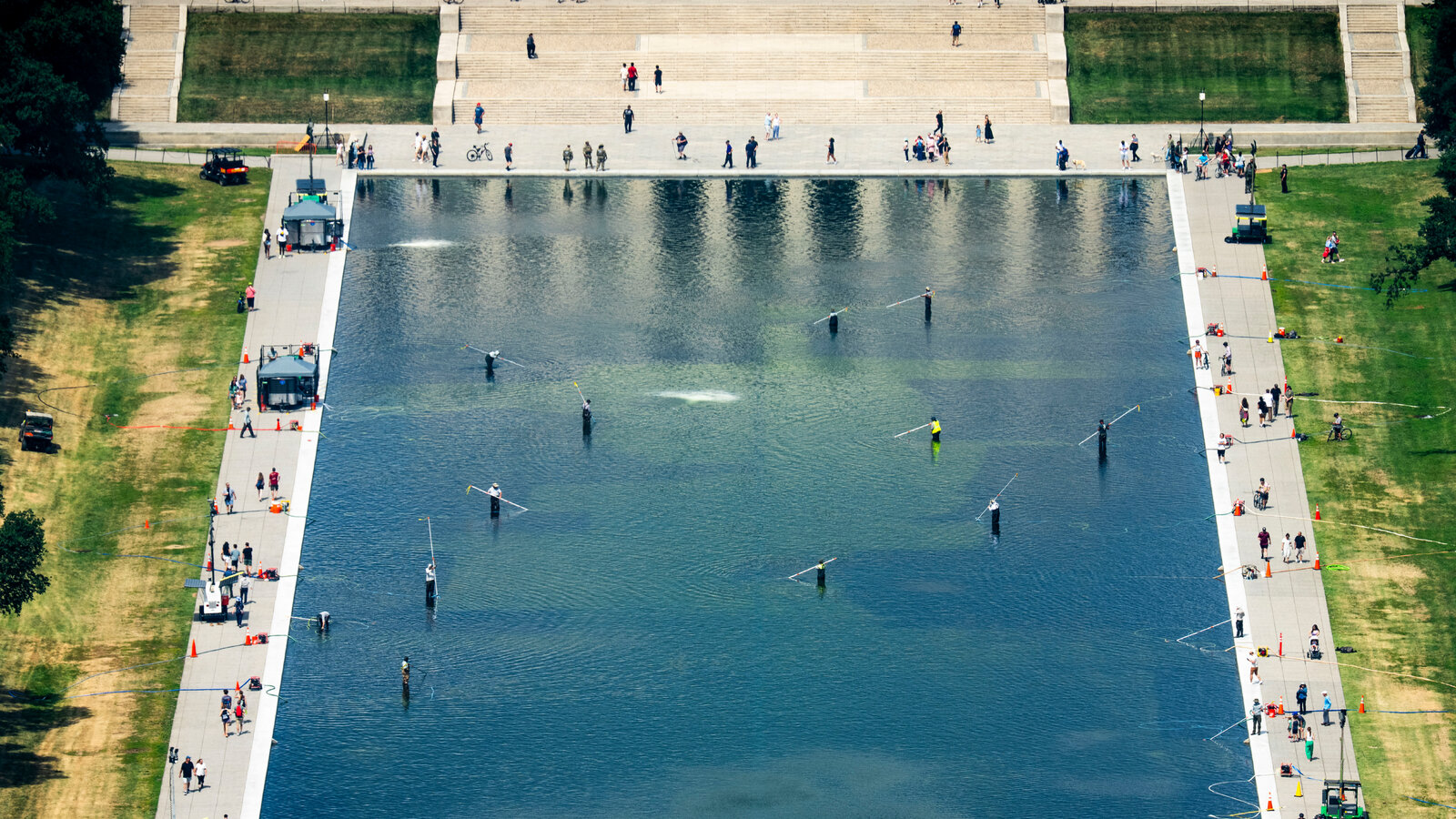
Trump’s Reflecting Pool has become an unlikely symbol of something far larger than a simple renovation gone wrong. To some observers, the troubled project mirrors a deeper story about ambition, ego, and the gap between image and reality. In many ways, it calls to mind one of literature’s most haunting cautionary tales, offering a lens through which to examine the president’s sweeping transformation of the nation’s capital.
A Literary Parallel Worth Considering
There’s a striking comparison to be drawn between the president’s beautification efforts and Oscar Wilde’s famous novel about Dorian Gray. In Wilde’s story, a young man strikes a dark bargain to remain eternally youthful, while a hidden portrait absorbs every trace of his moral decay.
For critics, this fictional arrangement feels eerily relevant. The idea that outward appearances can mask inner corruption resonates strongly when examining how the capital’s landmarks have been reshaped. According to this view, each project reveals something unintended about the man behind it.
The President as Self-Styled Artist
It’s no secret that the president fancies himself something of a creative visionary. He has frequently referred to himself as a builder and has long branded his approach to business and politics as the art of the deal.
He has also described himself as a deeply aesthetic person, someone attuned to beauty and design. His habit of speaking about himself in the third person suggests, to some, that he views his own name as a carefully crafted brand, almost a personal work of art in itself.
This self-image sets the stage for a larger critique. If a person defines themselves through their creations, then perhaps those creations reveal who they truly are.
Reshaping the Capital, One Project at a Time
Under this administration, several iconic Washington landmarks have undergone dramatic changes. Critics argue that rather than enhancing these historic sites, the alterations have diminished their meaning and beauty.
Among the changes that have drawn sharp criticism are the following:
- The historic White House Rose Garden was paved over and redesigned to resemble a patio reminiscent of the president’s Florida estate.
- The Kennedy Center had his name attached to it before being shut down for renovations.
- The historic East Wing was demolished to make way for an enormous ballroom, a structure detractors say overwhelms the scale of the White House itself.
- A proposed monument echoing the Arc de Triomphe would tower over the Lincoln Memorial, disrupting its solemn view toward Arlington Cemetery.
To those opposed, these projects share a common thread. Instead of honouring the nation’s history, they appear to prioritise grandeur and personal legacy above all else.
The Reflecting Pool Debacle
Perhaps no project captures this critique more vividly than the renovation of the Lincoln Memorial Reflecting Pool. What was pitched as a quick, affordable improvement has instead become a cautionary tale of its own.
Initially, the president boasted that the work would cost roughly 1.8 million dollars and take only a single week to complete. The reality proved dramatically different. In the end, the project reportedly consumed more than 14 million dollars of taxpayer money.
The way the contract was handled raised further eyebrows. Rather than opening the job to competitive bidding, it was awarded to a donor and personal acquaintance who had previously been linked to a bribery scandal. Critics saw this as a troubling sign of favouritism over fairness.
Predictably, the results disappointed. The finished pool has been plagued by problems, including:
- Multiple leaks throughout the structure.
- Strips of paint floating on the surface of the water.
- A layer of green algae that has clouded what should have been clear, reflective water.
Adding insult to injury, the president reportedly denied any responsibility for the mess, instead blaming vandals for whom there appears to be no evidence. Now, at further unknown expense to taxpayers, the pool must be drained entirely to address the issues.
An Ironic Twist
There’s a certain poetic irony in the situation that hasn’t gone unnoticed. During his campaigns, the president famously vowed to drain the swamp, a metaphor for cleaning up corruption in Washington.
Yet here, quite literally, a pool has turned murky and polluted, requiring a very real draining to fix. For critics, the symbolism writes itself. The very project meant to beautify a national treasure has instead become a stagnant, troubled mess.
Beyond the Monuments
For those making this argument, the reflecting pool is merely one example among many. They contend that the same pattern extends into the administration’s broader policies and decisions.
Detractors point to a range of controversial actions as further evidence of what they describe as vanity and mismanagement. These include contentious economic tariffs, a costly and destructive conflict with Iran, strained relationships with longtime allies, a growing national deficit, aggressive immigration enforcement, and accusations that the Justice Department has been used to target political opponents.
In each case, critics argue, the outcomes reflect ambition and self-interest rather than careful stewardship of the nation’s wellbeing.
A Symbol for a Milestone Moment
The timing of all this feels especially significant. As the country marks its 250th anniversary, the Lincoln Memorial stands watch over the reflecting pool, a place meant to inspire reflection on the enduring ideals of democracy and freedom.
Instead, according to this critique, the polluted water tells a different story. Much like the deteriorating portrait in Wilde’s novel, the troubled pool becomes a mirror, revealing not the noble principles of past leaders, but the flaws and excesses of the present moment.
A Reflection Worth Pondering
Ultimately, this perspective invites readers to think carefully about what our public spaces represent. Monuments and landmarks are more than mere structures; they are physical expressions of a nation’s values and aspirations.
When those spaces are altered in ways that prioritise ego over history, critics argue, something meaningful is lost. The reflecting pool, in this telling, becomes a powerful metaphor, a damaged surface that reflects not the grandeur its creator intended, but the character behind the choices.
Whether one agrees with this interpretation or not, the debate itself underscores an important truth. The way a nation treats its most sacred symbols speaks volumes, and on such a historic anniversary, those reflections carry more weight than ever.
Author