WHO Declares the Bundibugyo Virus Ebola Outbreak a Global Health Emergency
The Bundibugyo virus Ebola outbreak now spreading through the Democratic Republic of the Congo and Uganda has been formally declared a public health emergency of international concern (PHEIC) by the World Health Organization. The announcement, issued on 17 May 2026 by WHO Director-General following consultations with both affected countries, places the outbreak firmly on the global radar.
Importantly, while the situation is being treated with urgency, WHO clarified that it does not meet the criteria of a pandemic emergency as defined under the International Health Regulations (IHR).
Why WHO Sounded the Alarm
A PHEIC is not declared lightly. Under the IHR, the designation applies only when an event is considered extraordinary, poses a cross-border public health risk, and demands coordinated international action. According to WHO, the current outbreak satisfies all three conditions.
The Director-General reached this decision after weighing information from both governments, scientific evidence, and an assessment of the risks to human health, the danger of international spread, and the potential disruption to global travel.
The Scale of the Outbreak So Far
The numbers behind the declaration paint a worrying picture. As of 16 May 2026, the situation in the DRC’s Ituri Province included:
- Eight laboratory-confirmed cases
- 246 suspected cases
- 80 suspected deaths across at least three health zones, including Bunia, Rwampara and Mongbwalu
The outbreak has also crossed borders. Two laboratory-confirmed cases — one of them fatal — were reported in Kampala, Uganda, within 24 hours of each other on 15 and 16 May. Both patients had recently traveled from the DRC and were admitted to intensive care.
A separate case reported on 16 May, involving a person returning from Ituri to Kinshasa, initially raised concern but later tested negative for the virus on confirmatory testing and is no longer counted as a confirmed case.
Several Red Flags Worry Health Officials
Beyond the raw figures, several troubling patterns drove the emergency declaration.
Unusual clusters of community deaths with symptoms consistent with Bundibugyo virus disease have been reported across multiple health zones in Ituri, with suspected cases stretching into North Kivu. Even more alarming, at least four healthcare workers have died in circumstances suggestive of viral haemorrhagic fever — a sign of possible transmission within health facilities and gaps in infection control.
The early laboratory data is also concerning. Of 13 samples collected across different areas, eight tested positive — a strikingly high positivity rate that suggests the true scale of infection may be far larger than current reports indicate.
Compounding the danger are factors familiar from past outbreaks: ongoing insecurity, a protracted humanitarian crisis, high population mobility, the urban or semi-urban nature of the hotspot, and a sprawling network of informal healthcare facilities. These same conditions fueled the major Ebola epidemic in North Kivu and Ituri during 2018–19.
Crucially, unlike the Ebola-Zaire strain, there are currently no approved therapeutics or vaccines specific to the Bundibugyo virus.
A Risk That Reaches Beyond Borders
International spread is no longer hypothetical — it has already happened. The two confirmed cases in Kampala demonstrate how easily the virus can move through travel routes.
WHO has flagged neighboring countries that share land borders with the DRC as being at high risk, given the steady flow of people, trade and travel across the region, combined with significant epidemiological uncertainty.
What WHO Is Asking the Affected Countries to Do
For the DRC and Uganda, WHO has outlined a wide-ranging response. Key priorities include:
- Activating national emergency management systems and establishing emergency operation centres under top government authority
- Strengthening surveillance, contact tracing and decentralized laboratory testing across affected and at-risk zones
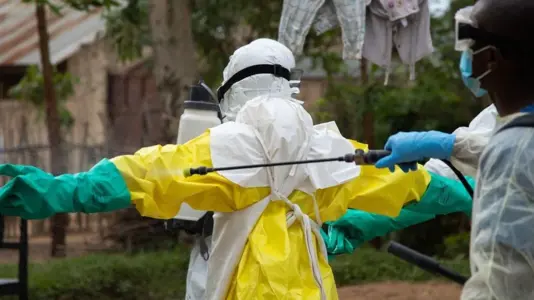
- Tightening infection prevention and control in health facilities, with proper training, protective equipment and timely pay for healthcare workers
- Setting up specialized treatment centres near outbreak epicentres to deliver safe, patient-centred intensive care
- Conducting safe and dignified burials carried out by trained personnel while still respecting family and cultural practices
Community engagement sits at the heart of this strategy. WHO stresses that local, religious and traditional leaders must be involved so communities actively participate in identifying cases, tracing contacts and spreading awareness about the benefits of early treatment.
Travel, Borders and Medical Research
On movement, WHO advises strict measures rather than blanket bans. Confirmed cases should be isolated and barred from travel until two virus-specific tests, taken at least 48 hours apart, return negative. Contacts should avoid international travel for 21 days after exposure, and exit screening should be implemented at airports, seaports and major land crossings.
WHO also urges affected nations to launch clinical trials for candidate therapeutics and vaccines, supported by international partners.
Guidance for Neighboring and Other Countries
Countries bordering the affected states are told to urgently boost preparedness — activating surveillance, securing laboratory access, training health workers in infection control, and forming rapid response teams ready to investigate cases within the first 24 hours.
For all other nations, WHO delivers a clear message: do not close borders or restrict travel and trade. Such measures, the organization notes, are typically driven by fear rather than science. They tend to push movement toward unmonitored informal crossings, harm local economies, and undermine the response itself. Entry screening for travelers returning from at-risk areas is not considered necessary.
What Happens Next
WHO will convene an Emergency Committee as soon as possible to advise on temporary recommendations, meaning the current guidance may be refined further in the coming days.
For now, the declaration serves as both a warning and a call to action. The Bundibugyo virus Ebola outbreak remains in its early and uncertain stages, but the combination of confirmed cross-border cases, healthcare worker deaths and the absence of approved treatments has made swift, coordinated global action essential.
This article covers a serious public health emergency. For accurate, up-to-date guidance, readers should rely on official WHO communications and their national health authorities.
Author