Americans Are About to Pay Even More at the Grocery Store as a New Inflation Wave Looms
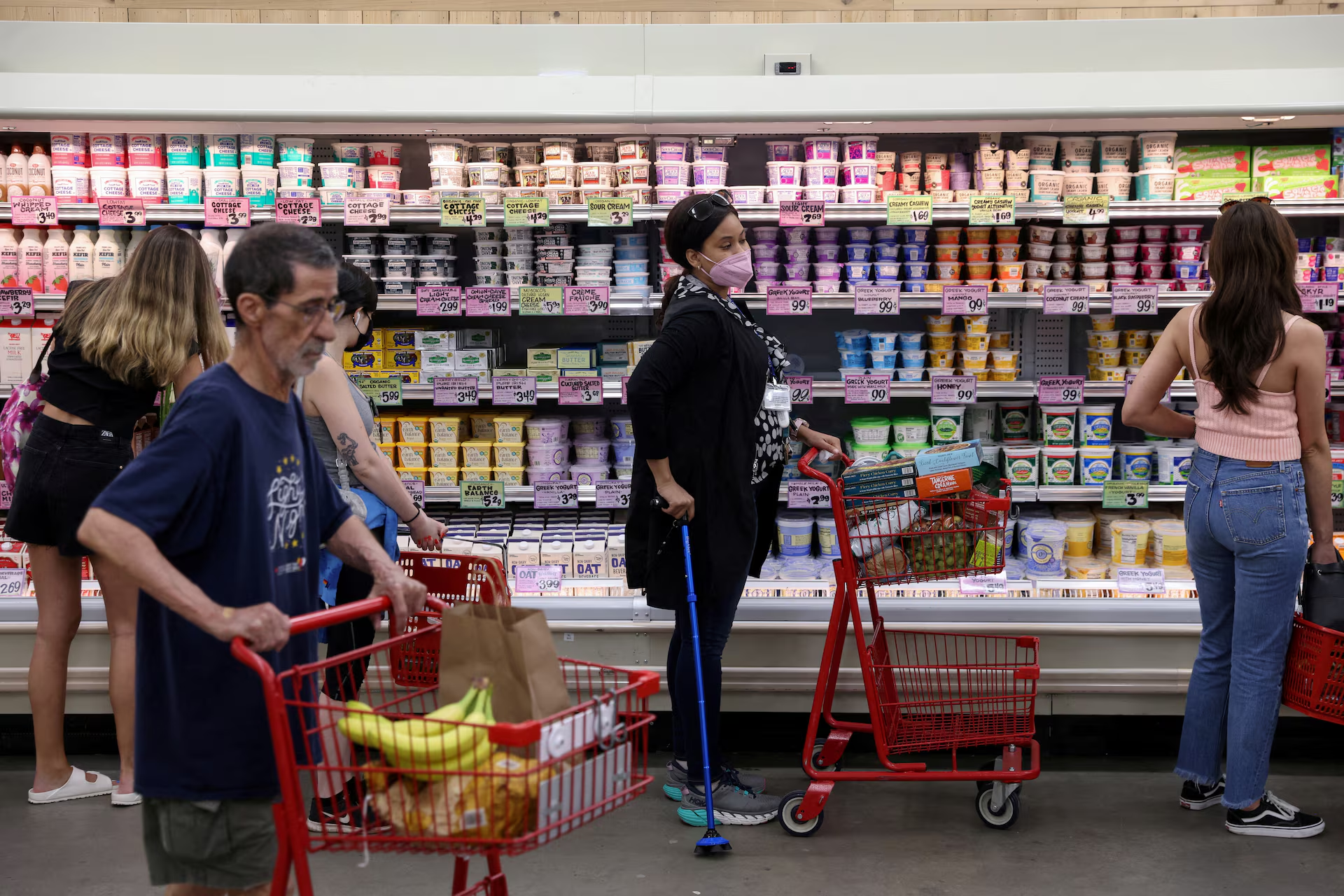
Just as Americans pay more at the grocery store and brace for relief from soaring prices at the gas pump, a fresh wave of food inflation is gathering force. A combination of harsh weather, trade tariffs, and a shrinking national cattle herd is already driving food costs upward at a pace well above the historical average.
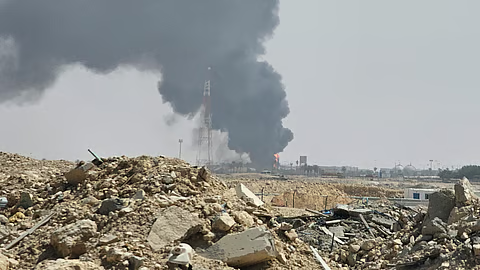
In April, grocery prices climbed by the largest margin in nearly four years, and economists warn that the situation is poised to get worse. With the effects of the Iran war and a possible El Niño weather pattern still building, the pressure on household budgets could stretch well into 2027.
A Slow-Moving Shock That’s Hard to Undo
What makes this food inflation especially troubling is its timing and its stubborn nature. The financial strain on American families is set to intensify right before the November midterm elections, pushing affordability to the forefront as a defining political issue.
Unlike a sudden spike in gas prices, which can ease relatively quickly, the food shock moves more slowly and is far harder to reverse. That’s because the size of the autumn harvest depends on planting decisions made back in the spring, locking in much of the supply long before it reaches store shelves.
“It’s going to be a challenging year,” warned Ricky Volpe, an agribusiness professor at California Polytechnic State University and a former USDA economist. He cautioned that food will become less affordable and that consumers should prepare accordingly.
How Much Higher Could Prices Go?
Official projections and expert forecasts paint a sobering picture. The latest USDA food price outlook projected a 3.2% rise in grocery prices this year. However, Volpe believes the real figure could land higher, somewhere in the range of 4% to 4.5%.
For ordinary Americans, those percentages translate into real, painful adjustments. James Giese, a 62-year-old living on his own in Madison, Wisconsin, has already started making changes. He’s cutting back on prepared foods and meat, and has even taken to growing potatoes in his backyard to help stretch his food budget.
“I’m very concerned,” Giese said. “I’m probably considered middle-income, but it’s starting to pinch.”
A Year of Bad Luck for American Farmers
The unusually large price increases in 2026 stem from a mix of misfortune, trade policy, and longer-term climate pressures. Weather, in particular, has dealt American farmers a brutal hand, with record-breaking heat, historic cold snaps, massive hail, and wildfires all taking a toll.
The country experienced its warmest start to a year on record, with temperatures running roughly 6°F above average through the end of April. This early heat caused some crops to blossom weeks ahead of schedule rather than staying dormant through winter, leaving them vulnerable to later frosts.
Several key food categories have already felt the impact:
- Beef prices hit a record in April, driven by the smallest cattle herd in 75 years, squeezed by drought and high production costs.
- Tomato prices surged 33% over two months after winter storms damaged Florida’s crops during peak growing season, while tariffs on Mexican imports reduced shipments.
More Pressure on the Horizon
Unfortunately, the worst may not be over. Heat and drought across the western and central United States threaten to push prices even higher in the months ahead.
California’s role in the nation’s food supply makes this especially concerning. The state accounts for nearly half of all US vegetable cash receipts and about three-quarters of fruit and nut receipts. Yet the Sierra Nevada snowpack sat at just 23% of typical levels in mid-April, raising serious worries about irrigation supplies.
Drought has also crept across the nation’s breadbasket, withering staple wheat crops used for all-purpose flour and pasta. As of May 19, drought conditions affected 70% of US winter wheat production and 25% of corn production.
The El Niño Wildcard
Adding another layer of uncertainty, forecasters now expect an El Niño weather pattern to emerge by August, with growing odds of an unusually powerful event lasting into 2027. While El Niño can sometimes bring extra rain to California, it has also historically triggered drought in major growing regions abroad for crops like rice, coffee, and cocoa.
That means the ripple effects could extend far beyond domestic produce, touching everyday items that Americans rely on from around the world.
The War’s Hidden Impact on Food Costs
The ongoing war has created yet another shock, this time in global fertilizer markets. The Middle East plays a major role as a supplier of agricultural inputs, and the conflict has disrupted that supply chain significantly.
Since the war began, fertilizer prices have risen 20%, according to a Green Markets index for North America. This increase is likely to push costs higher at harvest time. Even worse, if farmers respond by reducing fertilizer use, their crops could become less resilient to heat, drought, and flooding.
Rising fuel costs only compound the problem. Farmers and transporters face higher diesel prices to run tractors and trucks, while petroleum-based plastic packaging grows more expensive. All of these costs eventually find their way onto store shelves.
Grocery Chains Fight to Hold the Line
Major retailers are not standing still. Kroger’s chief executive announced plans for a price-cutting push to compete more aggressively with Walmart, which has spent the past year expanding its own efforts to keep prices low.
Still, these moves may offer only limited relief. According to Andrew Harig, a vice president with the Food Industry Association, consumers are already exhausted because prices have kept climbing even as the rate of food inflation has slowed.
A Growing Strain on Households
The broader economic picture adds to the worry. Household debt is rising, the personal saving rate is falling, and real average hourly earnings declined over the 12 months through April for the first time in three years.
The Federal Reserve Bank of New York recently reported a meaningful increase in food insecurity between October 2025 and February 2026, signaling that more families are struggling to put food on the table.
Many shoppers feel the contrast acutely when they compare today’s bills to what they paid years ago. As Harig put it, plenty of people look back at their pre-Covid grocery costs from 2019 and early 2020 and are stunned by how much more they’re paying now.
What This Means Going Forward
As Americans pay more at the grocery store, the combination of weather extremes, trade policy, war-driven supply shocks, and climate pressures suggests that relief won’t come easily or quickly. With harvests already shaped by spring planting decisions and global growing regions facing their own challenges, the food inflation story is likely to remain a central concern for households throughout 2026 and beyond.
For now, the best advice from experts is simple but sobering: prepare for higher bills, and brace for a challenging year ahead.
Author