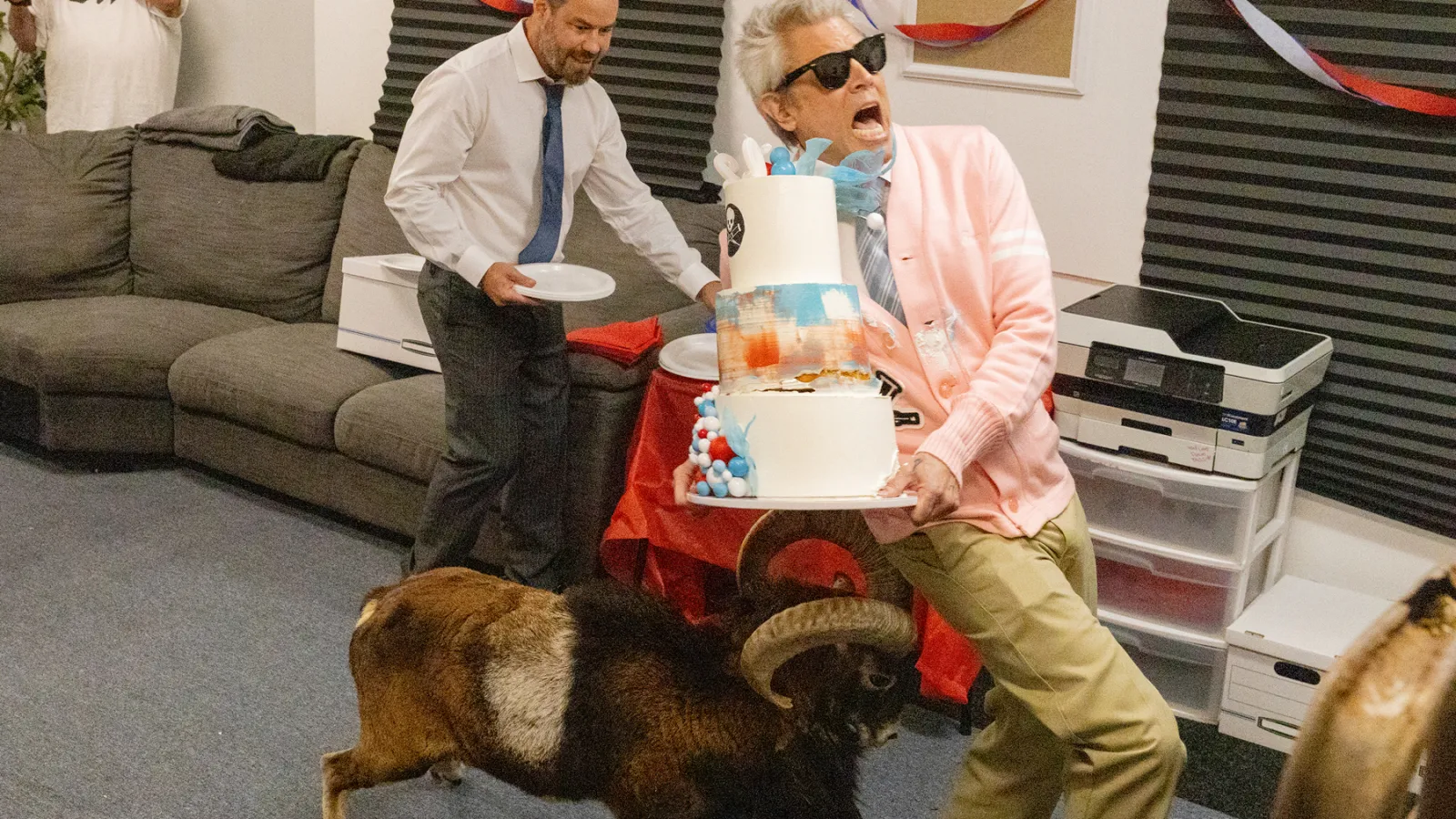
Jackass Best and Last arrives in theaters twenty-five years after the franchise first began, and it carries far more emotional weight than its outrageous stunts might suggest. Beneath the bruises, the bodily fluids, and the comically painful gags lies something unexpectedly tender: a long-running portrait of male friendship, mortality, and the passage of time. In that sense, the argument goes, “Jackass” may be one of the most quietly meaningful documentary series ever made.
More Than Just Clowns With Hammers
To call “Jackass” a documentary isn’t to focus on the obvious spectacle of grown men hitting themselves with giant hammers and warning viewers not to try it at home. The deeper meaning was almost certainly never the creators’ intention, yet it emerges all the same.
Like other acclaimed documentary projects that follow people over decades, such as the classic “Up” series or Robb Moss’s “river films,” the “Jackass” movies have tracked a group of people from young adulthood into middle age across more than 25 years. That sustained observation of real lives unfolding can’t help but accumulate meaning, even amid the chaos.
A Style That Has Barely Changed
The franchise began in 2000, when Johnny Knoxville, director Jeff Tremaine, and Spike Jonze created a series for MTV. It ran for three seasons, alarming plenty of parents and even some members of Congress, before making the leap to theaters with “Jackass: The Movie” in 2002. That success spawned sequels, spinoffs, video games, and no shortage of emergency room visits among imitators.
The formula has remained remarkably consistent over the years. At its core, the series is a collection of clips featuring the crew doing absurd things under comical titles, then collapsing together in laughter once the pain subsides. The cast invents endless ways to torment their bodies with pyrotechnics, sharp objects, and anything else that promises a reaction.
The aesthetic owes a clear debt to the lo-fi underground skate videos of the 1980s and ’90s, in which skate crews showed off tricks set to music. Here, instead of kickflips and grinds, the crew, including Knoxville, Bam Margera, Steve-O, Ryan Dunn, Jason Acuña, Chris Pontius, and many others, devised increasingly outrageous physical stunts. The more genitals, bodily fluids, or chaos involved, the better.
An Unexpected Revelation
The writer admits to having long avoided the franchise, assuming it was simply a showcase for mean-spirited frat-boy behavior. A 2022 “Jackass” marathon changed that view.
What stood out wasn’t the stunts, which were uniformly harrowing, but what happened between the participants. The men were constantly laughing together, helping each other off the ground, and hugging. Though the antics were undeniably and stereotypically masculine, often fixated on juvenile humor, they had little in common with the gender-obsessed posturing of the modern manosphere.
Notably, the crew didn’t talk about women disrespectfully, or much at all. They weren’t competing to prove who was the manliest, nor were they preoccupied with appearances. They were simply there, having enthusiastically consented, to share a painfully good time. The result was something you couldn’t quite call healthy, yet might genuinely call wholesome.
Real Life Off the Screen
Part of what gives the series its emotional depth is the offscreen history the cast has carried with them. Over the years, the group has weathered serious personal trials that bleed into the meaning of what appears on camera.
Among the most significant chapters:
- Steve-O has spoken openly about his struggles with addiction and his path to sobriety, which began after a 2008 intervention staged by his castmates.
- In 2011, Ryan Dunn died in a car crash, along with crew member Zachary Hartwell, while driving under the influence of alcohol.
- Bam Margera faced a long string of substance abuse problems that strained his relationships both within the cast and in his personal life, ultimately leading to his removal from “Jackass Forever” for breaching a wellness agreement.
As Knoxville has noted in interviews, many of the cast came from difficult backgrounds and found in one another something resembling a chosen family. Audiences have watched Steve-O maintain his sobriety and become a vocal animal-rights activist, and have seen the group mourn Dunn together. For “Jackass: Best and Last,” billed as the finale, Margera doesn’t appear, but the cast speaks of him warmly, and he gave permission for archival footage of his stunts to be included.
Confronting Mortality
The reckless young men of 2000 are now in their 50s, and the latest film doesn’t hide it. Their age even inspires a few especially gross stunts in “Best and Last.” Knoxville’s hair has gone largely gray, and once-tight bodies have begun to sag.
For years, the series sometimes felt like a documentary about men who had somehow cheated death. “Best and Last” gently corrects that impression, reminding viewers of their mortality. When Knoxville is asked whether this is truly the final installment, he grows emotional, admitting that, as much as he hates to say it, it is, just before being zapped in an enormous electric chair.
A Portrait of Rare Friendship
Even so, the crew remains together, and the film suggests that even if they stop making movies, they’ll still be hanging out and doing stupid tricks decades from now. That endurance is the real subject.
The argument lands on a striking idea: “Jackass” is ultimately a documentary about an endangered species, the lasting, strangely healthy, and deeply supportive male friendship in the 21st century. This rowdy band of knuckleheads managed to build something many people long for but never achieve.
The film underscores the point with a final archival clip. Grainy and blurry, it shows two of the guys after a prank. One lies on the floor, worse for wear, and says he needs help. The other simply replies “yup,” and reaches out a hand.
The Bottom Line
“Jackass: Best and Last” works because it understands what it has quietly become over a quarter century. Far from being just a parade of dangerous gags, it stands as a moving meditation on brotherhood, loss, and growing old together. Behind every wince-inducing stunt is a group of men who genuinely care for one another, and that, more than any rocket or electric chair, may be the franchise’s most lasting achievement.
A note for readers: this story touches on addiction and loss. Anyone struggling with substance use, or supporting someone who is, can reach out to a licensed professional or a local support service for help.
Author