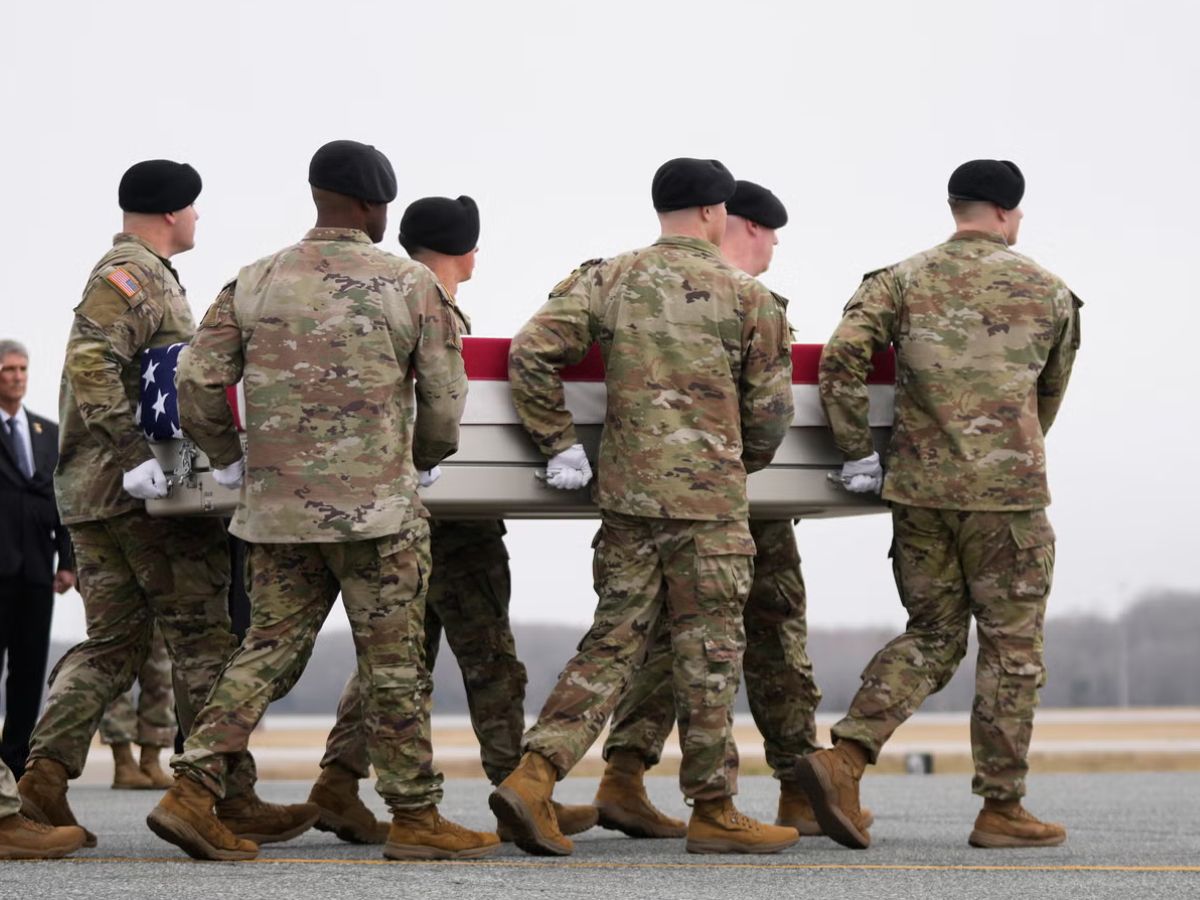
Two U.S. service members killed in Jordan and a third listed as missing have brought a sharp human cost to a conflict that had, until now, been measured mostly in intercepted missiles and damaged infrastructure. According to U.S. Central Command, the deaths occurred Friday while American forces were defending against an Iranian ballistic missile and drone assault.
What Happened in Jordan
CENTCOM confirmed the troops died in action as American and partner forces worked to repel the incoming attack. The command has not disclosed the exact location inside Jordan, nor has it released details about how the strike unfolded — a level of restraint that is typical while operations remain active and families are still being reached.
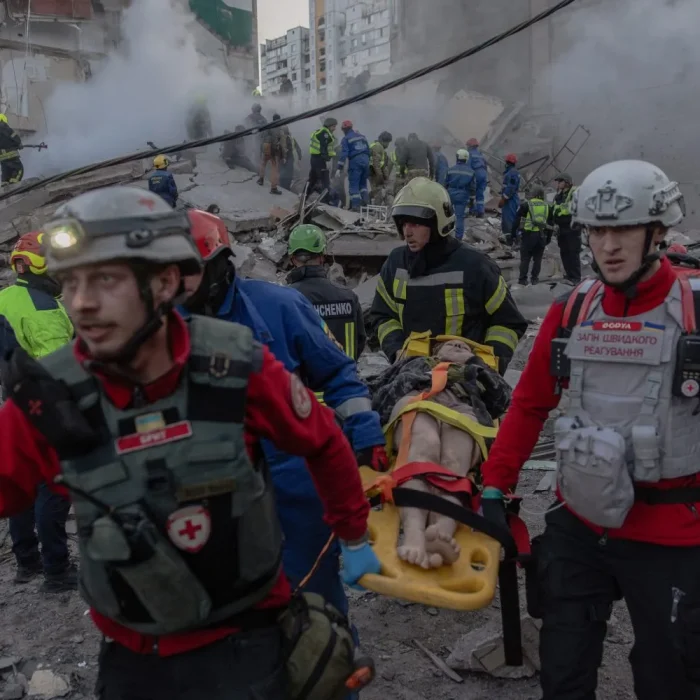
Four additional service members were hurt badly enough to require medical evacuation to hospitals inside Jordan. All four have since been discharged. A separate group of personnel who reported minor injuries were checked over and cleared to return to their posts.
The names of the two who died are being withheld. Military protocol requires a full 24 hours after next-of-kin notification before identities become public, a policy meant to spare families the shock of learning through news coverage.
Washington’s Response
President Donald Trump ordered retaliatory airstrikes against Iran, which began at 6 p.m. Eastern time on Saturday. CENTCOM described the operation as an effort to deliver swift punishment for the attack on American forces. The strikes continued for more than five hours before concluding at 11:30 p.m. ET.
But retribution was not the only goal. Central Command also framed the operation as a move to erode Iran’s capacity to threaten commercial shipping through the Strait of Hormuz — the narrow waterway through which a substantial share of the world’s oil moves every day. Washington has spent recent days pressing Tehran to loosen its grip on that corridor, and the latest strikes fit squarely into that campaign.
By late Saturday, CENTCOM noted that American forces had completed an eighth straight night of launching munitions at Iranian targets. Among those hit were Islamic Revolutionary Guard Corps units suspected of orchestrating Friday’s attack on the troops in Jordan.
What the U.S. Targeted
The strike list, as described by Central Command, covered a broad set of Iranian military assets:
- Surveillance installations and air defense systems
- Maritime assets tied to operations in the Gulf
- Storage facilities holding missiles and drones
Taken together, the target selection suggests a strategy aimed less at symbolic retaliation and more at degrading Iran’s ability to sustain the tempo of its attacks.
Iran Widens the Battlefield
Tehran has not limited its response to Jordan. Iran’s semi-official Tasnim news agency posted on Telegram overnight claiming that Iranian forces had carried out large-scale drone attacks on major U.S. military installations in Kuwait. The agency asserted the strikes would disrupt American military support operations across the region.
Kuwait’s army acknowledged Sunday that its air defenses were actively engaging hostile missiles and drones.
Bahrain followed shortly afterward. The kingdom, home to the U.S. Navy’s 5th Fleet, reported that its own defenses had intercepted an Iranian attack. Bahrain’s interior ministry urged citizens and residents through a post on X to stay composed and move to the nearest safe location — an unusually direct public warning for a country that rarely issues them.
A Ceasefire That Didn’t Hold
The deaths in Jordan land in the middle of an escalation that began when an interim ceasefire between Washington and Tehran fell apart. Since then, the two sides have exchanged fire almost daily.
Iran has directed ballistic missiles and drones at U.S. military positions and at American partners throughout the region, with Jordan, Kuwait and Bahrain all absorbing attacks. American forces, in turn, have carried out sustained strikes on Iranian military infrastructure. What was once framed as a pause in hostilities now looks, in retrospect, like a brief interruption.
Competing Claims on the Ground
Earlier Saturday, Jordan reported that its own forces had shot down Iranian missiles and drones. Tehran said those weapons were aimed at an American military base inside Jordanian territory.
Iran’s Islamic Revolutionary Guard Corps went further, claiming through Tasnim that the assault destroyed at least two U.S. fighter jets. That claim remains unverified by independent reporting — a reminder that in active conflicts, battlefield assertions from either side often outpace confirmable facts.
Why the Strait of Hormuz Matters
It would be easy to read this as a straightforward cycle of attack and counterattack. The waterway at the center of it explains why the stakes run higher.
The Strait of Hormuz is one of the world’s most consequential chokepoints. A significant portion of global seaborne oil passes through a channel that narrows to roughly 21 miles at its tightest. Disruption there does not stay regional — it registers in fuel prices and shipping insurance rates on the other side of the planet.
That reality helps explain why U.S. strikes have repeatedly targeted Iranian maritime capability rather than confining themselves to the units directly responsible for attacking American troops. Washington appears to be pursuing two objectives simultaneously: answering the deaths of its personnel and preventing Tehran from turning the strait into leverage.
Where Things Stand
For now, the picture is one of sustained escalation without a clear off-ramp. Eight consecutive nights of American strikes, Iranian attacks reaching multiple Gulf states, and a missing service member whose status remains unresolved all point toward a conflict that has moved well past the containable phase.
The families of two Americans are waiting for official word. The rest of the region is waiting to see whether anyone finds a reason to stop.
Author