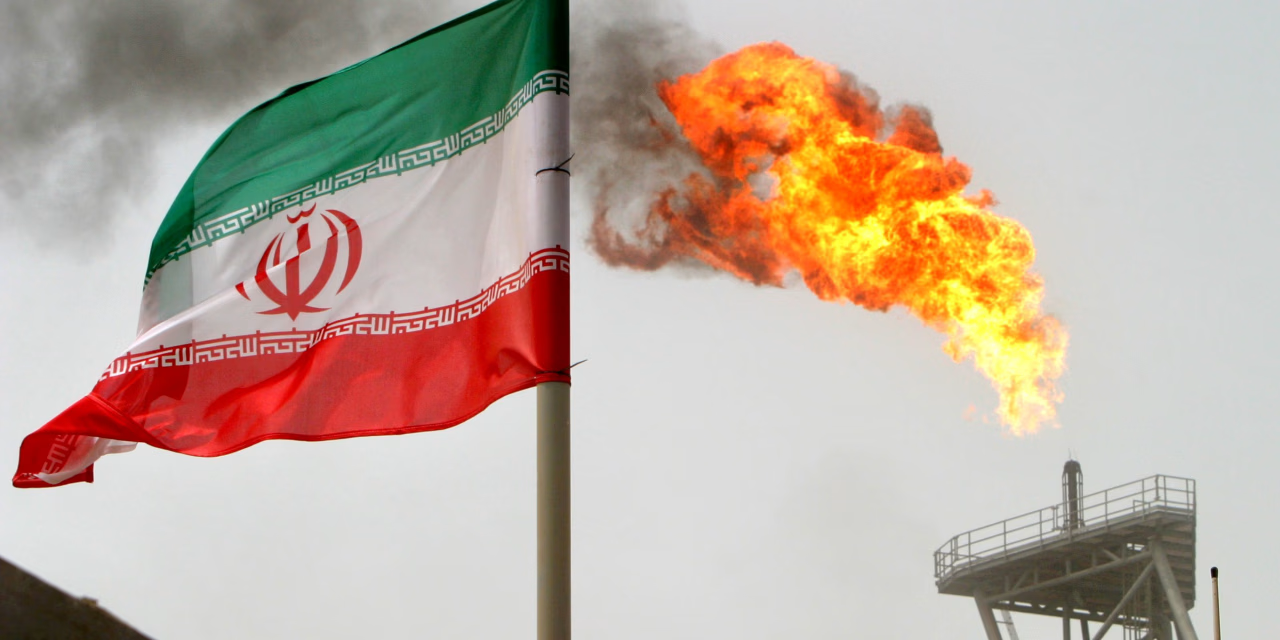
The Iranian oil sanctions waiver issued by the Trump administration marks a dramatic reversal of four decades of American policy, handing Tehran a significant concession that could ultimately enrich a longtime adversary. On June 22nd, the Treasury Department permitted the production, sale, and delivery of Iranian petroleum for 60 days, offering the regime immediate relief and potentially setting it on a path back to wealth.
A Sharp Break From Decades of Policy
To grasp the significance of this move, it helps to understand the history of American sanctions on Iranian oil.
The United States first banned its firms from buying Iranian oil in 1980, responding to the hostage crisis at its embassy in Tehran. That embargo was later strengthened in the early 2010s with “secondary” sanctions that exposed other buyers to American penalties. Those secondary measures were suspended under Barack Obama’s 2015 nuclear deal, then reimposed in even harsher form when Donald Trump abandoned the agreement three years later.
Going Further Than Ever Before
What sets the latest waiver apart is just how far it reaches compared to any previous relief.
- An earlier Trump-era waiver, issued during active conflict, covered only Iranian oil already loaded onto ships.
- Obama-era licenses required third countries to keep cutting their purchases, which pushed Iranian exports down from 2.5 million barrels per day in 2011 to 1.5 million in 2012.
- Even Obama’s nuclear deal lifted only the secondary sanctions.
Trump’s new license imposes none of these constraints. American refiners may now buy Iranian petroleum directly, pay for it in dollars, and receive it from blacklisted tankers, effectively rolling back, at least temporarily, the original embargo dating to 1979.
The Motives Behind the Generosity
Why offer such sweeping relief when negotiations have so far produced no Iranian concessions? Several motives appear to be at play.
One clear goal is to keep negotiations alive, and with them the Strait of Hormuz open, despite rising tensions over Israel’s continued attacks in Lebanon. According to Michelle Brouhard, a former trader advising America’s energy department, the administration also hopes the move will push oil prices down, prevent China from securing cheap Iranian crude, and deter Iran from closing the strait.
In practice, however, the waiver is likely to make only a marginal difference at best.
Why the Impact May Be Limited
Part of the reason is that Iranian crude was already flowing more freely even before the waiver. After America lifted its blockade of Iran’s ports in mid-June, oil exports jumped from nearly nothing in May to 1.5 million barrels per day, according to David Wech of the data firm Vortexa. Loadings from Kharg Island, Iran’s main export terminal, have also risen.
Still, Iran has some distance to cover before returning to the 2 million barrels per day average recorded before the war. Tellingly, the price of Brent crude, the global benchmark, has barely moved since the concession was announced, suggesting markets had already anticipated a surge in Iranian shipments.
The Search for New Buyers
For Iranian exports to climb much higher and prices to fall further, Iran will need to find new customers for its oil.
In recent years, nearly all of Iran’s barrels have gone to small independent “teapot” refineries in northeast China. These buyers are reportedly enthusiastic about purchasing with less need for costly concealment, according to Tom Reed of Argus Media. Yet they cannot easily ramp up. Iranian crude is now priced on par with Omani and Emirati oil, reducing the incentive to buy aggressively.
Attracting other buyers presents its own challenges. Bankers, insurers, and compliance officers must first trust that they can do business with Iran beyond the 60-day window and that Trump won’t abruptly revoke the waiver. Complicating matters further:
- European and British sanctions remain firmly in place.
- The reputational risk of funneling money directly to the Iranian regime persists, as noted by Amrita Sen of Energy Aspects.
These hurdles will deter many potential customers. India, once a major buyer, might take some. Japan and South Korea could begin considering purchases if the arrangement lasts a few weeks, according to Nader Itayim of Argus. Western purchases, however, are unlikely to revive before a permanent deal is reached.
The Strait of Hormuz Remains Uncertain
The waiver also appears unlikely to deliver the clarity America hopes for regarding the Strait of Hormuz.
Just days after Trump signed a preliminary deal with his Iranian counterpart on June 17th, Iran declared the strait closed again. Non-Iranian traffic, which had started rising after the signing, immediately paused even as Iranian shipments grew. Traffic now appears to be increasing again, but so are tensions between the two countries.
Longer-term concerns linger that Iran may seek to impose a toll on Hormuz crossings, which would restrict traffic. On June 22nd, Iran announced it would “administer” the waterway and establish a “telephone hotline” to coordinate the passage of ships.
A Clear Win for Tehran
From America’s perspective, the waiver so far looks largely ineffective. For Iran, though, it is an unmistakable blessing.
The relief hastens the recovery of Iranian exports and, by freeing up space in nearly full storage, allows curbed production to restart. By easing friction in logistics and payments, it also lets Iran’s oil firms, and by extension the regime, earn a bit more on every barrel sold.
If the license is renewed indefinitely, as some experts anticipate, Iran could attract a larger and more diverse pool of buyers. Combine that with billions of dollars annually in transit fees, the return of unfrozen assets, and Trump’s promised $300 billion reparation fund, and Iran could become one of the Gulf’s richest states within a decade, all without conceding much on its nuclear program or its support for regional proxies, according to one major trader familiar with the region.
Looking Ahead
Trump may yet face too much domestic opposition to what would amount to a near-total capitulation. But the odds of such an outcome appear to be steadily rising.
For now, the Iranian oil sanctions waiver stands as a striking gamble, one that offers Tehran tangible benefits while leaving America’s strategic objectives far from secured.
Author