A Fox River boat crash on Saturday afternoon killed a woman in McHenry County, and more than a day later authorities were still working to piece together exactly what happened and who was responsible.
The collision occurred around 2:30 p.m. along a stretch of the river near South Fernwood Lane. According to authorities, a middle-aged woman died when the boat she was aboard was struck by another vessel. That section of the river was closed following the crash.
What the Scene Showed
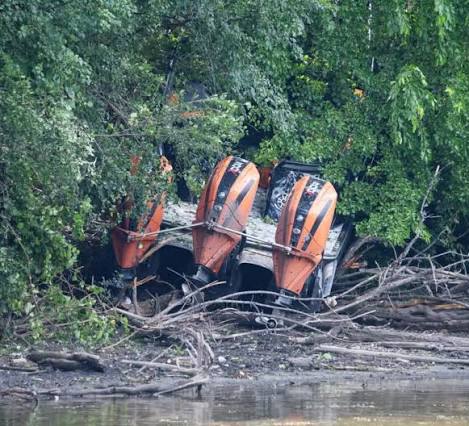
Video recorded as the damaged boat was hauled away showed significant impact damage along its left side.
That detail matters to investigators. In a collision between two vessels, the point and angle of impact help reconstruct the paths each boat was traveling and can indicate which had the right of way under navigation rules.
An Arrest, but No Confirmed Link
One man was taken into custody overnight on charges of reckless homicide and aggravated driving under the influence.
Officials have not connected that arrest to the boat crash, and the distinction is important. Two serious incidents can occur in the same county on the same night without being related, and investigators are typically careful not to link cases before evidence supports it.
Details remained limited on Sunday. Police may still be searching for the operator of the boat involved in the collision.
A Public Appeal
Illinois Sen. Craig Wilcox posted a statement on social media Saturday night urging residents to stay alert.
He asked people to watch for anyone who appeared injured or looked like a boater who seemed out of place in the area, and encouraged the public to contact police even on the basis of suspicion alone.
That kind of appeal usually signals that authorities believe someone involved may have left the scene, either deliberately or in the confusion following an impact.
Why Boat Collisions Are Hard to Investigate
Waterway crashes present challenges that roadway investigations do not.
There are no skid marks, no traffic cameras and no fixed lanes. Vessels leave no lasting trace of their path, and wake patterns dissipate within minutes. Evidence at the scene is often limited to damage on the hulls themselves, debris that may drift, and whatever witnesses on nearby boats or shoreline property observed.
Identifying an operator can also be difficult. Boats carry registration numbers but not license plates in the roadside sense, and a vessel can be trailered away from a launch ramp within minutes of returning to shore.
Witness accounts therefore carry unusual weight, which explains the public appeal.
Navigation Rules Most Boaters Do Not Know Well
Recreational waterways operate under rules that many casual operators never fully learn.
Vessels approaching head-on are generally expected to pass port to port. When paths cross, the boat with another vessel on its starboard side is typically required to yield. Overtaking vessels bear responsibility for keeping clear of the boat being passed.
Beyond the formal rules sits a broader obligation to maintain a proper lookout and operate at a safe speed for the conditions — a standard that accounts for traffic density, visibility, water conditions and the operator’s ability to stop or turn in time.
Rivers add specific complications. Channels are narrow, banks limit sightlines around bends, and current affects handling in ways that catch inexperienced operators off guard. Weekend afternoons in summer bring heavy congestion to stretches that feel comfortable on a quiet weekday.
Alcohol on the Water
The charge of aggravated driving under the influence in the separate arrest points to something worth addressing regardless of whether the cases prove connected.
Operating a boat while impaired is illegal in Illinois just as operating a car is, and the penalties are serious. But enforcement is more difficult and public awareness is markedly lower.
Boating also amplifies alcohol’s effects through what safety educators call boater’s fatigue — the cumulative impact of sun, wind, engine noise, vibration and motion. Those factors degrade judgment and reaction time on their own, and they compound with any alcohol consumed.
Add the absence of lane markings, brakes or fixed obstacles to guide spacing, and the margin for error narrows considerably.
Basic Practices That Prevent This
Nothing here is complicated, and most of it is routinely ignored.
Wear life jackets rather than storing them. In collisions, occupants are frequently thrown before they can reach stowed equipment.
Designate a sober operator, the same way a group would for driving.
Maintain constant lookout in all directions, including behind. Many collisions involve a vessel the operator never saw.
Slow down in congested areas and around blind bends where sightlines are limited.
Know the rules of the road before launching. A brief boating safety course covers material most operators have never encountered.
Where Things Stand
As of Sunday, the essential facts remained narrow. A woman died in a collision on the Fox River on Saturday afternoon. A section of waterway was closed. A man was arrested overnight on serious charges that officials have not tied to the crash. And investigators may still be looking for a boat operator.
Authorities have not released the identity of the woman killed pending notification of her family.
For anyone who was on that stretch of river Saturday afternoon, the request from officials is straightforward: contact police with anything observed, however incomplete it may seem. In a case where physical evidence is limited and the water keeps no record, what people saw may be the most valuable material available.
Author
-
Lucienne Albrecht is Luxe Chronicle’s wealth and lifestyle editor, celebrated for her elegant perspective on finance, legacy, and global luxury culture. With a flair for blending sophistication with insight, she brings a distinctly feminine voice to the world of high society and wealth.