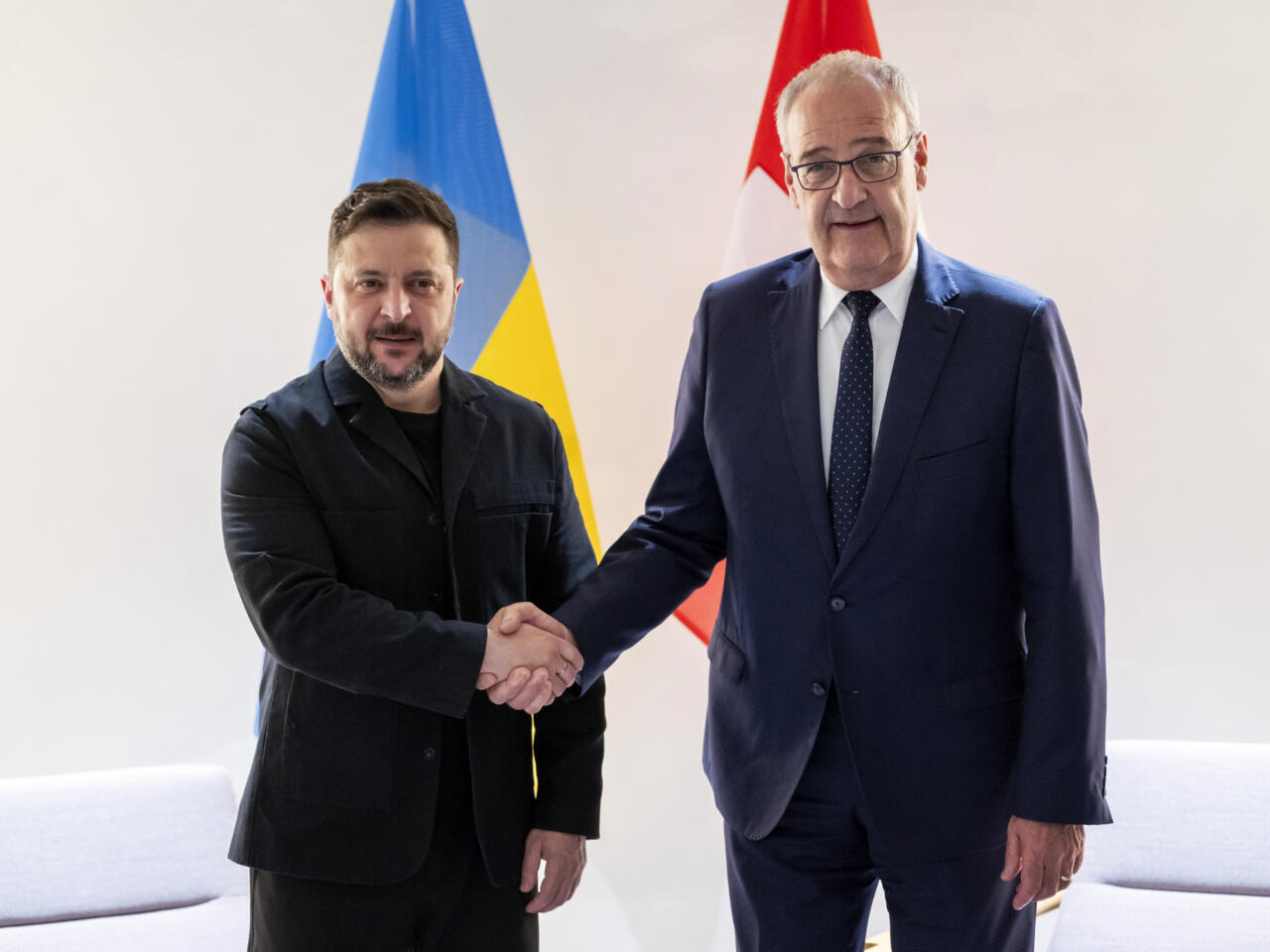
The Zelensky G7 summit appearance drew immediate attention on Tuesday as the Ukrainian president touched down in the French spa town of Evian, where world leaders are preparing to discuss a renewed push for peace. His arrival comes against the backdrop of cautious optimism from President Donald Trump, who hinted that progress on ending Russia’s war against Ukraine might finally be within reach after more than four years of conflict.
A Summit Centered on Ukraine
Volodymyr Zelensky’s arrival set the stage for a special morning session devoted entirely to Ukraine. That meeting will be followed later in the day by a separate session focused on Iran, one expected to draw the participation of several Arab leaders.
For the European leaders gathered under French President Emmanuel Macron’s hosting, the priority is clear. They want to remind Trump of the importance of pressing Russia to accept peace on Kyiv’s terms, rather than nudging Ukraine toward concessions that would benefit Moscow.
The urgency was sharpened by recent violence. Zelensky had called on Monday for a decisive and substantive response from the G7 after a fresh wave of Russian strikes killed at least 11 people and sparked a fire at a landmark Kyiv cathedral.
A Possible Opening on Peace
Perhaps the most striking development came from Trump himself. Arriving at the summit on Monday, he struck an upbeat tone, suggesting that “maybe we can do something” on Ukraine.
The president, who said he had spoken by phone with both Zelensky and Vladimir Putin, indicated that both leaders were receptive. He described having two very good conversations, though he offered no further specifics about what any path forward might look like.
Zelensky, for his part, revealed he had proposed meeting Putin at the G7, but said Moscow was “not ready” for such an encounter. The gap between Trump’s optimism and that reluctance underscores just how much distance may remain before any genuine breakthrough.
The UK Steps Up Pressure
Britain used the moment to signal a hardening stance against Russia. Ahead of the summit session, Prime Minister Keir Starmer announced two notable measures:
- The UK will supply enriched uranium to Ukraine to support its nuclear power stations.
- New sanctions will be imposed on Russia.
Condemning what he called Russia’s “barbaric strikes,” Starmer framed the moves as a way of choking off the revenues fueling Putin’s war while helping power Ukraine through the difficult winters ahead.
Some analysts argue the timing favors Kyiv, pointing to recent battlefield gains that may have shifted momentum in Ukraine’s direction. They have urged Western allies not to ease their support at such a pivotal moment.
The Iran Session and the Strait of Hormuz
Ukraine is not the only crisis on the agenda. Later Tuesday, a special session on Iran is set to bring together Egypt’s President Abdel Fattah al-Sisi, the emir of Qatar, and the president of the United Arab Emirates.
Allies are eager to press Trump on his deal with Iran to end the Middle East war, an agreement he says will fully reopen the Strait of Hormuz on Friday. Trump, however, was lukewarm about a proposed British-French military mission to guarantee safe passage through the vital shipping corridor, suggesting the US did not need “much help.”
A Wider Gathering of World Leaders
This year’s summit is notable for its expanded guest list. Over the three-day event, France has sought to broaden the G7’s reach beyond its core membership of Britain, Canada, France, Germany, Italy, Japan, and the United States.
Among the visiting leaders are Brazilian President Luiz Inacio Lula da Silva and Indian Prime Minister Narendra Modi, a parade of figures reflecting France’s ambition to give the gathering a more global character.
What to Watch
With Zelensky now on the ground and Trump signaling openness to action, the Ukraine session looms as the summit’s defining moment. Whether his optimism translates into concrete steps, or runs aground on Moscow’s reluctance, remains to be seen.
This is a developing story, and the coming days in Evian, spanning both the Ukraine and Iran sessions, will reveal how much the G7 can move the needle on two of the world’s most pressing conflicts.
Author