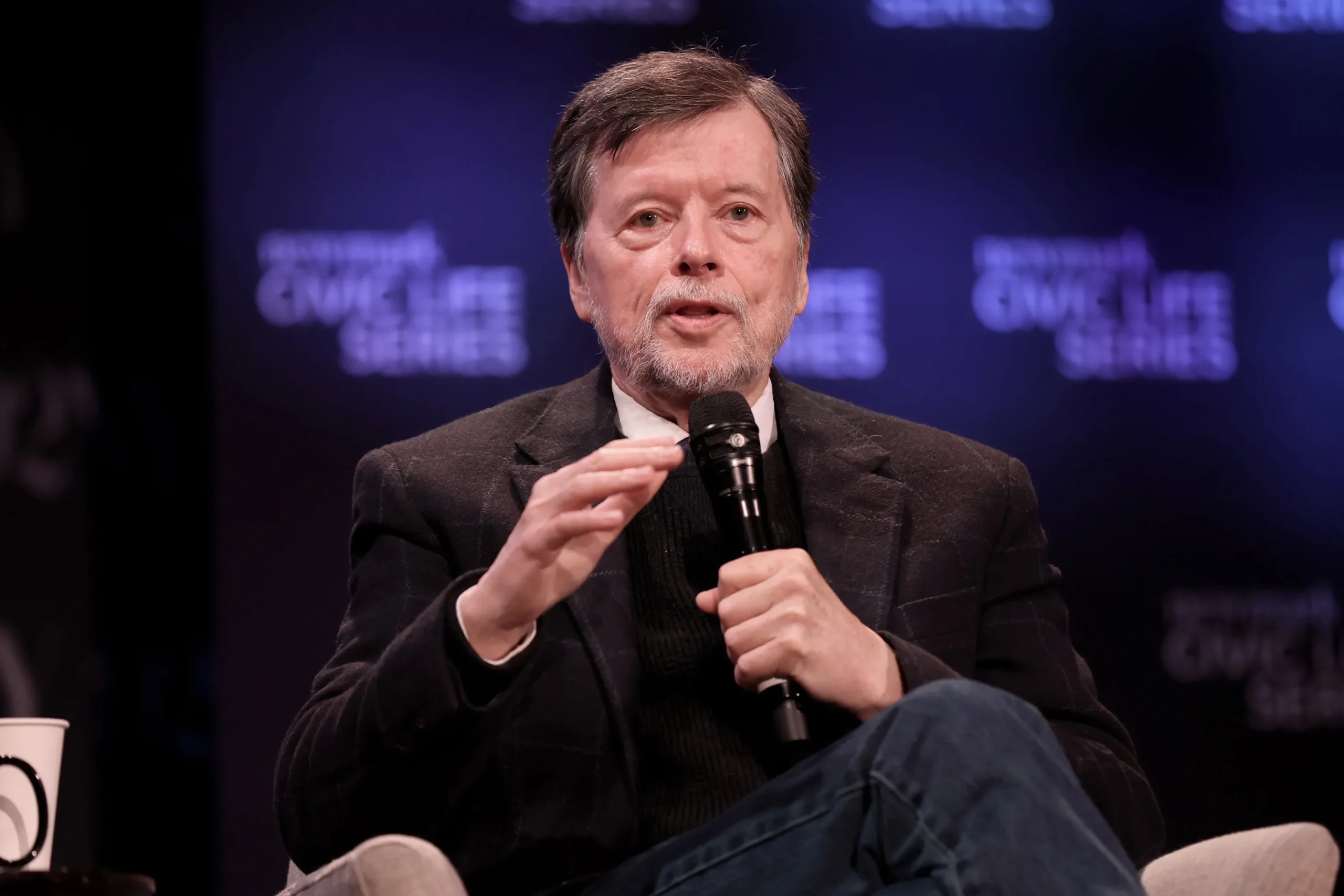
Ken Burns American history takes on new meaning in the eyes of the celebrated documentarian, who recently argued that America’s turbulent past can actually offer comfort during our divided present. According to Burns, our tendency to smooth over the violent chapters of our history only makes today’s conflicts feel worse than they truly are.
Speaking on NBC’s “Meet the Press” with Kristen Welker on July 5, Burns shared these reflections while promoting his documentary exploring the American Revolution. His perspective offers a fresh lens through which to view the challenges facing the nation today.
Confronting the Sanitized Version of the Revolution
One of Burns’s central points is that both our history books and our shared memory tend to clean up the story of the American Revolution. We often present it as a noble, orderly affair rather than the brutal struggle it actually was.
Burns believes this whitewashing stems from a genuine fear. Many worry that exposing just how dark and violent the founding era truly was might somehow tarnish the lofty ideals born in Philadelphia in 1776, and later enshrined in the Constitution in 1787.
But he firmly rejects that concern. In his view, revealing the harsh realities doesn’t weaken those founding principles at all. Instead, it makes them shine even brighter. When you consider the overwhelming odds against success and the sheer improbability of the entire endeavor, the achievements of the founders become all the more remarkable.
History That Rhymes With Today
Burns pointed to several striking parallels between the founding era and our current moment. The birth of the United States, he noted, unfolded amid circumstances that feel surprisingly familiar.
Among the historical echoes he highlighted were:
- A pandemic that swept across the entire continent
- Heated debate over whether to vaccinate soldiers
- A failed military invasion of Canada
These moments, he suggested, “rhyme” with challenges we face today. Yet when viewed as a whole, our present-day divisions appear modest compared to what previous generations endured.
Burns didn’t shy away from acknowledging that America is genuinely divided right now. However, he emphasized that we were far more fractured in earlier eras. He pointed specifically to the Civil War and the Vietnam era as periods of vastly deeper national conflict.
Divisions “A Mile Wide but an Inch Thick”
Perhaps his most memorable observation was his description of today’s divisions. Burns characterized them as being “a mile wide but an inch thick,” suggesting that while our disagreements appear vast on the surface, they lack the profound depth that tore the nation apart in the past.
He added that overcoming these divisions requires storytelling. A compelling narrative, he argued, has the power to remind Americans of the many values and experiences they actually share in common, cutting through the noise of division.
What Would the Founders Think?
Burns also turned his attention to concerns about rising authoritarianism in the country. He offered a nuanced take on how the nation’s founders might react to the present political climate.
According to Burns, the founders wouldn’t be shocked to see someone pursuing greater authoritarian power. They understood human nature well enough to anticipate such attempts. What would truly dismay them, he argued, is something different entirely.
Their deep disappointment would center on Congress. Burns explained that the founders designed the legislative branch, established in Article I, to serve as the primary defense against tyranny. Seeing that branch surrender so much of its authority would leave them profoundly let down, because they viewed it as the essential safeguard against the inevitable rise of would-be strongmen.
The Forces Keeping Us Divided
Burns didn’t hesitate to identify who he believes bears responsibility for much of today’s discord. He pointed to those who profit from keeping Americans fixated on their grievances.
He warned that authoritarians benefit when the public remains uneducated and distracted by conspiracy theories and superstition. Such distractions, he suggested, serve the interests of those seeking to consolidate power.
The good news, according to Burns, is that the formula for a healthy, peaceful democracy already exists. The problem is that the nation has allowed itself to become sidetracked. He described these distractions as “shiny objects”, the endless cycle of conspiracy, superstition, and us-versus-them thinking that pulls people away from what matters.
Drawing Wisdom From Thomas Paine
To illustrate the extraordinary nature of the American experiment, Burns invoked the words of Thomas Paine. In his influential pamphlet “Common Sense,” Paine famously suggested that not since the time of Noah had humanity been given such an opportunity to remake the world.
Burns embraced this almost biblical sense of destiny. He described America as a place where human beings could hit reset and boldly declare that certain truths are self-evident.
Yet he offered an important caveat. Those truths, he noted, were never actually self-evident, and they had never been tested before. The American founding represented an audacious attempt to try something entirely new, an experiment in human self-governance with no guarantee of success.
The Citizen as the Highest Office
One of Burns’s most powerful ideas involves the role of ordinary Americans. He described the position of citizen as “the highest office in the land.”
This, he explained, was a deliberate design choice by the founders. By elevating the citizen, they sought to limit the power of authoritarians and those who might resort to violence to achieve their aims.
Burns expressed cautious optimism about the tools available to Americans. He said the country possesses at least the recipe to remove the fuel rods of anger, distrust, and hatred from our political system. The real question, he posed, is whether Americans will choose to keep following that recipe as the nation approaches its 250th anniversary as the oldest democracy on Earth.
He warned against the seductive promises of authoritarians, who often argue that life would be better if everything were tightly ordered, or that the national story belongs to only one group of people rather than many.
Choosing Reconciliation Over Division
Ultimately, Burns framed the American story as one of remarkable unity emerging from staggering diversity. He described it as the tale of an incredibly wide range of people who, against all odds, manage to come together.
He believes Americans collectively hold the power to choose unity over violence. Rather than embracing needless drama, further division, and the potential for conflict, he urged the nation to take the path of reconciliation.
His message was clear and hopeful: we don’t have to choose disunion. The opportunity to heal and come together remains within reach, if only we’re willing to seize it.
Final Reflections
As America marks a monumental milestone in its history, Ken Burns offers a perspective that is both grounded in the past and hopeful for the future. By confronting the bloody, divided reality of earlier eras, he suggests we can gain valuable perspective on our current struggles.
His central takeaway resonates deeply: our divisions today, however loud and painful, pale in comparison to what previous generations survived. And if they could endure and ultimately move forward, perhaps we can too, choosing reconciliation and shared purpose over the drama of endless conflict.
Author