A devastating Kyiv missile attack in the early hours of Monday claimed at least 11 lives, laying bare a troubling weakness in Ukraine’s ability to protect its skies. The relentless barrage of Russian missiles and drones struck the capital with terrifying precision, leaving residents scrambling for safety and emergency crews digging through the wreckage of shattered homes.
A Night of Terror in the Capital
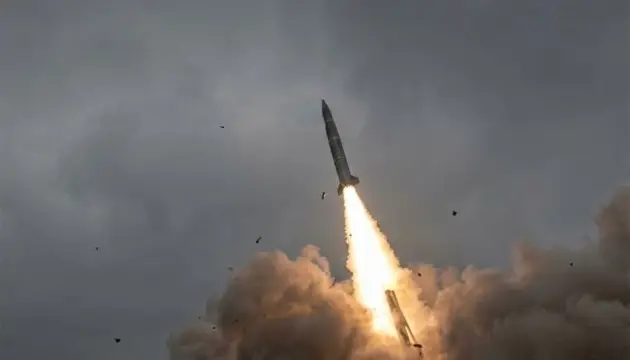
Russia unleashed successive waves of firepower on Kyiv, and the results were catastrophic. According to local authorities, every ballistic missile launched during the assault hit its intended mark, a chilling detail that highlights just how strained Ukraine’s defensive capabilities have become.
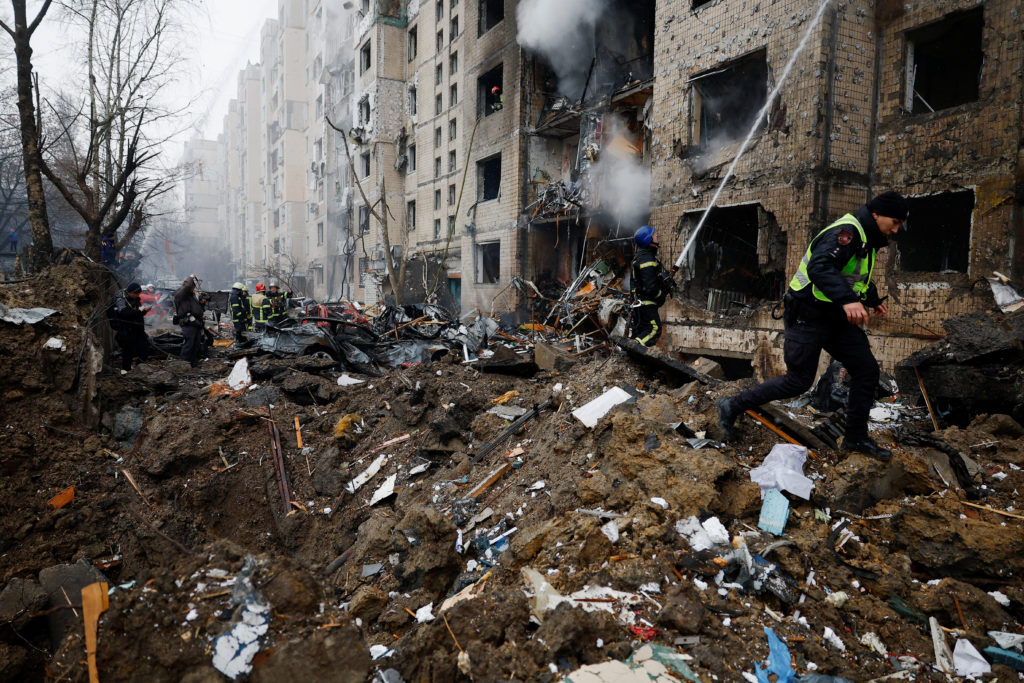
The human toll extended well beyond the dead. Officials reported that roughly 60 additional people were wounded in the onslaught. As dawn broke, rescue workers combed through the rubble of residential high-rise buildings at two locations that had taken direct hits, desperately searching for anyone still trapped.
The timing made the tragedy even more bitter. The strike arrived just hours after Ukraine’s president had warned that a major attack was looming, a prediction that proved grimly accurate.
Part of a Deadly Pattern
This latest assault came only days after another brutal strike rocked the capital. On the previous Thursday, a Russian attack killed 31 people in Kyiv, making it the deadliest day the city had endured all year.
Russia’s Defense Ministry framed the bombardment as retaliation. Moscow claimed the strikes were payback for Ukraine’s recent long-range operations, which have triggered serious fuel shortages and piled pressure on President Vladimir Putin.
The back-to-back attacks reflect an intensifying phase of a war that has now stretched beyond four years since Russia first launched its full-scale invasion.
Ukraine’s Edge, and Its Vulnerability
Ironically, Ukraine has enjoyed notable success on other fronts. Analysts and Western officials point out that Ukrainian advances in drone technology have given the country a meaningful advantage in recent months.
By striking supply routes deep behind the front lines, Ukraine has managed to blunt Russia’s battlefield momentum. These operations have slowed the Russian army’s advance and made every push more costly.
Yet Russia has found a way to capitalize on a different weakness. Moscow is now exploiting gaps in Ukraine’s air defenses, which lean heavily on American-made Patriot systems to intercept ballistic missiles that are nearly impossible to stop otherwise.
The Patriot Missile Crisis
At the heart of Ukraine’s struggle lies a critical shortage. The country relies on Patriot interceptor missiles to knock down incoming ballistic threats, but these systems are in dangerously short supply.
Several factors have converged to create this crisis:
- Patriot interceptors are produced in only limited quantities to begin with.
- Conflict in the Middle East has placed enormous strain on the global supply.
- Ukraine is now feeling the pinch more acutely than perhaps anywhere else in the world.
The consequences were on full display during Monday’s attack. Ukraine’s Air Force reported that Russia fired hundreds of drones and dozens of missiles overnight, with the capital as the primary target. Of those, 29 ballistic missiles struck their targets, a stark illustration of how little Ukraine can currently do to defend against them.
Voices From the Defense
Air Force spokesman Yurii Ihnat spoke bluntly about the situation on national television. He emphasized that intercepting ballistic missiles requires the proper means to do so, means Ukraine simply lacks in sufficient numbers.
Ihnat acknowledged that Russia is clearly aware of and exploiting the serious deficit of interceptor missiles affecting both Ukraine and the wider world.
President Volodymyr Zelenskyy echoed these concerns ahead of a NATO summit in Ankara. Writing on social media, he noted that Ukrainian forces had held up well against drones and cruise missiles but continued to struggle against ballistic missiles, a shortfall he directly attributed to inadequate interceptor supplies.
Zelenskyy pressed allies to take decisive action, urging both American and European partners to leave the summit committed to strengthening Ukraine’s air defenses and safeguarding civilian lives. He argued that as long as Patriot missiles sit idle in allied stockpiles, Russia will remain emboldened to keep destroying residential buildings, insisting that the United States and Europe possess more than enough strength to halt the terror.
Conflicting Accounts of the Targets
Russia offered its own version of events. The country’s Defense Ministry claimed the attack aimed at weapons factories in Kyiv, including facilities it said produce drones, sea drones, armored vehicles, and missiles. Moscow also asserted it targeted sites that repair air defense systems along with fuel and energy infrastructure in the region.
These claims, however, could not be independently verified. What remains undeniable is the pattern of civilian harm. Russia’s aerial campaigns have repeatedly struck residential areas, and according to United Nations figures, more than 16,000 Ukrainian civilians have died over the course of the war.
Tymur Tkachenko, head of Kyiv’s City Military Administration, underscored this reality, noting that the buildings hit were ordinary homes where people slept and lived their daily lives. He reported that a residential building in the Podilskyi district partially collapsed, while in the Darnytsia district, several multistory buildings were damaged, with people feared trapped beneath the debris.
Survivors Describe the Chaos
For those who lived through the attack, the experience was nothing short of harrowing. Khrystyna Piatetska, a 20-year-old resident of the Darnytskyi district, recalled screaming after the first strike, only for a second blast to blow out the windows of her building.
She described a scene of pure terror: the lights going dark, the acrid smell of burning filling the air, and smoke choking the stairwell. As she fled, she saw bodies on the ground, and once outside, cars began exploding, forcing her to escape from beneath the rubble directly into flames.
Another resident, 61-year-old Halina Ivanivna, woke to the sound of the first strike around 2 a.m. Within moments, her apartment building began collapsing around her. She remembered everything falling apart, water pouring through the structure, and smoke spreading as emergency crews rushed to evacuate residents. Roughly five minutes after the initial hit, a second strike struck.
Ukraine Strikes Back
The violence was not one-sided. As Kyiv reeled, Ukrainian forces carried out their own operations against Russian and occupied territories.
An energy provider in Russia-occupied Crimea reported a peninsula-wide blackout caused by what it described as an external impact. The Moscow-appointed head of Sevastopol, Mikhail Razvozhayev, said Ukrainian attacks had cut power to the city early Monday, though supplies were later restored using backup equipment.
Meanwhile, in Russia’s Yaroslavl region, Governor Mikhail Yavrayev reported that two people were wounded in a Ukrainian drone attack on the city of Yaroslavl. He stated that more than 70 Ukrainian drones were shot down during the assault. While he didn’t confirm any damaged facilities, the Astra news outlet reported that the strike targeted an oil refinery, sparking a fire. Russia’s Defense Ministry claimed its air defenses downed 519 Ukrainian drones overnight.
Looking Ahead
The deadly Kyiv missile attack serves as a sobering reminder of the mounting stakes in this prolonged conflict. As Ukraine’s interceptor supplies dwindle, the nation’s civilians remain dangerously exposed to Russia’s ballistic arsenal.
With Zelenskyy pleading for urgent support and the NATO summit underway, the coming days may prove pivotal in determining whether Ukraine can shore up its faltering defenses. For the families mourning their dead and sifting through the ruins of their homes, that help cannot come soon enough.
Author