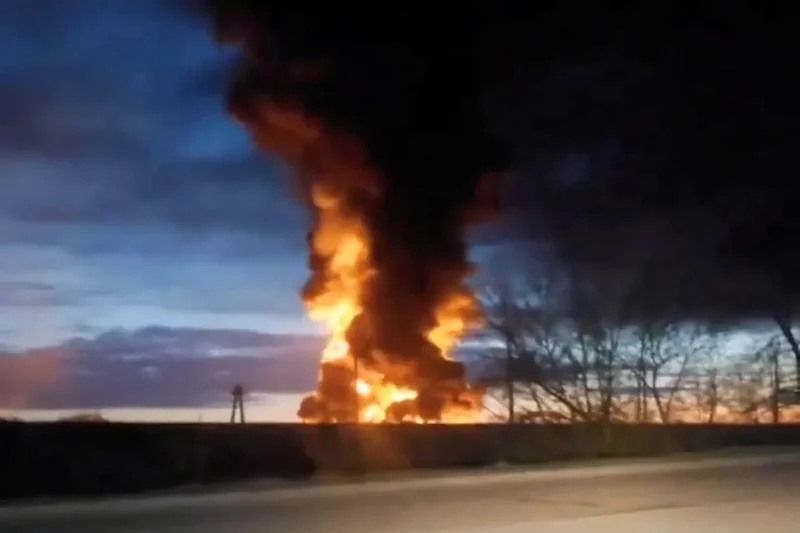
Ukraine strikes on Russian tankers have escalated once again, with Ukrainian drones hitting two more vessels in southern Russia as Kyiv broadens its campaign against the fuel supplies flowing into the region. The attacks come as Russia grapples with a worsening nationwide gasoline shortage.
The Latest Attacks
The two tankers were struck in Taganrog Bay and suffered mechanical damage, according to Yury Slyusar, governor of the Rostov region on Russia’s Azov Sea coast. Speaking Thursday, he said both vessels caught fire, though the blaze on one had already been extinguished. He did not name the ships involved.
Ukraine’s military has not yet commented on the strikes in Taganrog Bay.
A Broadening Campaign
The tanker hits are part of a wider effort by Kyiv to squeeze Russia’s energy sector. In recent weeks, Ukraine has intensified attacks not only on tankers but also on oil refineries, aiming to reduce the country’s fuel production and pressure the Kremlin toward negotiations.
Those assaults have taken a toll. Several major refineries have been forced offline, deepening the gasoline shortage across Russia. In response, the government has banned nearly all exports of gasoline, jet fuel, and diesel in an effort to keep more supplies within the country.
The recent operations have targeted multiple fronts:
- Earlier this week, Ukrainian forces struck several small tankers in the Sea of Azov heading toward Crimea, seeking to cut off fuel to the Russia-occupied peninsula.
- Ukrainian officials also reported attacks on several vessels in the Black Sea.
A Deepening Supply Crisis
The fuel shortages have hit hardest in southern Russia and occupied Ukrainian territories, where delivery logistics are especially complicated. But the strain is spreading. At a meeting with President Vladimir Putin on Wednesday, several regional governors requested federal assistance.
The pressure was evident again on Thursday, when Igor Artamonov, governor of the Lipetsk region about 300 miles from Moscow, urged oil companies Lukoil, Rosneft, and Gazprom Neft to urgently boost gasoline deliveries.
Artamonov framed the crisis as far more than an inconvenience for drivers. He stressed that it affected the normal functioning of the region, including emergency services, the harvest, food delivery, public safety, and broader national priorities.
For now, Kyiv’s expanding strikes appear designed to keep that pressure mounting, targeting the flow of fuel that keeps both Russia’s economy and its occupied territories running.
Author