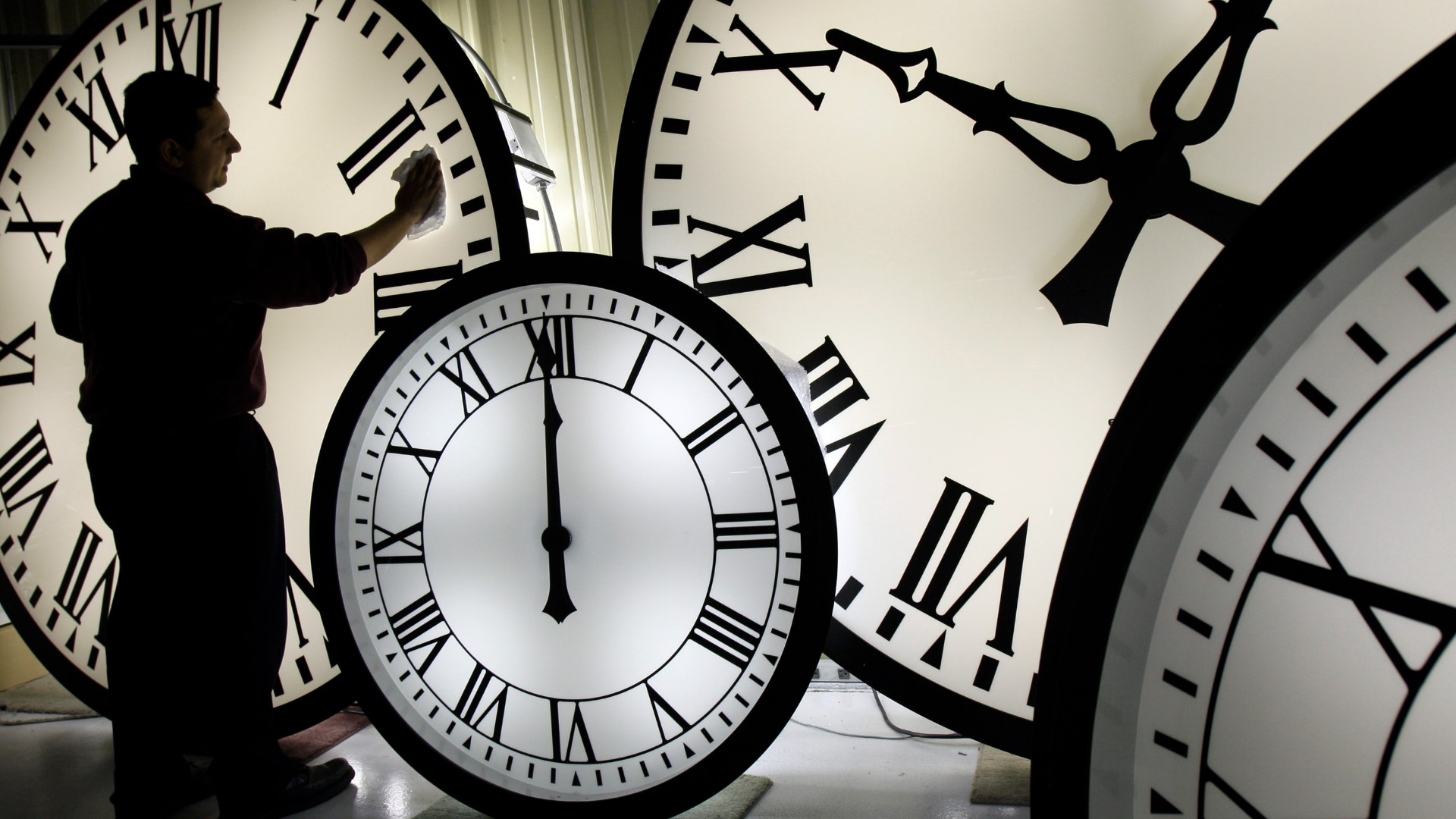
Daylight saving time may finally be losing its most annoying feature: the switching.
The US House of Representatives is expected to vote next week on legislation that would make daylight saving time permanent, retiring the twice-yearly clock ritual that has irritated Americans for generations.
For anyone who has ever dragged themselves through a Monday in March wondering where the hour went, this is the bill.
The Sunshine Protection Act
The measure cleared committee by a lopsided 48-1 vote — the kind of margin that suggests broad, cross-party fatigue with the current system rather than a partisan fight.
It also has presidential backing. Trump recently dismissed the seasonal clock changes as a “ridiculous, twice-yearly production.”
There is precedent here, and it is not entirely encouraging. A similar bill passed the Senate in 2022 with apparent ease, only to stall out and die before ever reaching the president’s desk.
Which points to the obvious caveat: even if the House approves it next week, the Senate still has to act. Passage in one chamber changes nothing on its own.
What Daylight Saving Time Actually Is
For the uninitiated — or the perpetually confused — the mechanics are simple enough.
Daylight saving time runs from March to November. During that stretch, most Americans move their clocks forward by one hour, shifting daylight later into the evening.
In spring, clocks jump ahead. In autumn, they fall back to standard time.
The stated logic: more evening light during the warm months, more morning light during the winter. Whether that tradeoff still makes sense in a country that no longer runs on agricultural schedules is precisely the argument driving the legislation.
Not Everyone Plays Along
Here is a detail many Americans forget — the current system is not even universal.
Two places largely opt out:
- Hawaii, which sits close enough to the equator that daylight barely fluctuates across seasons
- Most of Arizona, which has its own reasoning entirely
Arizona’s exemption is about heat, not tradition. In a desert climate, an extra hour of evening sun is not a gift — it is a cost.
Calvin Schermerhorn, a history professor at Arizona State University, explained the logic in environmental terms. Starting the day earlier rather than later, he said, is simply more efficient in terms of power usage. Businesses, schools and vehicles all burn more energy air-conditioning spaces during the hottest part of the day.
In other words, Arizona is not being stubborn. It is being practical.
The Exceptions Within the Exception
Arizona’s opt-out comes with a wrinkle. The Navajo Nation — whose territory extends across parts of Arizona, Utah and New Mexico — does observe daylight saving time.
The result is a patchwork that can genuinely confuse travelers crossing reservation boundaries.
Several US territories also skip the change entirely:
- American Samoa
- Guam
- Northern Mariana Islands
- Puerto Rico
- US Virgin Islands
Why This Keeps Coming Back
The persistence of this issue in Congress says something about how universally disliked the current arrangement has become.
Sleep researchers have flagged the disruption. Safety advocates have pointed to accident data around the transitions. Parents complain about the chaos it inflicts on children’s schedules. And nearly everyone finds the whole exercise faintly absurd.
What has always stopped reform is not opposition to change — it is disagreement about which direction to go. Some want permanent daylight saving time, with more evening light year-round. Others prefer permanent standard time, arguing it better aligns with human circadian rhythms.
The Sunshine Protection Act picks a side: lock the clocks on daylight saving.
What Happens Next
The House vote is the immediate test. A strong result there would build pressure on the Senate, which has already demonstrated it can pass a version of this bill when motivated.
But 2022 offered a cautionary lesson. Legislation can sail through one chamber and simply evaporate. The Sunshine Protection Act’s supporters will be watching to see whether this attempt gains genuine momentum or repeats history.
If it does pass and become law, the practical consequence for most Americans is straightforward. No more losing an hour of sleep in March. No more resetting the microwave clock in November. No more sunset at 4:30 in the afternoon.
For a piece of legislation, that is an unusually tangible promise — and probably explains why it keeps coming back, no matter how many times it fails.
Author